How Jackson Pollock used gravity and geometry to create a masterpiece
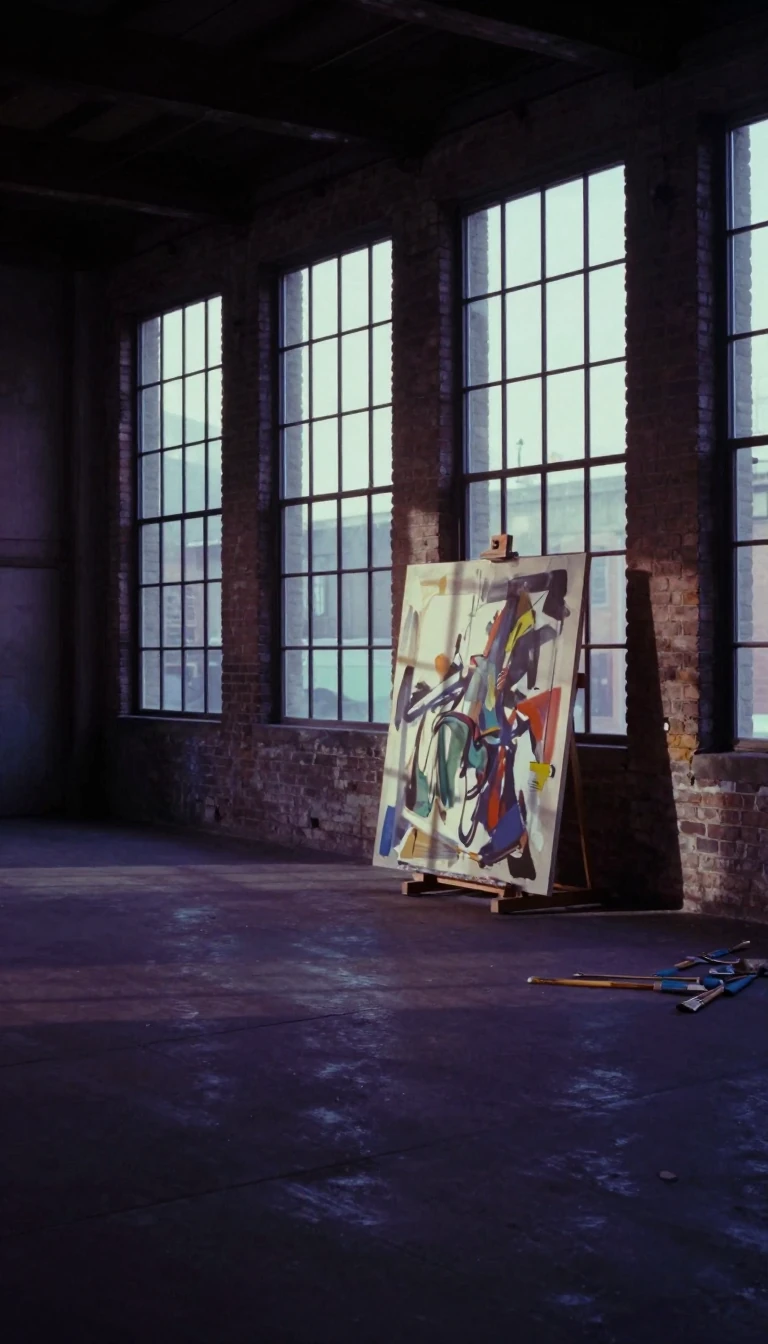
In short: In the summer of 1950, Jackson Pollock abandoned the easel for the floor. By dripping and pouring paint onto unprimed canvas, he created a monumental work of abstract expressionism that hides a complex mathematical secret within its chaotic, tangled lines.
Created in July and August of 1950 at his studio in Springs, New York, Autumn Rhythm (Number 30) is a defining example of Pollock's poured-painting technique. Rather than using traditional brushes on an upright easel, Pollock laid unprimed canvas directly on the floor. He controlled streams of paint using sticks, heavily loaded brushes, and even cans, flinging and dripping pigment to build a dense web of color.
The process was highly systematic despite its frenetic appearance. According to photographs by Hans Namuth, Pollock worked around the entire perimeter of the canvas. He began by laying down a skein of thin black lines on the right third of the work, then moved to the center, and finally the left. He layered browns, white, and small amounts of teal blue, creating puddled areas and varied line types until the composition reached its finished state.
While the painting appears purely spontaneous, researchers have identified a deeper order. Studies of the underlying fractal geometry in the drip patterns of Autumn Rhythm have estimated a fractal dimension of 1.67. This mathematical complexity adds a layer of structural sophistication to the work's visual energy.
The painting's identity has shifted over time. Between 1947 and 1952, Pollock used numbers like 'Number 30' to avoid imposing specific meanings on viewers. While some titles from this era were suggested by critic Clement Greenberg, historians believe 'Autumn Rhythm' was Pollock's own choice. The Metropolitan Museum of Art acquired the massive, 17-by-8-foot canvas in 1957 for $20,000 and a trade of another work.
Opens the Intellect+ feed with this card first. Swipe up for the next one.
Sources
- Summary by Intellect · source: Autumn Rhythm (Number 30)
To cite this card, link to https://intellectplus.co.uk/app/art-autumn-rhythm-number-30.
How we source, check and correct cards: Editorial standards.
General information, not professional advice. Spotted an error? Flag the card or see corrections and complaints.
Intellect Plus is a visual educational discovery platform for exploring fascinating facts and ideas. Brain Food, Not Brain Rot. What is Intellect Plus?
Related
More in Expressionism · More in Art · Latest · A–Z · All topics
