How a Dominican Friar Became the Master of Early Renaissance Perspective
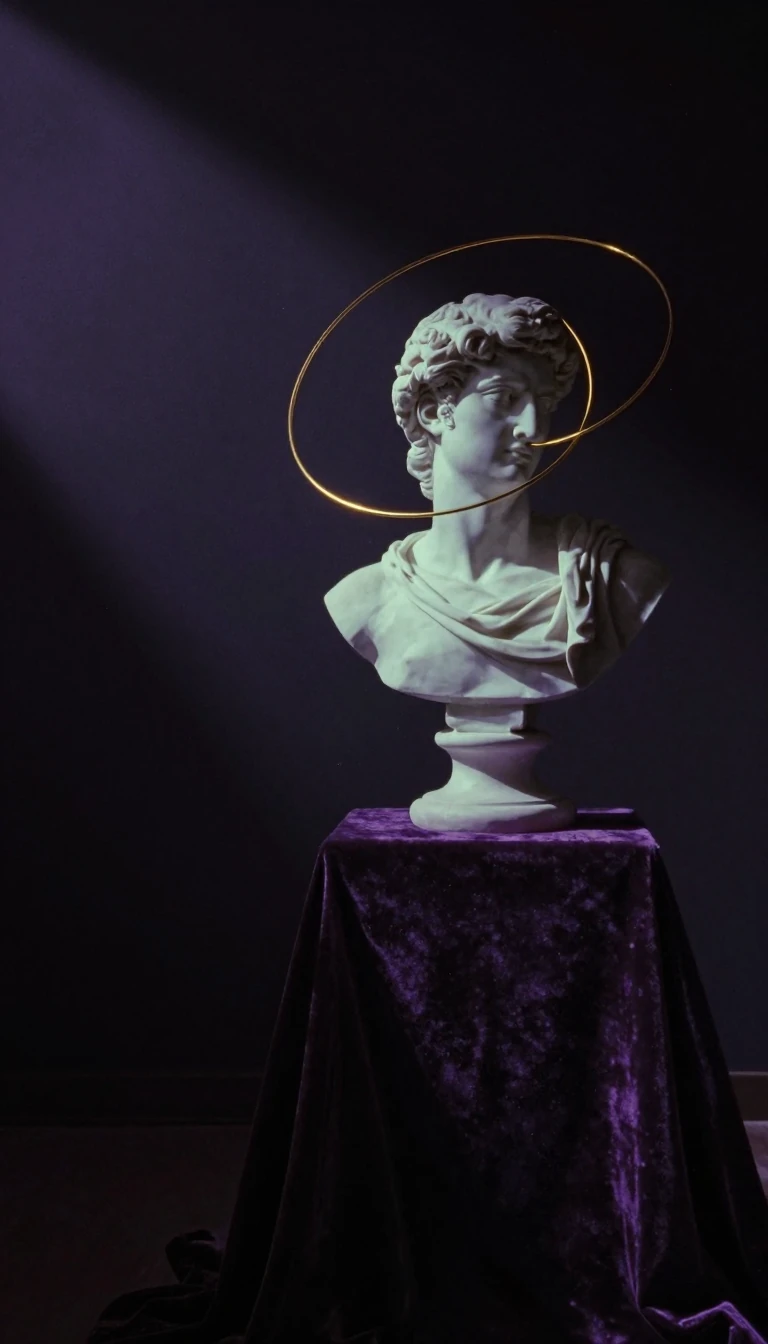
In short: Born Guido di Pietro, the artist known as Fra Angelico balanced a life of pious devotion with a career as a revolutionary painter. By blending Gothic delicacy with the emerging science of linear perspective, he transformed religious art, creating serene, luminous works that defined the early Florentine Renaissance.
Fra Angelico was born around 1400 in Vicchio, Italy, and was baptized Guido di Pietro. By 1417, he was already working as a painter, but his life took a definitive turn between 1420 and 1422 when he joined the Dominican Order at the priory of San Domenico in Fiesole. Taking the name Fra Giovanni da Fiesole, he spent his career navigating the tension between traditional spirituality and the rising tide of humanism. His artistic development was likely shaped by the teachings of Giovanni Dominici, a militant defender of traditional faith, and his fellow friar St. Antoninus Pierozzi, who may have influenced his compositions.
Though trained in the Gothic tradition—possibly by the miniaturist Lorenzo Monaco—Angelico became a pioneer of the early Renaissance. He mastered the representation of space through linear perspective, a technique that allowed him to move away from the traditional gold-ground backgrounds of the medieval period. In works like the Deposition for Santa Trinità, he introduced receding landscapes, depicting figures in naturalistic settings rather than on a flat stage. His ability to unify complex scenes with vibrant luminosity and precise formalism earned him the admiration of contemporaries, including the powerful Cosimo de' Medici, who commissioned him to decorate the convent of San Marco.
Angelico’s reputation for moral virtue was so profound that he became known as 'angelico' shortly after his death in 1455. This title, often preceded by 'beato' (blessed), was formalized when Pope John Paul II beatified him in 1982. Two years later, he was named the patron saint of artists. His legacy remains a testament to the intersection of faith and technical innovation, as his work bridged the gap between the painstaking detail of the Gothic era and the spatial depth that would define the Renaissance.
Opens the Intellect+ feed with this card first. Swipe up for the next one.
Sources
- Summary by Intellect · source: Fra Angelico | Biography, Art, & Facts | Britannica
- Also: Fra Angelico
- Also: Saint Anthony Abbot
To cite this card, link to https://intellectplus.co.uk/app/art-fra-angelico.
How we source, check and correct cards: Editorial standards.
General information, not professional advice. Spotted an error? Flag the card or see corrections and complaints.
Intellect Plus is a visual educational discovery platform for exploring fascinating facts and ideas. Brain Food, Not Brain Rot. What is Intellect Plus?
Related
More in Visual artists · More in Art · Latest · A–Z · All topics
