Jacques Lecoq transformed theatre by teaching actors to move like athletes and mimes
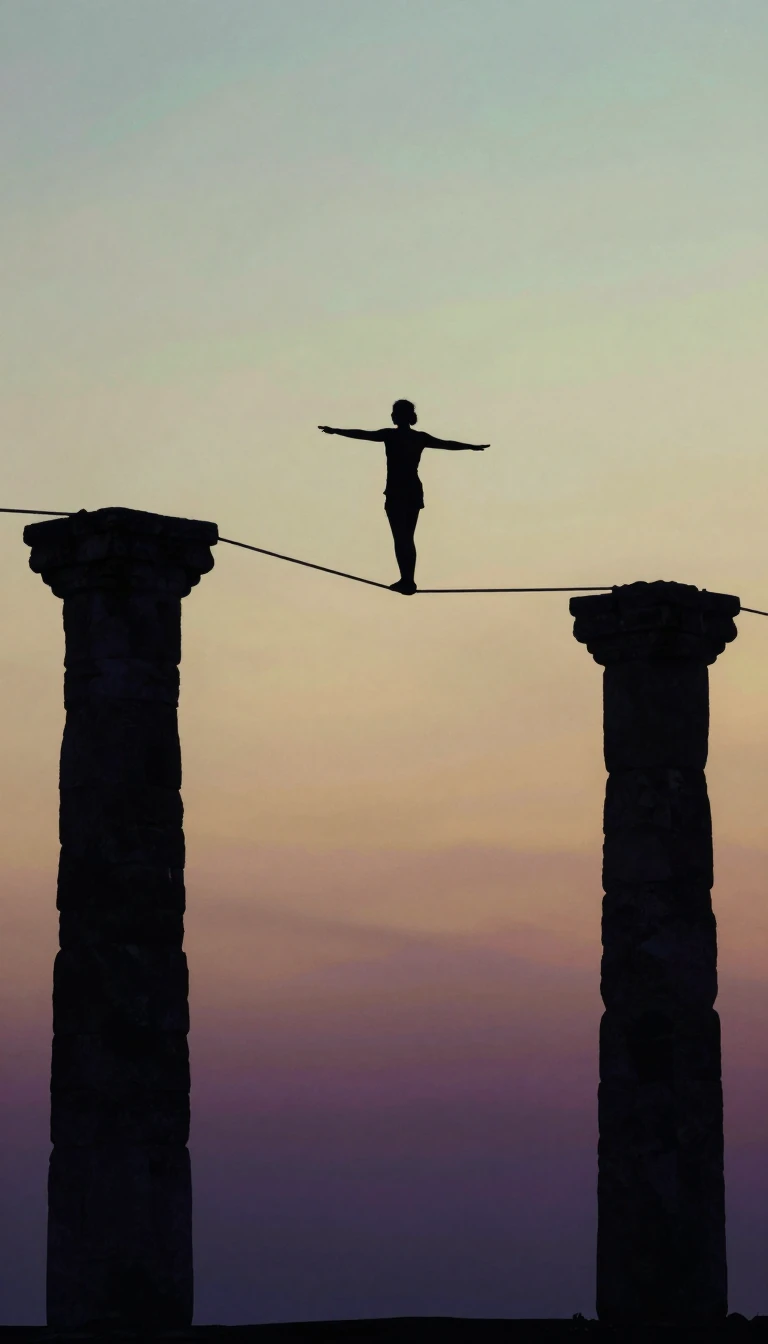
In short: Jacques Lecoq was the only major twentieth-century theatre pedagogue with a background in sports rehabilitation. By applying the geometry of gymnastics to the stage, he moved beyond traditional scripts to create a physical language of performance. His Paris school became a global hub for actors seeking to master their own creative expression.
Born in 1921, Jacques Lecoq began his career in athletics, studying sports and physical education at Bagatelle college in 1937. His early fascination with gymnastics—specifically the parallel and horizontal bars—taught him to perceive the body’s movement through space as an abstract, rhythmic poetry. This foundation in physical discipline remained central to his pedagogy even after he transitioned into professional acting with the Comediens de Grenoble and later lived in Italy, where he engaged with Commedia dell'arte and performed alongside Dario Fo.
In 1956, Lecoq opened the École Internationale de théâtre Jacques Lecoq in Paris, eventually moving it to a former boxing center in 1976. His teaching philosophy rejected codified skills in favor of nurturing individual creativity. He famously employed the via negativa, or negative way, where he critiqued only the unacceptable elements of a performance, forcing students to discover their own 'right' way through trial and error. This approach aimed to foster le jeu (playfulness), complicité (togetherness), and disponibilité (openness).
Central to his method was the use of masks, which he believed stripped away the actor's past to reveal raw physical awareness. Students progressed from the neutral mask—a blank, symmetrical face—to larval and expressive masks, eventually culminating in the red clown nose. Lecoq viewed this final stage as the most personal, as it required the actor to study their own self. Beyond performance, he collaborated with architect Krikor Belekian in 1977 to establish the Laboratory for the Study of Movement, exploring how architecture and scenography interact with the human body.
Lecoq’s influence persists through the diverse cohorts of performers he trained, including figures like Simon McBurney, Julie Taymor, and Ariane Mnouchkine. By treating gesture as a linguistic system and movement as a 'zen art' of efficiency, Lecoq provided a framework for artists to create original work rather than merely interpreting existing texts. He continued teaching until his death in 1999, leaving behind a legacy that redefined the relationship between the performer's body and the audience's perception.
Opens the Intellect+ feed with this card first. Swipe up for the next one.
Sources
- Summary by Intellect · source: Jacques Lecoq
To cite this card, link to https://intellectplus.co.uk/app/art-jacques-lecoq.
How we source, check and correct cards: Editorial standards.
General information, not professional advice. Spotted an error? Flag the card or see corrections and complaints.
Intellect Plus is a visual educational discovery platform for exploring fascinating facts and ideas. Brain Food, Not Brain Rot. What is Intellect Plus?
Related
More in Entertainers · More in Art · Latest · A–Z · All topics
