Why Friedrich Nietzsche believed that only aesthetic phenomena could justify the existence of the world.
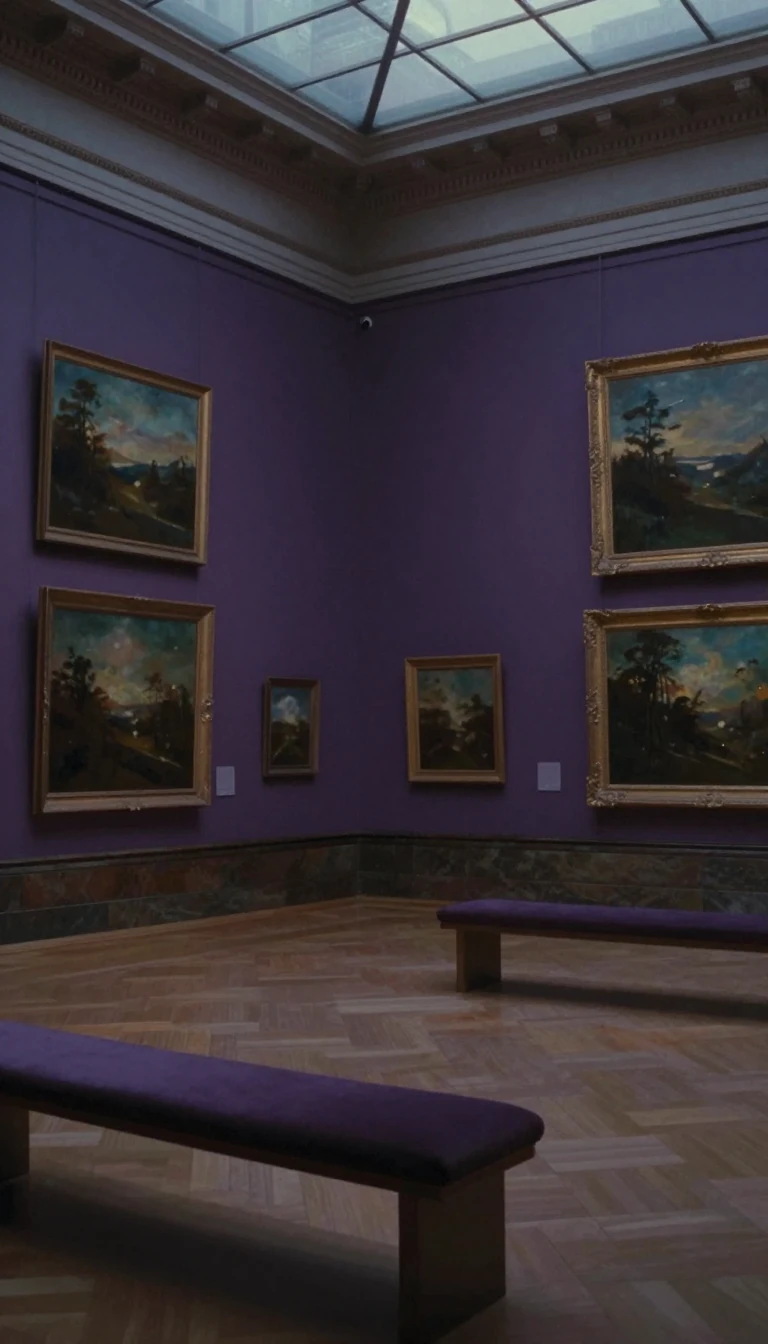
In short: Nietzsche rejected objective truth, viewing existence as a chaotic struggle of conflicting desires. He argued that traditional morality and religion were life-denying forces that fostered nihilism. Instead, he championed the Dionysian spirit and the creation of higher types, asserting that art alone provides the necessary justification for our reality.
Friedrich Nietzsche, active in the late 19th century, developed a philosophy that challenged the foundations of Western thought. Influenced early on by Arthur Schopenhauer, Nietzsche eventually sought to overcome Schopenhauer’s pessimism. He posited that there is no objective truth, as every perception is filtered through the observer's biases. He rejected the idea of a unitary self, describing consciousness instead as a collection of competing drives and desires. For Nietzsche, existence is inherently chaotic and irrational, and he criticized the tendency to devalue this real world in favor of imagined 'True Worlds' like Plato’s forms or religious heavens, which he viewed as symptoms of decadence.
Central to his critique was the concept of 'God is dead,' signifying the collapse of traditional religious foundations for morality. He identified a 'slave morality'—born from the resentment of the weak—which he believed had poisoned society by condemning strength and power as evil. In contrast, he looked back to the 'master morality' of ancient aristocracies, where the strong, healthy, and noble defined their own values. Nietzsche argued that modern society’s focus on egalitarianism and Christianity aimed to level humanity down, hindering the development of the Übermensch, or higher type, who could embrace chaos and turn suffering into a creative advantage.
Nietzsche’s philosophy was not a rigid system but a series of evolving, often provocative ideas. He emphasized the 'will to power'—the drive to expand one’s influence—as the fundamental human motivation. He also introduced the thought of eternal recurrence, a concept that challenges individuals to live in a way that they would be willing to repeat their lives infinitely. By advocating for a 'transvaluation of all values,' he urged the exceptional to move beyond traditional good and evil. Ultimately, he believed that the world’s existence is only justified as an aesthetic phenomenon, requiring the creation of higher types to make life once again awe-inspiring and beautiful.
Opens the Intellect+ feed with this card first. Swipe up for the next one.
Sources
- Summary by Intellect · source: Philosophy of Friedrich Nietzsche
To cite this card, link to https://intellectplus.co.uk/app/art-philosophy-of-friedrich-nietzsche.
How we source, check and correct cards: Editorial standards.
General information, not professional advice. Spotted an error? Flag the card or see corrections and complaints.
Intellect Plus is a visual educational discovery platform for exploring fascinating facts and ideas. Brain Food, Not Brain Rot. What is Intellect Plus?
Related
More in Performing arts · More in Art · Latest · A–Z · All topics
