How a single ancient sound shift reshaped the world's most spoken language
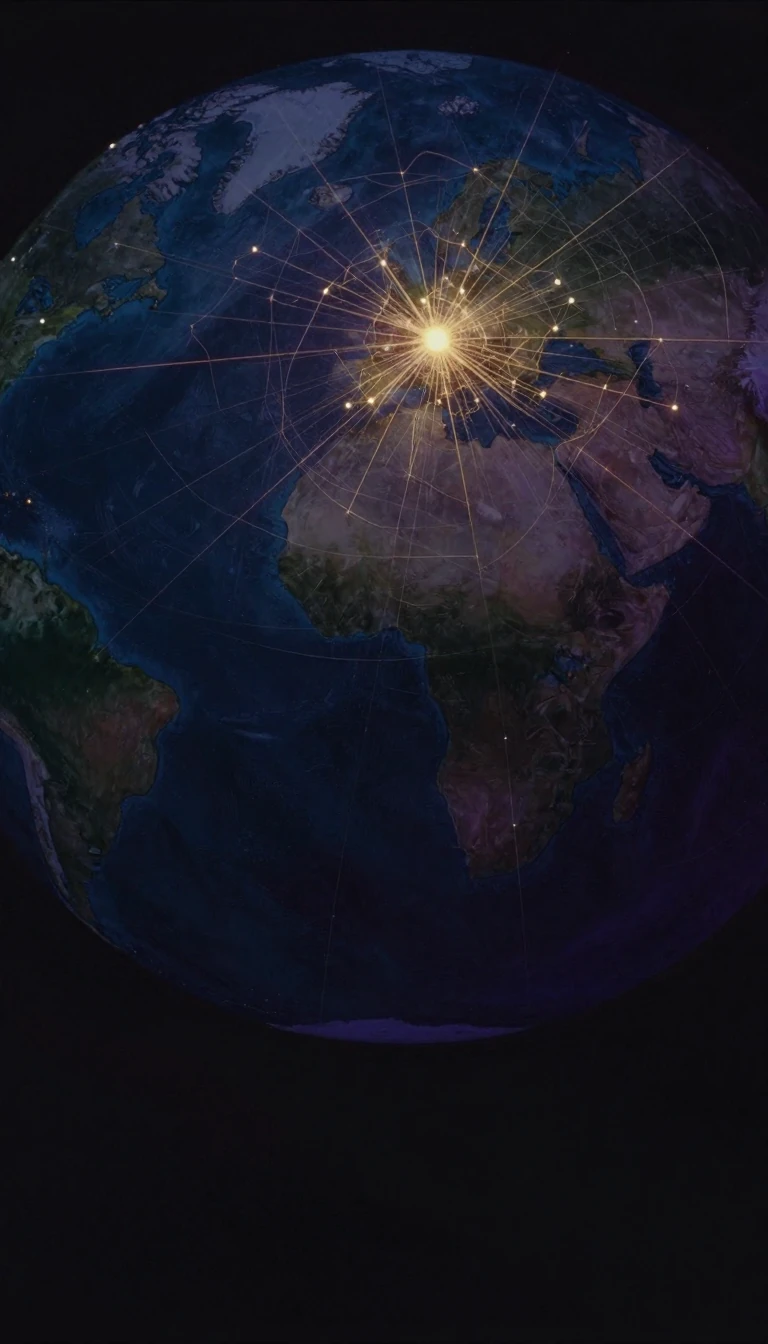
In short: From the heavy consonants of English to the rhythmic vowels of German, the Germanic language family shares a hidden blueprint. Tracing back to the Iron Age, these tongues were transformed by specific phonetic laws that fundamentally altered how we speak, write, and understand the world today.
The Germanic languages, a branch of the Indo-European family, trace their origins to Proto-Germanic. Spoken around the middle of the 1st millennium BC in regions like Northern Germany and Iron Age Scandinavia, this ancestor language underwent profound transformations. Two pivotal mechanisms, known as Grimm's law and Verner's law, shifted the values of Indo-European stop consonants. This linguistic revolution is why the Latin 't' in 'tres' corresponds to the English 'th' in 'three'.
Beyond sound shifts, a unique stress pattern emerged, placing heavy emphasis on the first syllable of words. This caused many syllables to erode or disappear, leading to the monosyllabic structures common in English, Swedish, and Danish. This process also gave rise to the 'Germanic umlaut,' a vowel modification seen in English pairs like 'mouse' and 'mice,' and more prominently in German vowels like 'ä' or 'ö'.
The family is broadly divided into three branches: West, North, and East. While the East Germanic branch—including Gothic and Vandalic—largely vanished by the 7th century (with Crimean Gothic surviving until the late 1700s), the others flourished. The West Germanic group includes English, German, and Dutch, while the North Germanic group encompasses Swedish, Danish, and Norwegian. Interestingly, while mainland Scandinavian languages remain somewhat mutually intelligible, island languages like Icelandic have remained much more conservative, preserving much of the grammar of Old Norse.
Today, this linguistic lineage connects over 515 million native speakers across the globe. While English has expanded to an estimated 2 billion speakers worldwide, the family maintains deep regional roots, from the Frisian languages on the North Sea coasts to Afrikaans in Southern Africa.
Opens the Intellect+ feed with this card first. Swipe up for the next one.
Sources
- Summary by Intellect · source: Germanic languages
To cite this card, link to https://intellectplus.co.uk/app/culture-germanic-languages.
How we source, check and correct cards: Editorial standards.
General information, not professional advice. Spotted an error? Flag the card or see corrections and complaints.
Intellect Plus is a visual educational discovery platform for exploring fascinating facts and ideas. Brain Food, Not Brain Rot. What is Intellect Plus?
Related
More in Language · More in Cultures · Latest · A–Z · All topics
