 Intellect Plus
Cultures
The traditions, festivals, languages and ways of life of cultures around the world.
14,790 cards. Each one is a 40-second story with a five-minute read behind it.
Biggest areas: US culture · UK & Irish culture · Festivals & celebrations · Traditions & customs · Languages · Peoples & civilisations · Clothing and fashion · Journalism and mass media
Subtopics
 US culture2,502 cards
 UK & Irish culture2,380 cards
 Festivals & celebrations1,979 cards
 Traditions & customs1,566 cards
 Languages1,205 cards
 Peoples & civilisations1,183 cards
 Clothing and fashion648 cards
 Journalism and mass media444 cards
 Language384 cards
 Culture373 cards
 Education306 cards
 Language families150 cards
 Communication119 cards
 Fashion through the ages114 cards
 Ethnology87 cards
 Ethnology and anthropology73 cards
 Anthropology50 cards
 Ancient peoples36 cards
 Writing systems23 cards
 Norse mythology21 cards
 Folk dance19 cards
 Japanese culture19 cards
 Language learning18 cards
 Pilgrimage & sacred journeys16 cards
 Calendars & new year12 cards
- Etiquette & manners12 cards
 Indian culture12 cards
- Australian & Pacific cultures11 cards
- Latin American culture11 cards
 Asian folklore10 cards
 Culture of Korea; Culture of South Korea10 cards
 Indigenous cultures of the Americas10 cards
- Superstitions10 cards
- Celtic mythology9 cards
- Endangered languages9 cards
 Public holidays9 cards
- Fairy tales & folk tales8 cards
 Proverbs & idioms8 cards
- Sign languages8 cards
- Traditional games8 cards
 Chinese culture7 cards
- Egyptian mythology7 cards
- African cultures6 cards
- Arab & Persian culture6 cards
- Nordic culture6 cards
- Weddings6 cards
- Hairstyles & jewellery5 cards
 Legendary creatures5 cards
 Russian & Eastern European culture5 cards
- Traditional dress5 cards
- French & Italian culture3 cards
- Handicrafts3 cards
Every cultures card
 Word of the day: susurrationsusurration (noun): the indistinct sound of people whispering.
 Word of the day: penchantpenchant (noun): a strong liking.
 Word of the day: sobriquetsobriquet (noun): a familiar name for a person (often a shortened version of a person's given name).
- Tejanos are Texans whose roots reach back to Spanish colonial settlers and Native peoplesLong before Texas became a US state, Tejanos were shaping its land, music, food and faith. The word itself comes from an older Caddo term meaning friend or ally. Their story spans…
- Agender describes a gender identity that feels like having no genderAgender is a gender identity in which a person feels they have no gender and need not follow conventional gender roles. It forms part of the A in LGBTQIA+. Survey results vary a g…
- A language known only from names carved in Roman stoneAquitanian was spoken on both sides of the Pyrenees nearly two thousand years ago, yet no continuous text survives. Its whole record is personal and divine names preserved in Lati…
- Some cities have neighbourhoods where LGBTQ life is concentrated by choice and historyAcross the world, certain neighbourhoods have become known as gay villages, where LGBTQ people gather to live, socialise and run businesses. The idea began in 1920s Berlin and cha…
- Bhang, an Indian cannabis-leaf preparation, dates back to about 1000 BCELong before modern drug laws, people in ancient India were eating and drinking bhang, a preparation made from cannabis leaves. It appears in festivals such as Holi and Maha Shivar…
- A 12th-century Sanskrit poem still sung in temples across India todayGitagovinda, written in the 12th century by the Sanskrit poet Jayadeva, tells of the divine love between Krishna and Radha. Its twelve cantos were built to be performed with music…
- In Japan, seniority can be set by the day someone joins a groupIn Japanese schools, clubs and workplaces, people are ranked by when they arrived, not only by age. The senior member, called senpai, guides the newcomer, called kōhai, who answer…
- Jung Chang's Wild Swans became one of the most widely read China memoirs ever writtenJung Chang's family memoir Wild Swans has sold over 10 million copies worldwide and been translated into dozens of languages, yet it remains banned in the country it describes. He…
- Word of the day: quagmirequagmire (noun): a soft wet area of low-lying land that sinks underfoot.
- The word tifosi once meant typhoid patients, which is an odd name for football fansItalian football fans are called tifosi, a word that comes from typhus and typhoid. Its origin is debated, but the fever link is considered the more plausible explanation. Behind …
 Romanian folklore's strigoi were troubled spirits, not always vampires at firstLong before Dracula, Romanian folklore described the strigoi: restless spirits said to rise from graves, take on animal forms, turn invisible and feed on the blood of the living. …
 Estonians sit where Western and Eastern European traditions meetEstonia lies between western and eastern Europe, facing Sweden across the Baltic and Russia across Lake Peipus. Its culture has absorbed influences from both sides, yet it kept a …
 Gullah grew from rice fields and still carries West African roots todayThe Gullah language was built by enslaved people on the coast of South Carolina and Georgia, blending English with West African speech. Once dismissed as broken English, it is now…
- Pamplona's San Fermín festival began as a fair, not a bull runEvery July, Pamplona fills its streets for a week-long festival that opens with fireworks and closes with a candlelit lament. Its best-known event, the running of the bulls, is on…
- The Char Dham links four Indian shrines to the four ages of Hindu timeFour pilgrimage sites across India make up the Char Dham, a circuit many Hindus believe can bring them closer to liberation. Each site is paired with one of the four yugas, the gr…
- Why so many female comic characters were killed to motivate male heroesIn 1999 comic fan Gail Simone named a storytelling pattern after a single panel: a hero coming home to find his girlfriend stuffed in a refrigerator. The pattern, called fridging,…
- Catalan human towers reach ten storeys, built entirely by people, with no ropes or framesIn Catalonia, teams called colles castelleres build castells: human towers stacked several people high. Some reach ten levels. The structure rests on a base of hundreds of people,…
 Fushimi Inari-taisha's thousands of gates were donated one by oneWalk up the mountain behind Fushimi Inari-taisha in Kyoto and you pass rows of vermilion torii gates. Roughly 10,000 were given by Japanese businesses, and about 800 line the main…
- Hygge is a Danish idea of cosy togetherness, and its meaning is hard to translateDanes have a word, hygge, for a cosy, contented mood built from comfort and good company. Its meaning has been traced to old roots in fire, shelter and togetherness, and it resist…
- Six Tamil temples are linked to one story of a six-headed godSix temples in Tamil Nadu, India, are grouped as the Six Abodes of Murugan. Each is tied to Hindu myth and to Tamil literature. Their shared origin story begins with a boy born fr…
- Sun Dance ceremonies were banned in Canada for decades, yet they continued in secretFor generations, the Sun Dance was one of the ceremonies Canadian and American laws tried to suppress. Its Plains communities kept practising it anyway, sometimes quietly, sometim…
- The corrido was Mexico's newspaper before radio arrivedBefore radio and television, a sung ballad could carry news across Mexico to listeners who could not read. The corrido served as a leading informational and educational outlet unt…
- Some languages build whole words around sounds made by suctionThe tut-tut sound of disapproval is a real consonant in parts of Southern and East Africa. Click consonants form when the tongue draws air inward between two points of closure, th…
- A 1540 Sufi epic turned a queen's legend into a lasting literary classicPadmavat, composed in 1540 by the Sufi poet Malik Muhammad Jayasi, is an allegorical epic about a princess, a king and a sultan's desire. Its story was retold for centuries in Per…
- Saudade is a Portuguese longing that English has no single word forPortuguese and Galician have a word for a melancholic, nostalgic longing for someone or something beloved yet absent. It is called saudade. Its roots reach back to the Latin for s…
- A simple cloth head wrap with a surprisingly contested historyThe durag, a close-fitting cloth tied around the head, is more than an accessory. Its name and spelling are still debated, and its early history is hard to pin down. Worn to prote…
- Comrade began as a word for a fellow soldier, and later a revolution gave it politicsComrade began as a plain word for a companion or fellow soldier, long before it became a political badge. Its modern political sense grew out of revolutions, especially the French…
- Islamic funerals aim to bury the dead within about a day of deathIn Islamic tradition, the body should be buried quickly, ideally within a day. It is washed, wrapped in plain white cloth and prayed over by the community, then laid in a grave wi…
- The Philippines counts 110 indigenous groups with roots that predate colonial ruleMany indigenous communities in the Philippines kept a measure of independence through centuries of colonial rule, preserving much of their pre-colonial heritage. The country recog…
- Advent calendars began with German Lutherans and once hid pictures behind 24 little doorsThe Advent calendar was first taken up by German Lutherans in the nineteenth and twentieth centuries and has since spread to other denominations. Its familiar doors, one for each …
- Pachinko is officially not gambling, yet Japan spends vast sums on it each yearIn Japan, most gambling is banned by the Criminal Code, yet a pinball-style game called pachinko is treated as an exception. Its parlors are everywhere, and the money spent on the…
- Vaisakhi is both a harvest festival and the birthday of the KhalsaVaisakhi, also spelled Baisakhi, is a spring harvest festival observed each April, mainly in Punjab. For Sikhs it also marks the founding of the Khalsa in 1699, a moment when Guru…
- A playwright who turned Britain's institutions into stage satireDavid Hare, born in 1947, became one of Britain's sharpest chroniclers of its own institutions. From newspapers and the Church of England to the legal profession and politicians, …
 A powwow is a gathering where Native communities dance, sing and honor their culturesPowwows are gatherings with dances held by many Native American and First Nations communities. They began as a form of resistance, since many Native communities kept dancing in se…
- Japanese period dramas feature occupations most modern viewers have never seenJidaigeki are Japanese period dramas set in eras before 1868. Their stories show samurai, farmers, craftsmen and merchants, along with police watch-keepers, fire companies and nin…
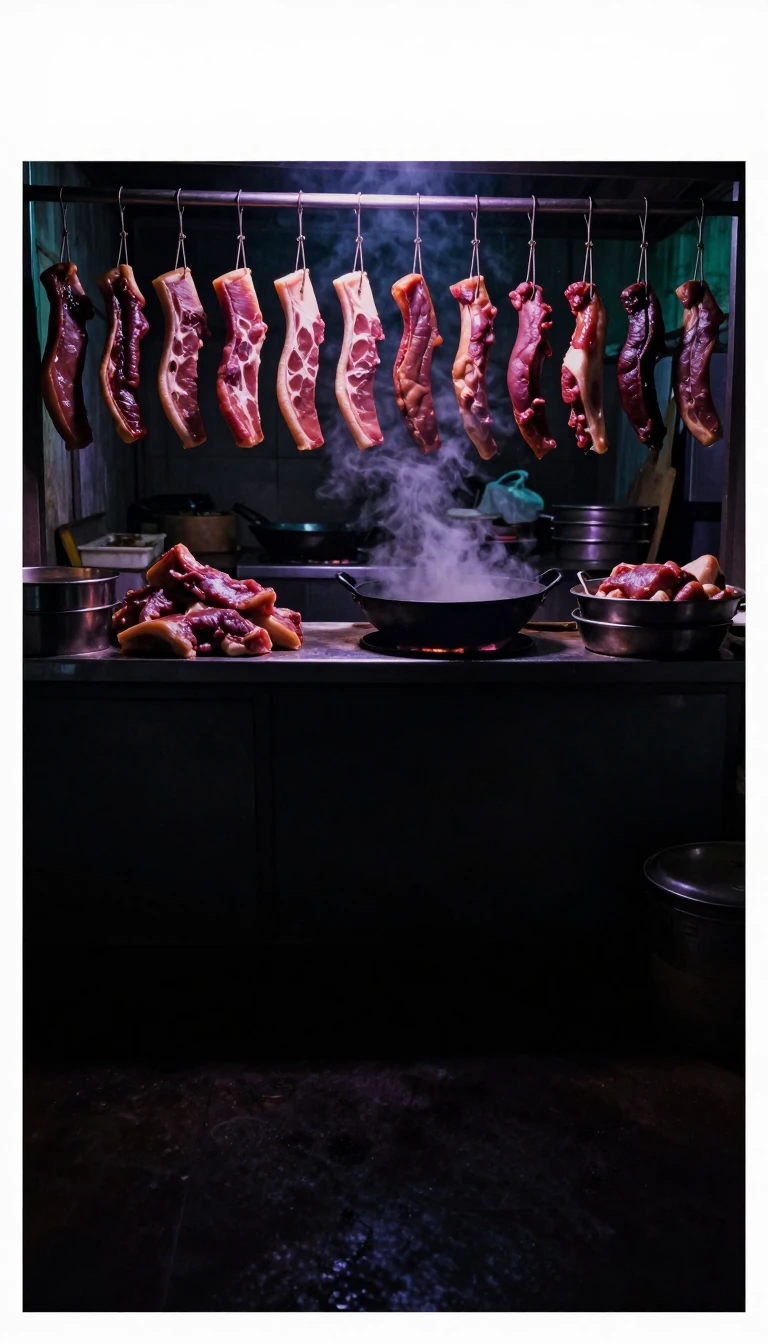 Chow mein just means stir-fried noodles, yet versions abroad look very differentThe name chow mein simply means stir-fried noodles, yet the dish has been reshaped country after country. American crispy and steamed styles differ, Newfoundland cooks use cabbage…
- A Catholic Armenian church follows Rome yet shares its liturgy with Armenian Apostolic cousinsThe Armenian Catholic Church recognises the bishop of Rome while keeping a liturgy older than its break with Armenian Apostolic tradition. Its story turns on a dispute over the 45…
- The name Lanka belongs to an epic fortress and to a real islandLanka is a name from the Hindu epics, where it was the island fortress capital of the king Ravana. The island now called Sri Lanka was long identified with that epic Lanka, and it…
- Whit Monday was a British bank holiday for a century before 1972Whitsun marks Pentecost, seven weeks after Easter. For generations it was one of the favourite holiday times of the year, with fairs, dances and new clothes for children. Its name…
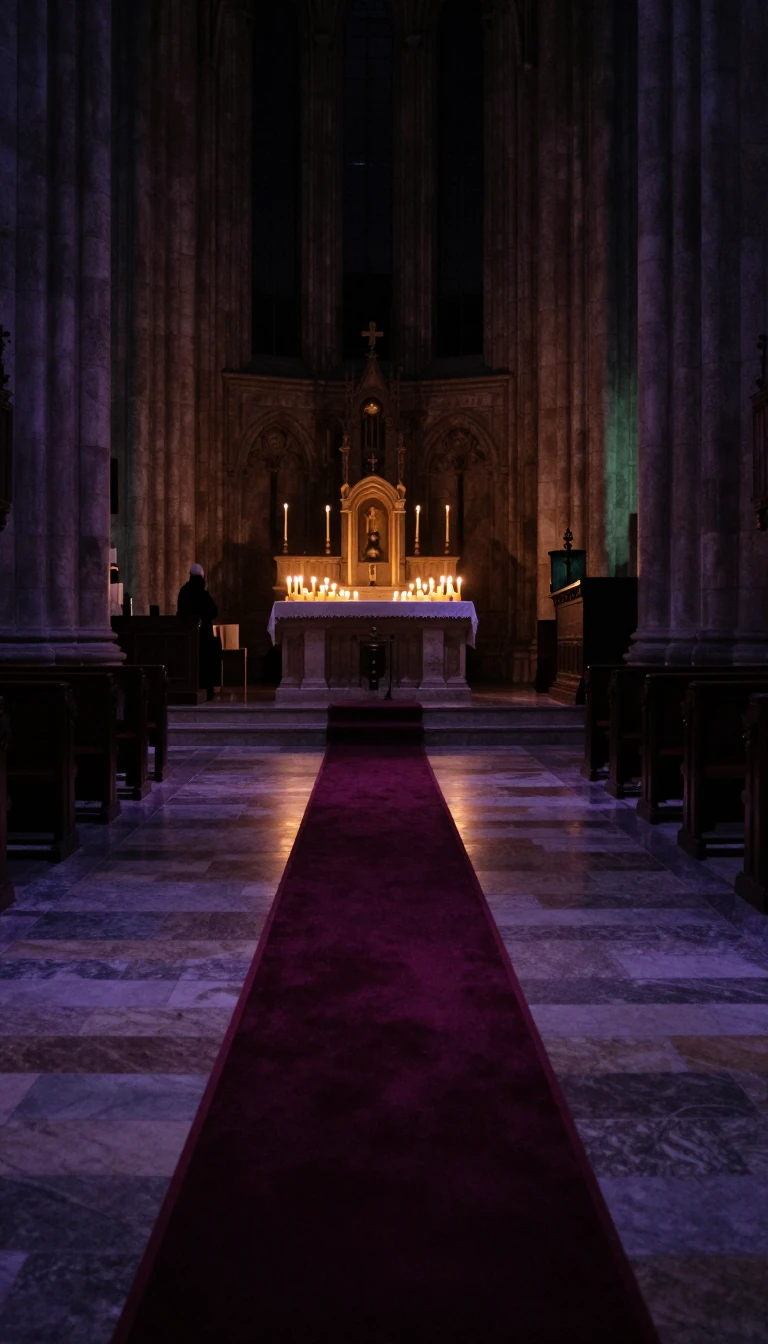 The Roman Mass is the most widespread liturgical rite in all of ChristianityFew rituals have traveled so far. The Roman Rite governs the Mass and the Liturgy of the Hours across the Latin Church, and it is now the most widely used liturgical rite in Chris…
- Somalis have shaped the Horn of Africa through clans, herding and Islam for centuriesSomalis are a people rooted in the Horn of Africa, united by a shared Cushitic language and a social world built on kinship groups. Their traditions grew from pastoral life, a lon…
- Timor-Leste has two official languages yet about 32 indigenous onesTimor-Leste is a small country with a remarkable linguistic mix. Its two official languages are Portuguese and Tetun, and an estimated 32 indigenous languages are also spoken. Som…
- In Thailand, kathoey are highly visible yet still lack legal recognitionIn Thailand, kathoey appear in television, pageants and village festivals, often more visibly than transgender people in many countries. Yet a separate legal category is missing, …
- A 2,400-year-old comedy stages a contest between dead tragedians for a throneAristophanes' comedy The Frogs took first place at an Athenian festival in 405 BC. In it, the god Dionysus travels to the underworld to bring a dead playwright back to life. Its c…
- Word of the day: kinetickinetic (adjective): relating to the motion of material bodies and the forces associated therewith.
- Lombard is a Romance language still spoken by millions in northern Italy and SwitzerlandMillions of people in northern Italy and southern Switzerland speak Lombard, a Romance language shaped by Celtic, Latin and Germanic influences. Its history runs from medieval adm…
- Danish and Norwegian share a 29-letter alphabet, yet the two spell differentlyDanish and Norwegian both use a Latin-based alphabet of 29 letters, and the last of them, å, arrived only in the twentieth century. Their spellings diverge in quiet ways, from how…
- Mahr: the bride wealth a Muslim bride keeps as her own propertyIn Islamic marriage, the groom gives the bride a mahr, a payment that is legally required and belongs to her alone. Unlike a dowry or bride price, it goes directly to the woman, n…
- One skullcap, many names: the taqiyah travels across the Muslim worldThe taqiyah is a small, rounded cap worn by Muslim men, yet it answers to many names. Across the Indian subcontinent it is a topi, in Turkmenistan a tahya, and in Malaysia a kopia…
 Bosnian names a citizenship, while ethnic labels carry a more contested pastIn Bosnia and Herzegovina, Bosnian describes everyone who holds citizenship, whatever their background. The largest ethnic groups share a common South Slav origin, and what sets t…
- Culture jamming turns corporate advertising against itself to provoke thoughtCulture jamming takes the look of mainstream advertising and bends it into critique. A logo gets edited, a billboard gets reworked, and suddenly the viewer is asked to examine the…
- Islam reached the Philippines in the 14th century through trade and missionariesIslam is the second largest religion in the Philippines, and it arrived well before Spanish colonists did. Traders, scholars and Sufi missionaries carried the faith along Southeas…
- Rangoli is a floor art that doubles as a welcome sign for good fortuneAcross India, women draw intricate patterns of colored powder, rice flour and flower petals at their front doors. These temporary designs are meant to fade, and they carry meaning…
- The Barelvi movement says it defends traditional Sunni Islam rather than founding a new sectMany Sunni Muslims in South Asia belong to a movement that calls itself Ahle Sunnat and rejects the label Barelvi. Its followers see themselves as defenders of older Sunni belief …
- Pradyumna survived being thrown into the ocean by swallowing fish in Hindu and Jain traditionIn Hindu tradition, the infant Pradyumna was hurled into the ocean by a demon who feared a prophecy. A large fish swallowed him whole, and he was later found alive inside it. His …
- Romandy is Switzerland's French-speaking region, and its name is surprisingly oldSwitzerland has four national languages, yet one region is defined by French. Romandy covers the French-speaking part of the country, home to about 2 million people, nearly a quar…
- Silat began as a warrior's self-defence art and is now also a sportSilat is a family of Southeast Asian fighting traditions whose movements often borrow from animals, plants and the human body. Malaysia alone counts more than 150 known styles. On…