Before television dominated our screens, radio drama was the world's most powerful visual medium.
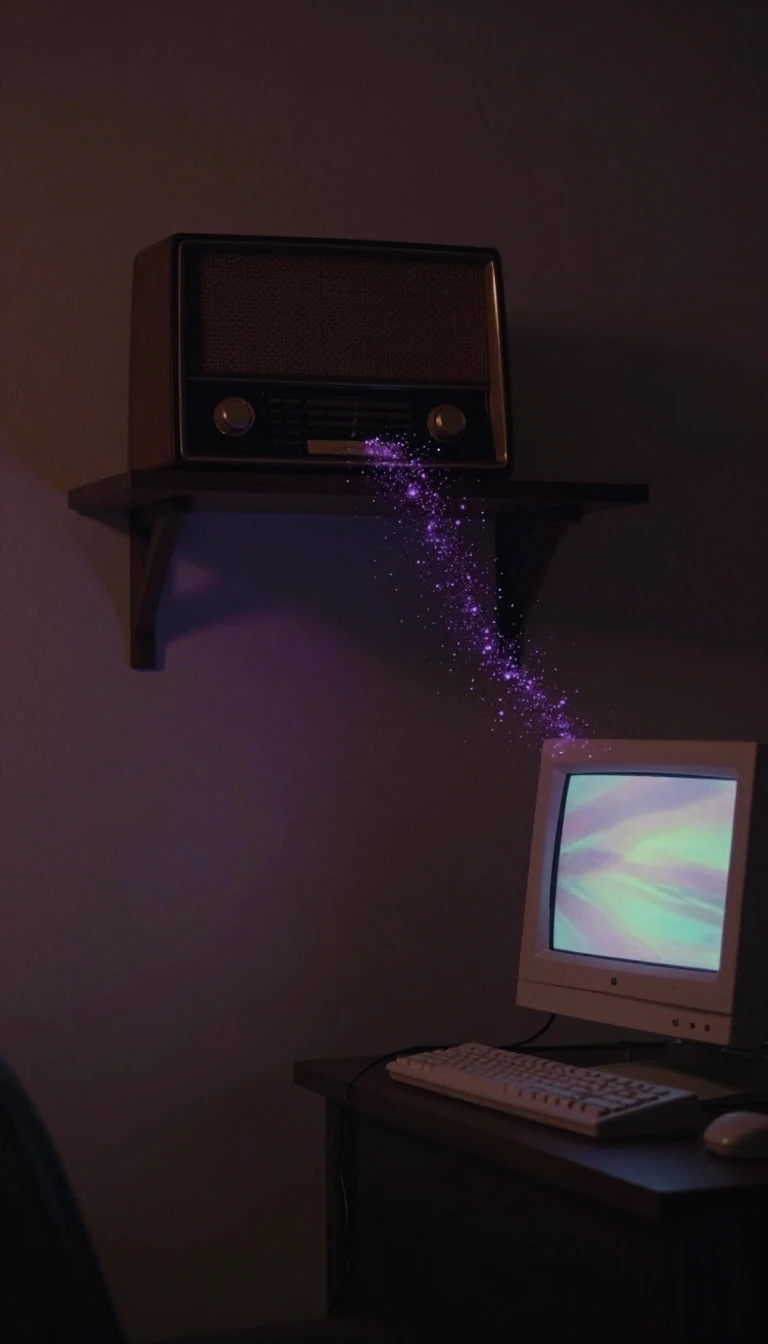
In short: Radio drama relies entirely on sound to build worlds, forcing listeners to construct characters and settings within their own minds. While television pushed this art form to the margins in the 1950s, digital technology and podcasting have recently sparked a global revival of this purely acoustic storytelling.
Radio drama is a performance medium that eschews visuals, relying instead on dialogue, music, and sound effects to trigger the listener's imagination. Though often associated with the 20th century, its roots stretch back to the Roman playwright Seneca, whose works were performed by readers as sound plays. The modern era of the medium began in the United States during the 1920s, with early experiments like the 1921 broadcast of A Rural Line on Education on Pittsburgh's KDKA. By the 1940s, it had become a dominant international entertainment format, reaching its zenith before the widespread adoption of television.
The BBC in the United Kingdom became a powerhouse for the medium, producing over 400 plays annually by the mid-1940s. Its programming ranged from high-brow classical adaptations to popular serials like The Archers, which remains the world's longest-running soap opera with over 18,400 episodes. The 1950s and 1960s marked a creative peak, serving as a launchpad for major playwrights including Caryl Churchill, Tom Stoppard, and Harold Pinter. Writers like Giles Cooper and Bill Naughton pioneered techniques specifically for the microphone, moving beyond simple stage adaptations to embrace the unique potential of audio.
In the United States, the medium faced a sharp decline after 1960, with major networks cancelling their dramatic programming. Despite sporadic efforts like the 1981 NPR adaptation of Star Wars, which boosted ratings by 40%, terrestrial radio drama largely faded. However, the rise of podcasting around 2010 transformed the landscape. By lowering production costs and enabling global distribution, digital platforms have allowed radio drama—now often called audio drama—to thrive once again. Today, it remains a vital training ground for writers, where the quality of the script is paramount because there is no stagecraft to hide poor dialogue.
Opens the Intellect+ feed with this card first. Swipe up for the next one.
Sources
- Summary by Intellect · source: Radio drama
To cite this card, link to https://intellectplus.co.uk/app/culture-radio-drama.
How we source, check and correct cards: Editorial standards.
General information, not professional advice. Spotted an error? Flag the card or see corrections and complaints.
Intellect Plus is a visual educational discovery platform for exploring fascinating facts and ideas. Brain Food, Not Brain Rot. What is Intellect Plus?
Related
More in Journalism and mass media · More in Cultures · Latest · A–Z · All topics
