Can a single missed train determine if you become a communist or a martyr?
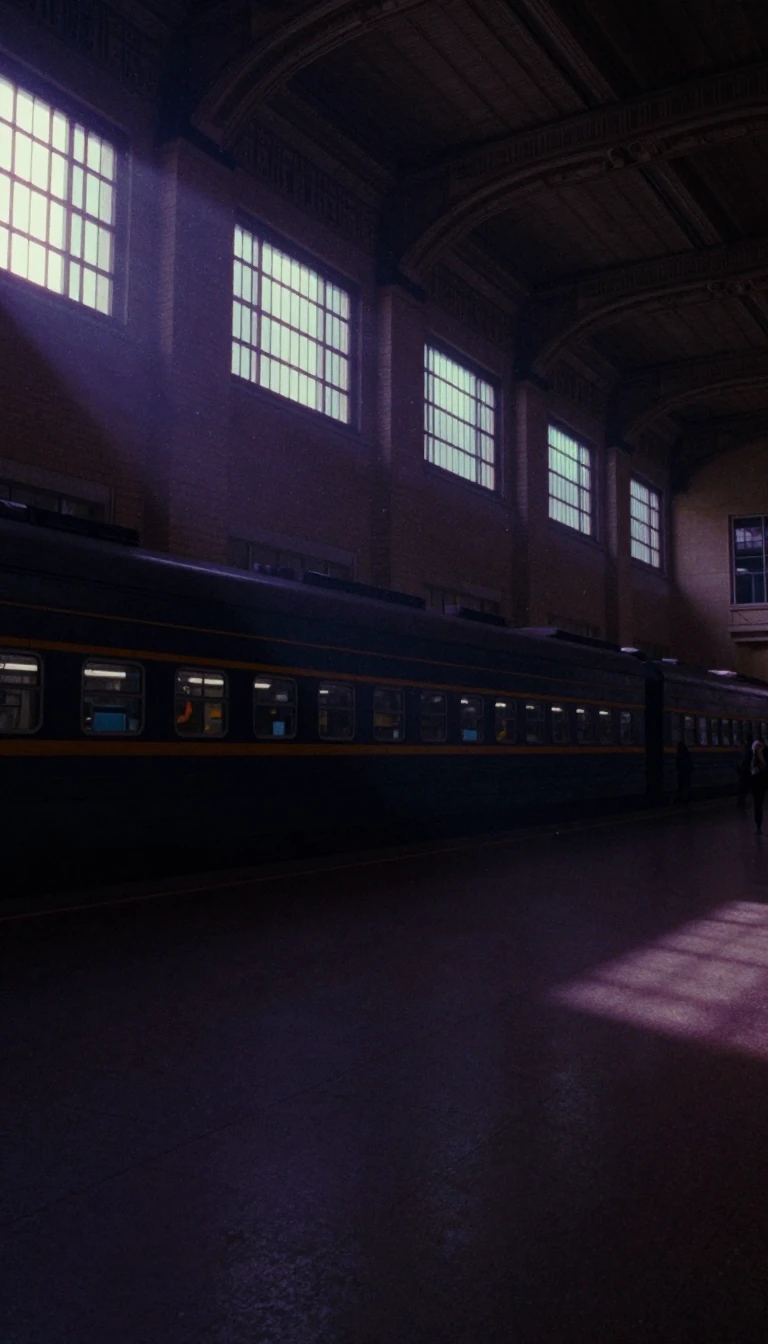
In short: In Krzysztof Kieślowski's 1981 masterpiece Blind Chance, a man's life pivots on a split-second encounter at a railway station. By exploring three divergent paths stemming from one ordinary moment, the film asks whether our identities are forged by deliberate choice or the cruel, arbitrary whims of fate.
Completed in 1981 but suppressed by Polish authorities until 1987, Blind Chance follows Witek, played by Bogusław Linda, as he attempts to board a train. The film presents three distinct life trajectories triggered by how Witek navigates a crowded platform. In the first, he catches the train, joins the Communist Party, and becomes entangled in political missions. In the second, he misses the train after an altercation, is arrested, and finds purpose within the anti-Communist resistance and religious faith. In the third, he misses the train but avoids conflict, choosing an apolitical life as a doctor, only to face a final, tragic irony.
Kieślowski’s narrative structure serves as a meditation on the intersection of personal agency and historical circumstance. While the protagonist’s character shifts—from communist to religious dissident to apolitical professional—the film remains deeply rooted in the specific political climate of Poland. Scholars like Paul Coates have noted that the film marries psychoanalytic themes, such as the impact of a father's death, with an East European reluctance to abandon humanism. This tension between the internal life of the individual and the external pressures of the state is central to the film’s philosophical weight.
The film’s influence on cinema is profound, with filmmakers like Agnieszka Holland noting that its concept of branching realities has been echoed in later works like Sliding Doors and Run Lola Run. However, critics argue that these successors often strip away the original's stylistic subtlety and depth. Unlike films that use the 'what if' scenario as a mere plot device, Kieślowski uses it to examine the fragility of existence. Whether Witek is a party member or a martyr, his life is ultimately subject to the same unpredictable forces, culminating in a conclusion that underscores the terrifying randomness of human destiny.
Opens the Intellect+ feed with this card first. Swipe up for the next one.
Sources
- Summary by Intellect · source: Blind Chance
- Also: Wikidata — Blind Chance · CC0
- Also: Wikidata — Blind chance? An investigation into the perceived probabilities of phrases used in oral radiology for expressing chance · CC0
To cite this card, link to https://intellectplus.co.uk/app/entertainment-blind-chance.
How we source, check and correct cards: Editorial standards.
General information, not professional advice. Spotted an error? Flag the card or see corrections and complaints.
Intellect Plus is a visual educational discovery platform for exploring fascinating facts and ideas. Brain Food, Not Brain Rot. What is Intellect Plus?
Related
More in Films · More in Entertainment · Latest · A–Z · All topics
