How removing milk solids transforms butter into a high-heat culinary staple
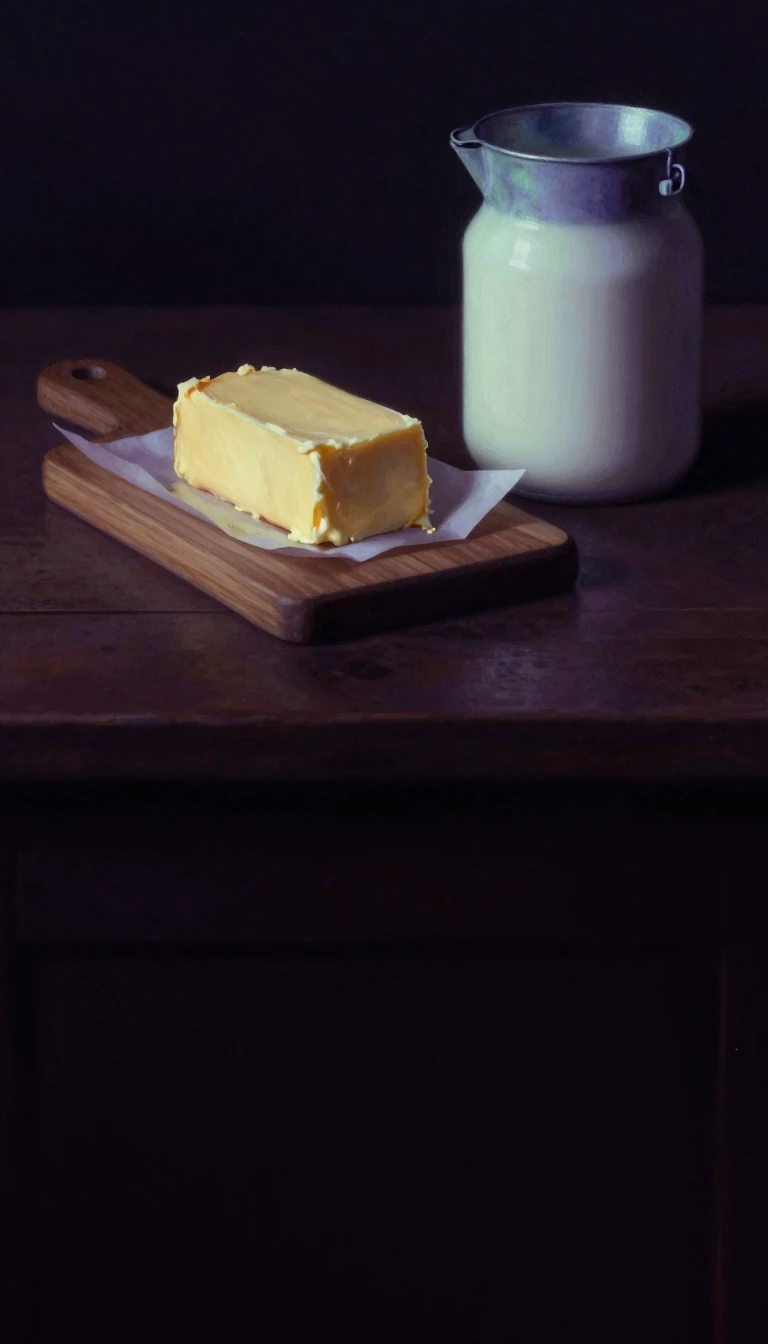
In short: Standard butter burns quickly because of its water and milk solid content. By separating these components, you create clarified butter—a golden fat with a significantly higher smoke point and longer shelf life that serves as a foundational ingredient in global cuisines from France to Ethiopia.
The transformation of butter into clarified butter is primarily a process of separation based on density. When butter is melted, it separates into three distinct layers: water evaporates, whey proteins float to the surface, and casein (milk solids) sinks to the bottom. By skimming off the top and pouring off the remaining butterfat from the bottom, you are left with a clear, yellow fat. This process removes most of the lactose and casein, making it suitable for individuals with specific dairy sensitivities while also extending its shelf life by removing moisture that typically leads to rancidity.
Because it lacks these solids, clarified butter possesses a much higher smoke point—reaching 252 °C (486 °F) compared to the 163–191 °C (325–376 °F) range of regular butter. This makes it an essential tool for high-heat techniques like sautéing, as well as a core component in classic French sauces such as béarnaise and hollandaise. While many are familiar with the basic clarified version, various cultures have developed sophisticated variations by manipulating the separation process.
Global culinary traditions demonstrate how these chemical properties can be refined for specific flavors. In the Indian subcontinent, ghee is produced by cooking the butter longer during clarification to caramelize the solids into a nutty flavor before filtering them out. Conversely, in Ethiopia, niter kibbeh is seasoned during the clarifying process. Other regional variations include Smen—a salted, fermented clarified butter from North Africa and the Middle East—and unique Yemeni customs where roasted wheat kernels or fenugreek seeds are simmered with the butter to add depth of flavor.
Historically, clarification served as a vital preservation method. In Normandy, France, it allowed for the long-distance export of butter, while in parts of Croatia, it enabled storage at room temperature. Modern industrial production has moved beyond simple stovetop melting; commercial methods now include direct evaporation, centrifugation, and vacuum drying to achieve consistent results on a large scale.
Opens the Intellect+ feed with this card first. Swipe up for the next one.
Sources
- Summary by Intellect · source: Clarified butter
To cite this card, link to https://intellectplus.co.uk/app/food-clarified-butter.
How we source, check and correct cards: Editorial standards.
General information, not professional advice. Spotted an error? Flag the card or see corrections and complaints.
Intellect Plus is a visual educational discovery platform for exploring fascinating facts and ideas. Brain Food, Not Brain Rot. What is Intellect Plus?
Related
More in Cooking, food and drink · More in Food & Drink · Latest · A–Z · All topics
