Why the 0-6-0 locomotive became the workhorse of the industrial age
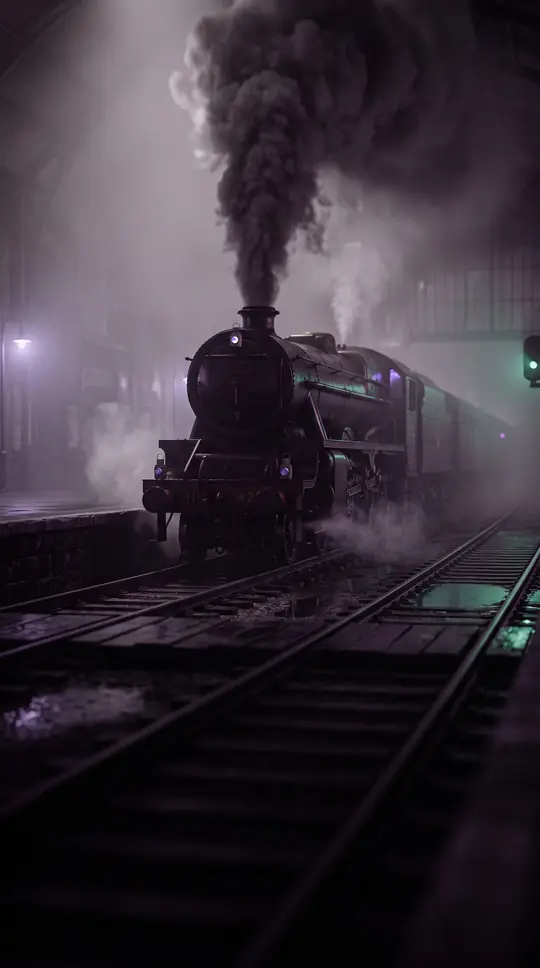
In short: With no leading or trailing wheels, the 0-6-0 locomotive concentrates its entire weight on its driving wheels. This design creates exceptional tractive effort and adhesion, making it a powerful, compact engine. While less stable at high speeds, it became the definitive choice for freight, switching, and short-distance branch line operations.
The 0-6-0 designation, based on Whyte notation, describes a steam locomotive featuring six powered driving wheels arranged on three axles, with no unpowered leading or trailing wheels. This configuration was historically the most common wheel arrangement for both tender and tank locomotives. Because the engine's entire weight rests directly on the driving wheels, it delivers high tractive effort relative to its size and fuel consumption. However, the absence of leading wheels limits its stability at high speeds, confining its use primarily to freight and shunting duties where velocity is secondary to raw pulling power.
Early 0-6-0 designs, such as The Duke built by George Stephenson in 1817, utilized outside cylinders for ease of construction. As engineering progressed, designers addressed the issue of broken crank axles, leading to the adoption of inside cylinders for improved stability. By the mid-1850s, tank engine versions were being built in quantity, becoming ubiquitous by the mid-1860s. These engines proved indispensable in diverse environments, from the dockyards and goods yards of the United Kingdom to the sugarcane plantations of the Philippines and the Dutch East Indies, where they hauled heavy freight across short and medium distances.
The versatility of the 0-6-0 extended globally, with specific adaptations for local infrastructure. In the Dutch East Indies, for instance, locomotives like the NIS Class 250 utilized the Golsdorf wheel movement system, allowing wheels to shift laterally to navigate sharp bends. Meanwhile, in New Zealand, the F class became the most prolific 0-6-0 tank engine, surviving throughout the entire era of national steam operations. Whether serving as yard shunters or hauling mixed freight, the 0-6-0 remained a fundamental component of rail networks for over a century, proving that a simple, robust design could outlast more complex, high-speed alternatives.
The legacy of these machines persists in preserved collections worldwide. From the Finnish Railway Museum, which houses the 1869 Class C1, to the heritage services in the Philippines, these locomotives offer a window into the mechanics of 19th and 20th-century industry. Despite the eventual transition to diesel and electric power, the 0-6-0 remains a testament to the efficiency of specialized engineering, having served as the backbone of global freight transport for decades.
Opens the Intellect+ feed with this card first. Swipe up for the next one.
Sources
- Summary by Intellect · source: 0-6-0
To cite this card, link to https://intellectplus.co.uk/app/health-0-6-0.
How we source, check and correct cards: Editorial standards.
General information, not professional advice. Spotted an error? Flag the card or see corrections and complaints.
Intellect Plus is a visual educational discovery platform for exploring fascinating facts and ideas. Brain Food, Not Brain Rot. What is Intellect Plus?
