Beyond Emotions: Decoding the Precise Mechanics of Every Facial Twitch
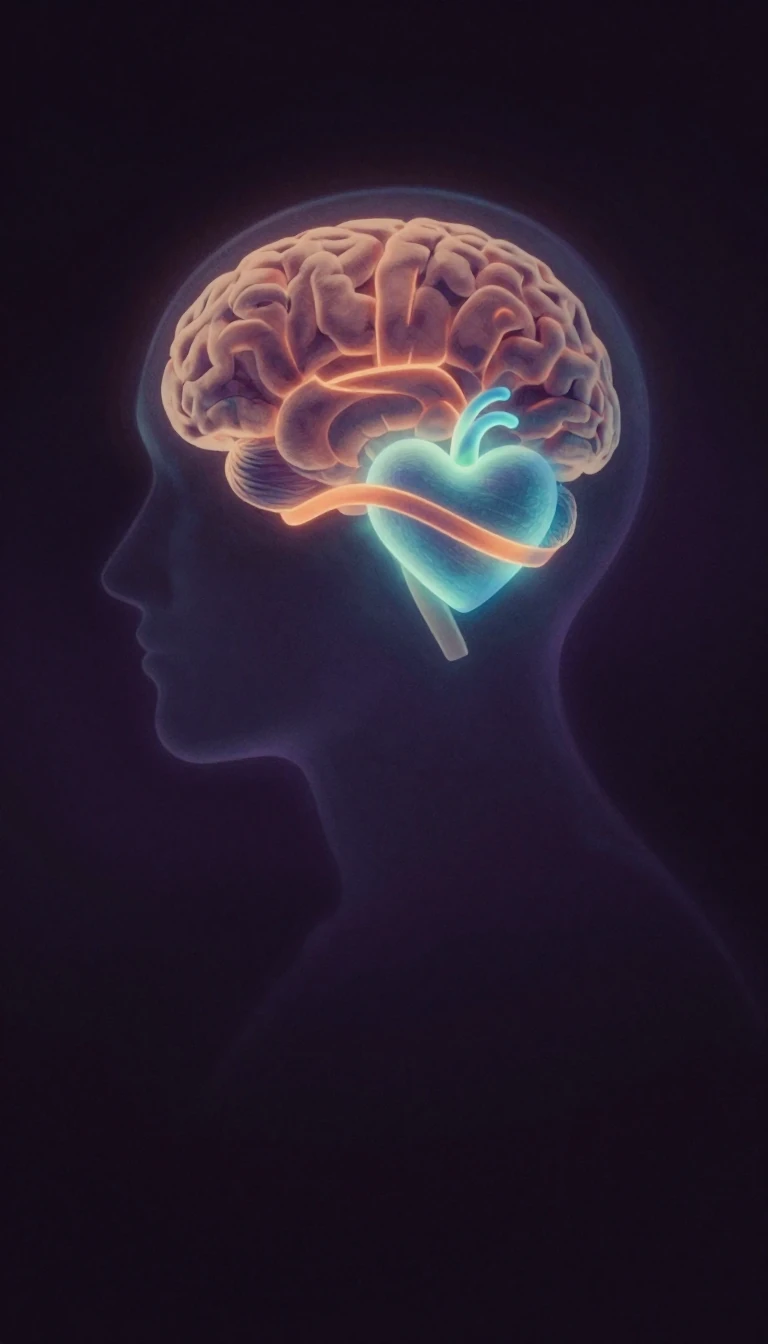
In short: Most people see a smile or a frown as a single emotion. However, scientists use a system to decode faces into a complex choreography of muscle contractions. By breaking down movements into independent Action Units, researchers can identify subtle facial nuances that standard emotional labels often fail to capture.
The Facial Action Coding System (FACS), first published in 1978 by Paul Ekman and Wallace V. Friesen, moves beyond subjective labels like "happy" or "sad." Instead, it treats facial expressions as a series of independent muscle movements called Action Units (AUs). Because AUs are anatomically based rather than emotionally interpreted, they allow researchers to decode ambiguous or subtle expressions that don't fit into prototypical categories. This makes FACS a vital tool for analyzing neuropsychiatric disorders, where patients may exhibit "flattened" or "inappropriate" affect that standard emotional ratings might miss.
The system is so precise it can distinguish between a voluntary, insincere "Pan-Am" smile (zygomatic major muscle only) and a sincere, involuntary "Duchenne" smile (zygomatic major plus the inferior part of the orbicularis oculi). This level of granularity has been used to study the characteristics of pain in non-verbal patients, identify signs of depression, and even distinguish genuine from fake smiles in various studies. It is even used to analyze the facial expressions of infants (Baby FACS) and other species, such as chimpanzees, bonobos, and gorillas.
Despite its precision, FACS has a significant hurdle: it is notoriously difficult to use. Human coding requires extensive training, is time-consuming, and remains prone to subjective bias. To solve this, researchers are developing automated systems that use computer science to track faces in videos, extract geometric and texture features, and produce temporal profiles of muscle movements. These automated tools allow for high-throughput analysis of large populations, providing objective quantification of symptom severity in conditions like schizophrenia and Asperger's syndrome without the need for a human expert to watch every second of footage.
theme_key_case_theme-mechanisms mood-reflective difficulty-3 topics-["neuroscience", "facial-recognition", "psychology"]
claims-["FACS encodes movements of individual facial muscles as Action Units (AUs)", "FACS was published in 1978 by Ekman and Friesen", "A Duchenne smile involves the zygomatic major and inferior orbicularis oculi", "Automated FACS can quantify 'flatness' and 'inappropriateness' in schizophrenia patients", "GorillaFACS identified 28 AUs in gorillas, a number comparable to the 32 AUs in HumanFACS"]
canvas-type-data canvas-data-title-Facial Movement Repertoires in Primates canvas-data-series-["Bonobos", "22 AUs (plus 3 Action Descriptors and 3 Ear Action Descriptors)", "S2:p2", "Gorillas", "28 AUs and 14 Action Descriptors", "S4:p1"] canvas-data-insight-The data shows that while gorillas and bonobos have diverse facial repertoires, their total number of Action Units is comparable to the human system.
Opens the Intellect+ feed with this card first. Swipe up for the next one.
Sources
- Summary by Intellect · source: Automated Facial Action Coding System for Dynamic Analysis of Facial Expressions in Neuropsychiatric Disorders - PMC
- Also: Facial Action Coding System
- Also: GorillaFACS: The Facial Action Coding System for the Gorilla spp.
To cite this card, link to https://intellectplus.co.uk/app/health-facial-action-coding-system.
How we source, check and correct cards: Editorial standards.
General information, not professional advice. Spotted an error? Flag the card or see corrections and complaints.
Intellect Plus is a visual educational discovery platform for exploring fascinating facts and ideas. Brain Food, Not Brain Rot. What is Intellect Plus?
Related
More in Memory · More in Health · Latest · A–Z · All topics
