Royal jelly is the biological switch that turns ordinary bee larvae into fertile queens.
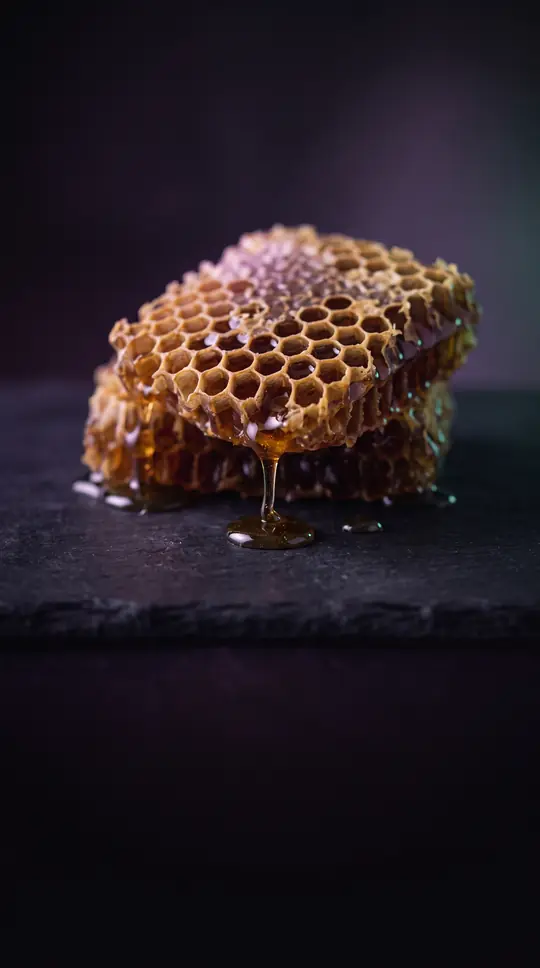
In short: In the hive, royal jelly is more than just food; it is a powerful epigenetic tool. By feeding larvae this secretion, nurse bees trigger a developmental cascade that transforms a genetically identical larva into a long-lived, fertile queen rather than a sterile worker. It is nature's ultimate biological switch.
Royal jelly is a glandular secretion produced by nurse bees to nourish larvae. While all larvae receive it initially, only those destined to become queens are fed the substance throughout their entire development. This continuous feeding triggers a profound phenotypic shift, resulting in a queen with fully developed ovaries and a significantly longer lifespan compared to the sterile worker caste. This process is a classic example of environmentally controlled polymorphism, where identical DNA produces vastly different adult forms based on nutritional input.
The mechanism behind this transformation is rooted in epigenetics. Research indicates that royal jelly, specifically a protein called royalactin, influences DNA methylation—a chemical modification that regulates gene expression. When scientists silenced the enzyme responsible for this methylation in newly hatched larvae, the bees developed into queens even without the royal jelly diet. This suggests that the jelly acts as a nutritional signal that alters the epigenetic landscape, effectively unlocking the queen developmental pathway.
Despite its biological potency in the hive, the human health benefits of royal jelly remain unproven. Regulatory bodies like the European Food Safety Authority have found no evidence to support health claims for human consumption, and the FDA has taken action against companies marketing it with unfounded promises. Furthermore, it carries risks, including potential allergic reactions ranging from hives to fatal anaphylaxis. While some laboratory studies, such as those on human epidermal keratinocytes, explore its potential as a senomorphic agent to reduce inflammation, these findings do not translate to proven clinical benefits for human health.
Harvesting royal jelly is a labor-intensive process because it is only practical to collect from queen cells, where it is deposited in excess. A well-managed hive may produce only about 500 grams in a season. Because it is highly perishable, it requires immediate refrigeration to maintain its integrity. Whether used in cosmetics or sold as a supplement, royal jelly remains a fascinating subject of biological study, even if its reputation as a human health miracle is largely unsupported by rigorous evidence.
Opens the Intellect+ feed with this card first. Swipe up for the next one.
Sources
- Summary by Intellect · source: Royal jelly
- Also: Molecular biology reports — Royal jelly suppresses senescence-associated secretory phenotype in senescent human epidermal keratinocytes. · CC BY
- Also: Molecules (Basel, Switzerland) — In-Depth Biological Activities, Chemical Profiling by LC-MS/MS of Mersin, Türkiye Bee Products (Pollen, Honey, Propolis, Royal Jelly and Bee Bread). · CC BY
To cite this card, link to https://intellectplus.co.uk/app/health-royal-jelly.
How we source, check and correct cards: Editorial standards.
General information, not professional advice. Spotted an error? Flag the card or see corrections and complaints.
Intellect Plus is a visual educational discovery platform for exploring fascinating facts and ideas. Brain Food, Not Brain Rot. What is Intellect Plus?
Related
More in Anatomy and morphology · More in Health · Latest · A–Z · All topics
