Akhenaten built a desert capital in five years, only to have it abandoned shortly after.
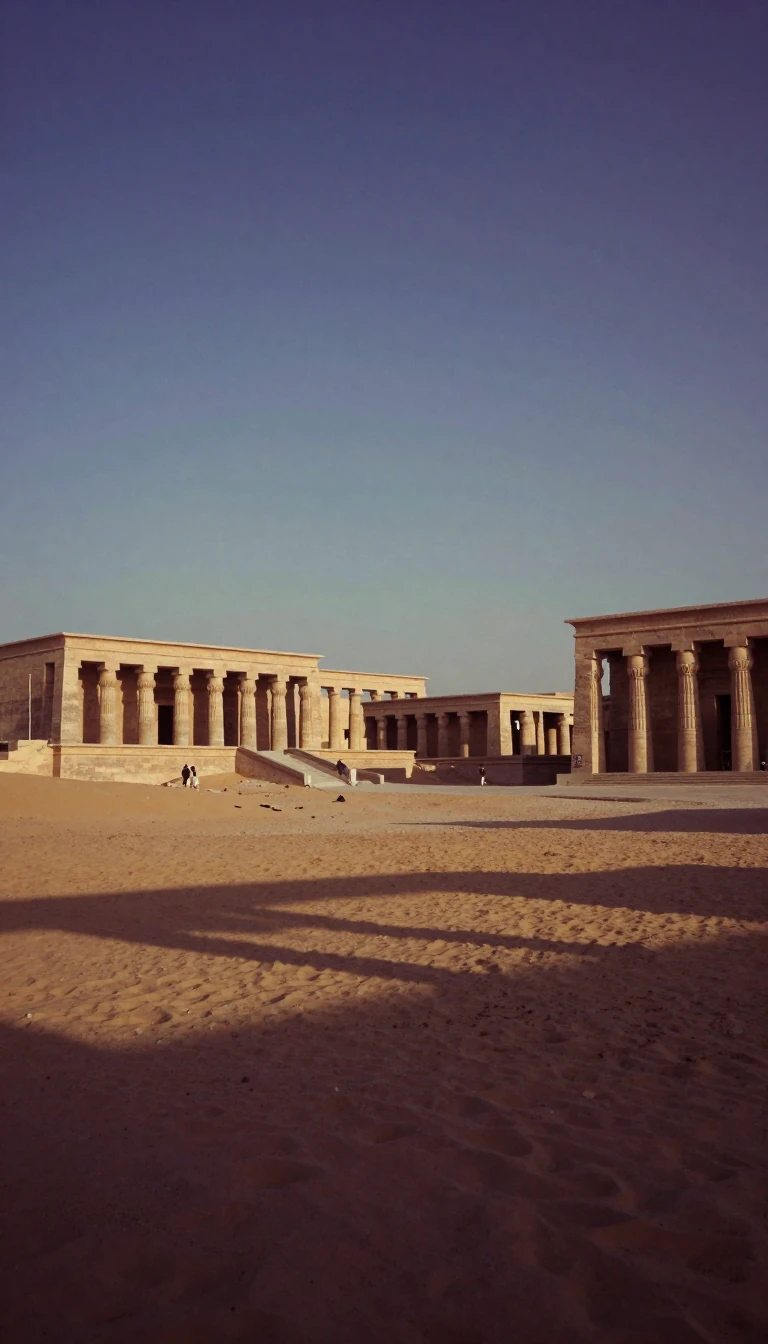
In short: In 1346 BC, Pharaoh Akhenaten founded Akhetaten, a sprawling city dedicated to the sun god Aten. Built hastily from mudbrick, this short-lived capital served as the center of a radical religious shift. Though the city was abandoned after his death, its ruins offer unparalleled insight into ancient Egyptian life.
Established in Year 5 of Akhenaten's reign, the city of Akhetaten—now known as Amarna—was a monumental project constructed on the east bank of the Nile. The site was chosen for its unique geography, as the Royal Wadi’s shape resembled the hieroglyph for the horizon. To expedite construction, builders relied on mudbrick and whitewash, reserving stone only for the most significant structures. The city was defined by its Royal Road, connecting northern palaces to a central administrative hub and southern residential suburbs.
The city functioned as the heart of Akhenaten’s new religious order, which prioritized the worship of the Aten. While often described as a form of monotheism, archaeological evidence suggests a more complex reality. Excavations by Barry J. Kemp and others have uncovered numerous objects depicting traditional deities like Bes and Taweret, indicating that residents continued to practice personal, non-official forms of belief alongside the state-mandated cult. This tension between royal decree and daily life remains a central point of study for modern Egyptologists.
Amarna’s rapid decline followed the death of Akhenaten in 1332 BC. After the royal government under Tutankhamun returned to Thebes, the city was largely deserted, though it saw limited occupation during the reign of Horemheb. Its abandonment preserved the city's internal layout in remarkable detail, providing a rare snapshot of an ancient urban center. Today, the site is famous for the 1887 discovery of the Amarna Letters—over 300 cuneiform tablets documenting diplomatic exchanges—and the 1912 discovery of the iconic bust of Nefertiti in the sculptor Thutmose’s workshop.
The legacy of Amarna extends beyond its ruins, particularly through its distinct art style. Breaking from the rigid formalism of earlier periods, Amarna art embraced realism, depicting the royal family in intimate, informal scenes. Although the city itself was eventually reclaimed by the desert and later Roman-era settlers, these artistic innovations and the site's unique preservation continue to shape our understanding of the Eighteenth Dynasty.
Opens the Intellect+ feed with this card first. Swipe up for the next one.
Sources
- Summary by Intellect · source: Amarna
To cite this card, link to https://intellectplus.co.uk/app/history-amarna.
How we source, check and correct cards: Editorial standards.
General information, not professional advice. Spotted an error? Flag the card or see corrections and complaints.
Intellect Plus is a visual educational discovery platform for exploring fascinating facts and ideas. Brain Food, Not Brain Rot. What is Intellect Plus?
Related
More in Post-classical · More in History · Latest · A–Z · All topics
