The Mystery of Dacia: Why We May Never Know How an Ancient Language Sounded
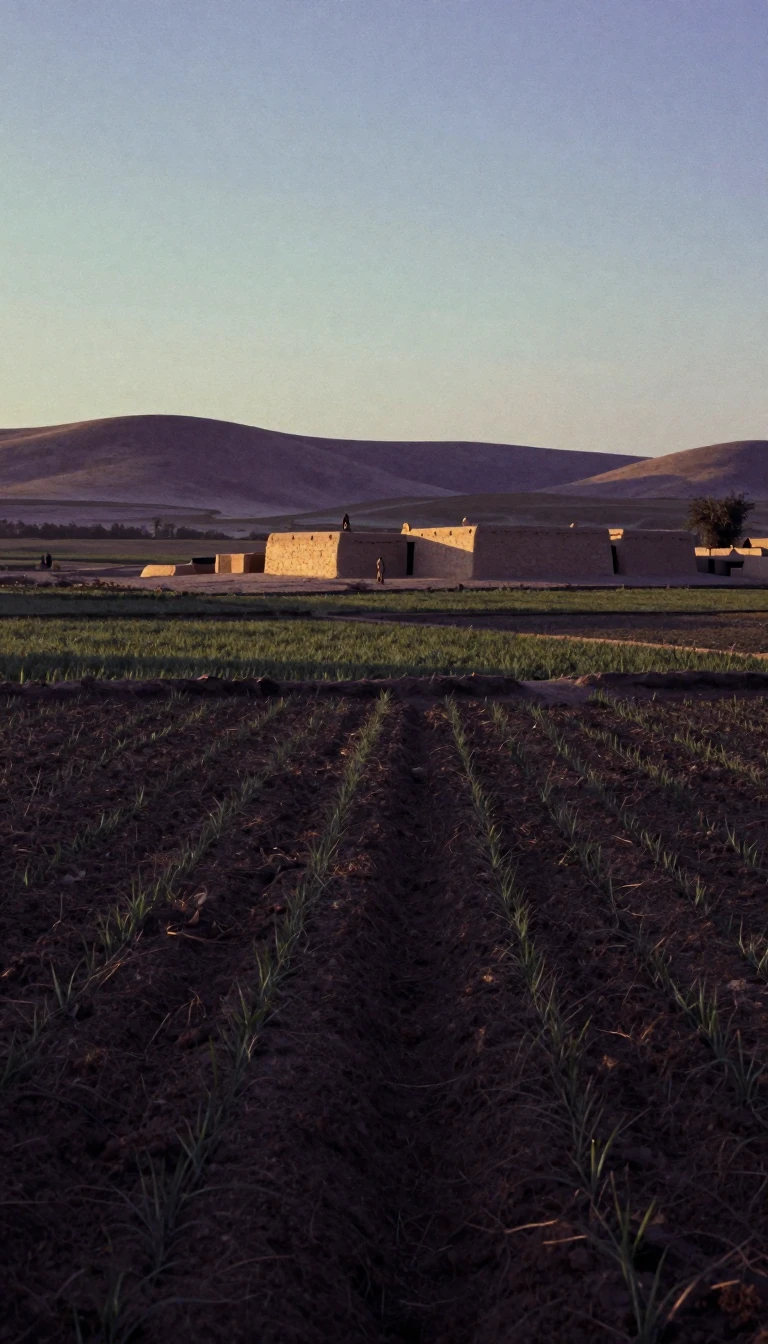
In short: Dacian was once the language of a powerful Carpathian civilization, yet it remains a linguistic ghost. With no surviving texts and only a handful of plant names and toponyms to study, scholars are left to debate whether it was a distinct branch of Indo-European or merely a dialect of Thracian.
The Dacian language is notoriously poorly documented. Unlike Phrygian, which left behind roughly 200 inscriptions, not a single authentic Dacian-language text has ever been discovered. Our entire understanding of the language relies on fragments: about 50 medicinal plant names recorded by ancient Greek and Roman writers, alongside approximately 1,150 personal names and 900 toponyms. Because these were transcribed into Greek or Latin—alphabets that lacked specific signs for many indigenous phonemes—the true phonetic structure of Dacian remains a subject of intense, often circular, academic speculation.
The central debate in the field concerns the relationship between Dacian and Thracian. One school of thought, supported by historians like Strabo, argues that these languages were so closely related they formed a single 'Thraco-Dacian' continuum. Conversely, linguists like Vladimir I. Georgiev have argued that they were as distinct as Armenian and Persian. Georgiev pointed to the 'dava' versus 'para' divide in placename suffixes—where Dacia used 'dava' for strongholds and Thrace used 'para' for settlements—as evidence of a fundamental linguistic split. However, critics note that these patterns are inconsistent and may simply reflect regional dialectal variation rather than separate branches of the Indo-European family.
The mystery extends to the origins of modern Romanian. Many scholars have long hypothesized that Dacian serves as the primary linguistic substratum for Romanian, potentially accounting for about 10% of its basic vocabulary. Yet, this theory faces significant hurdles. Words like 'brânză' (cheese) or 'balaur' (dragon) are often cited as potential Dacian survivors, but there is no definitive proof. Many of these terms could just as easily be loanwords from Albanian or Slavic, or even inherited from Latin. Ultimately, the lack of written records from the period between the Roman withdrawal around 300 AD and the 1300s leaves the evolution of the region's speech largely in the realm of conjecture.
Opens the Intellect+ feed with this card first. Swipe up for the next one.
Sources
- Summary by Intellect · source: Dacian language
To cite this card, link to https://intellectplus.co.uk/app/history-dacian-language.
How we source, check and correct cards: Editorial standards.
General information, not professional advice. Spotted an error? Flag the card or see corrections and complaints.
Intellect Plus is a visual educational discovery platform for exploring fascinating facts and ideas. Brain Food, Not Brain Rot. What is Intellect Plus?
Related
More in Ancient · More in History · Latest · A–Z · All topics
