Was the last great Viking king actually a Byzantine mercenary who loved gold?
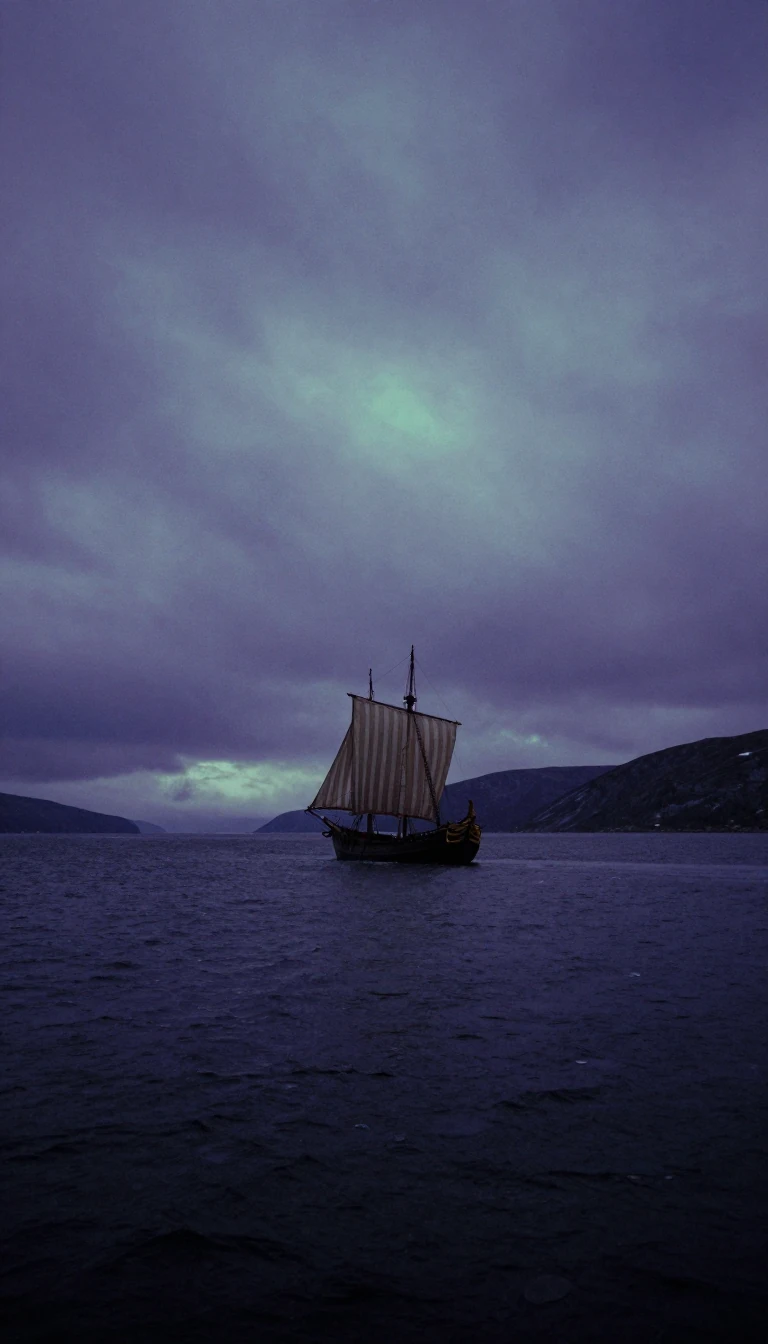
In short: Harald Hardrada spent decades as a legendary commander in the Byzantine Varangian Guard before returning to Norway with a fortune that literally unbalanced his ship. Known as the Thunderbolt of the North, his death in 1066 is often cited by historians as the definitive end of the Viking Age.
Born in 1015 to a petty king in Ringerike, Harald Sigurdsson was a restless youth who fought alongside his half-brother, Saint Olaf, at the Battle of Stiklestad in 1030. Following their defeat, he fled to Kievan Rus', where he served Grand Prince Yaroslav the Wise. By 1034, he had moved to Constantinople, rising to command the elite Varangian Guard. His service took him across the Mediterranean, Asia Minor, and Bulgaria, where he earned the nickname 'Bulgar-burner' and participated in eighteen major battles.
Harald’s time in the Byzantine Empire was defined by immense wealth and political intrigue. He allegedly participated in three instances of 'palace-plunder' during imperial successions and served under emperors like Michael IV. After a falling out with the imperial court, he escaped Constantinople by maneuvering his ship over the city's defensive iron chains. He returned to Norway in 1045, his vessel reportedly weighed down by so much gold that it sat unevenly in the water. This fortune allowed him to secure the Norwegian throne, first as a co-ruler with Magnus the Good, and later as sole king.
As king, Harald sought to recreate Cnut the Great’s North Sea Empire, spending nearly two decades in constant, violent raids against Denmark. His reign also saw the introduction of a royal coin monopoly, centralizing economic power. His ambition ultimately led him to England in 1066 at the invitation of Tostig Godwinson. After a victory at Fulford, his forces were decimated at the Battle of Stamford Bridge on 25 September 1066. While later sagas dubbed him 'Hardrada'—often translated as 'severe' or 'hard-ruler'—earlier sources suggest he may have preferred the epithet 'Fairhair', a title later historians suspect was retroactively stripped from him to bolster the legitimacy of earlier, potentially mythical, Norwegian kings.
The historical legacy of Harald is complicated by the gap between contemporary accounts and later Icelandic sagas. While Snorri Sturluson’s 13th-century writings provide the most vivid details of his life, modern scholars warn that these texts often reflect the political agendas of their own time. Despite the uncertainty surrounding his epithets and genealogy, Harald remains a singular figure: a man who bridged the worlds of the Byzantine East and the Viking North, dying just weeks before the Norman Conquest transformed England forever.
Opens the Intellect+ feed with this card first. Swipe up for the next one.
Sources
- Summary by Intellect · source: Harald Hardrada
To cite this card, link to https://intellectplus.co.uk/app/history-harald-hardrada.
How we source, check and correct cards: Editorial standards.
General information, not professional advice. Spotted an error? Flag the card or see corrections and complaints.
Intellect Plus is a visual educational discovery platform for exploring fascinating facts and ideas. Brain Food, Not Brain Rot. What is Intellect Plus?
Related
More in UK & Ireland: history · More in History · Latest · A–Z · All topics
