Ecology began as a study of household management before becoming a global science.
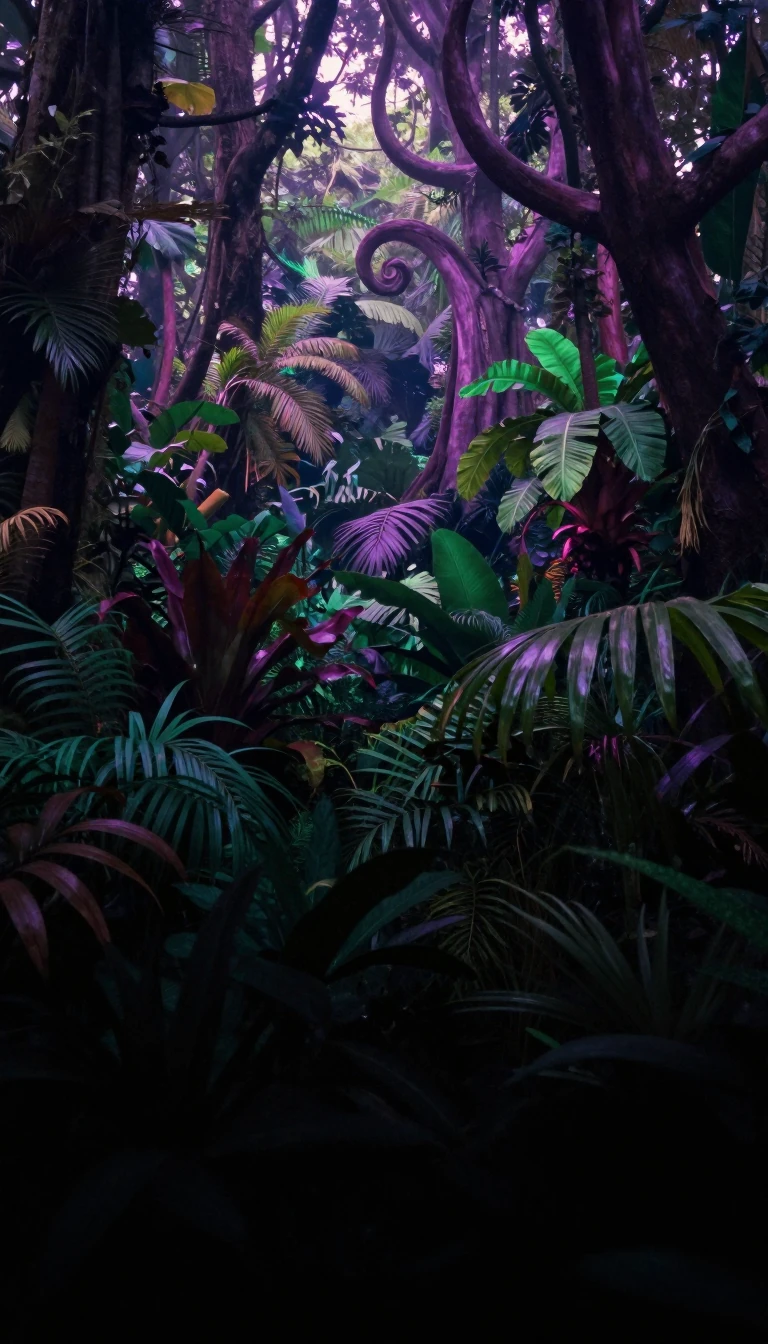
In short: The term ecology comes from the Greek oikos, meaning household. Coined by Ernst Haeckel, it originally described the relationship between animals and their surroundings. What started as ancient natural history has evolved into a complex study of energy flow, population dynamics, and the delicate balance of our planet's ecosystems.
Ecology lacks a single, firm starting point, tracing its lineage back to the natural history of the ancient Greeks. Theophrastus, an associate of Aristotle, is credited with the first descriptions of how organisms relate to one another and their nonliving environment. For centuries, this inquiry remained fragmented, with plant and animal studies often proceeding along separate paths.
The discipline gained significant momentum in the early 19th century when Thomas Malthus highlighted the tension between expanding human populations and Earth's finite food supply. This sparked a rigorous mathematical turn in the 1920s, led by figures like Raymond Pearl, Alfred J. Lotka, and Vito Volterra. Their work established foundations for understanding predator-prey interactions, competition, and the mechanisms that regulate population sizes.
By the mid-20th century, ecology shifted toward systems-level analysis. Researchers like August Thienemann and Charles Elton introduced concepts of trophic levels and energy pyramids, while Raymond L. Lindeman later formalized the trophic-dynamic view of energy flow. The advent of modern tools—such as radioisotope tracers and computer modeling—eventually enabled scientists to quantify the movement of nutrients and energy, transforming ecology into the study of complex, interconnected systems.
Today, ecology addresses some of the most urgent challenges in human affairs, from global warming and pollution to mass extinctions. By viewing the environment as a biotic whole, the field has moved beyond mere observation to provide a critical framework for understanding how human activity influences the biosphere, proving that our political and social problems are, at their core, ecological.
Opens the Intellect+ feed with this card first. Swipe up for the next one.
Sources
- Summary by Intellect · source: Ecology | Biodiversity, Ecosystems & Conservation | Britannica
- Also: History of ecology
To cite this card, link to https://intellectplus.co.uk/app/history-history-of-ecology.
How we source, check and correct cards: Editorial standards.
General information, not professional advice. Spotted an error? Flag the card or see corrections and complaints.
Intellect Plus is a visual educational discovery platform for exploring fascinating facts and ideas. Brain Food, Not Brain Rot. What is Intellect Plus?
Related
More in History by topic · More in History · Latest · A–Z · All topics
