 Intellect Plus
History by topic
216 cards. Each one is a 40-second story with a five-minute read behind it.
 The Pirc Defence: A hypermodern gamble on the fringes of chessIn the world of chess, some players prefer to let their opponents take the center before striking back from the shadows. The Pirc Defence is a masterclass in this 'hypermodern' ph…
 How your brain and computers turn moving pictures into 3D worldsHumans perceive depth by moving around objects, watching how they shift against the background. This biological trick, known as motion parallax, is the fundamental principle behin…
 The manager who never played a single professional gameMike Shildt reached the pinnacle of Major League Baseball without ever playing a single professional game. From high school coaching to leading the St. Louis Cardinals to a Manage…
 A mountain range where a Hindu god and a Sufi saint are oneIn the Western Ghats of India, a single cave serves as a sanctuary for two seemingly different faiths. Here, the 11th-century Sufi mystic Dada Hayath and the Hindu deity Dattatrey…
 The complex tonal architecture of the Fon languageIn the Fon language, a single word can shift its entire meaning based on the rise and fall of your voice. Beyond simple melody, these tones follow rigorous phonological rules—wher…
- The city named for a well and a lost toothBeed is a city of deep contradictions, where legends of celestial wars meet the gritty reality of medieval engineering. From a fortress built by Yadava rulers to a site where an e…
 A medieval brawl for gold that survived 800 years of bansEvery Shrove Tuesday, the town of Atherstone transforms into a chaotic arena. This medieval tradition began in 1199 as a violent competition for a bag of gold. Today, participants…
 Is mansplaining a gendered behavior or a perception of power?The term mansplaining has become a staple of modern discourse, yet research suggests the phenomenon might be more about how we perceive power than who is actually speaking. While …
 The ancient architecture of 64 patterns that define the I ChingBeyond simple fortune-telling lies a complex system of stacked lines and mathematical permutations. By combining broken and unbroken symbols, the I Ching creates a structural lang…
 From strongman variety acts to choreographed spectacle: the evolution of professional wrestlingWhat began as legitimate grappling and circus showmanship transformed into a global entertainment phenomenon. Once a legitimate test of strength, professional wrestling evolved th…
 From oil lamps to arc lights: the evolution of urban illuminationBefore the glow of modern LEDs, cities navigated the dark through a series of radical technological shifts. From Roman oil lamps and medieval link boys to the revolutionary brilli…
 Why the Age of Sail is far more than just a historical footnoteThe Age of Sail defined global trade and warfare for centuries, yet its end was not a sudden collapse but a slow, complex transition. While steam power eventually rendered wind-dr…
 Humanity conquered the oceans long before we mastered the written word or the wheel.Long before history was recorded, humans were already master navigators. From the earliest dugout canoes to the sophisticated outrigger ships of the Austronesians, ancient seafare…
 Ancient warfare was defined by organizational shifts rather than just technological advancements in weaponry.While we often focus on the evolution of swords and chariots, the true revolution in ancient warfare was the rise of centralized states. Agricultural surpluses allowed for the fir…
 The Atomic Age promised a utopian future but delivered a legacy of complex risks.Born from the Trinity test in 1945, the Atomic Age was once sold as a magical era of cheap, limitless energy. From nuclear-powered cars to desert-greening projects, the dream was …
 Is diplomatic history a finished discipline, or is it just waiting for new secrets?Diplomatic history is often considered the most perfected branch of historical study, relying on meticulous archival research to map how sovereign states interact. Yet, this field…
 How gunpowder and the rise of the state transformed the nature of human conflictEarly modern warfare marked a shift from medieval chivalry to the age of gunpowder. As firearms replaced bows and plate armor, the battlefield changed forever. Massive, state-fund…
 Languages are living, evolving systems that constantly reshape themselves through every generation of speakers.Language is not a static artifact but a fluid, cumulative process. From the subtle shifts in a child's speech to the grand divergence of entire language families, linguistic chang…
 Is the destruction of a culture a form of genocide, or only physical killing?Raphael Lemkin coined the term genocide in 1944 to describe the systematic destruction of ethnic groups. While he intended to include cultural erasure, the 1948 UN Convention narr…
 Why the golden age of arcade games was a multi-billion dollar cultural phenomenonBetween the late 1970s and early 1980s, arcade games evolved from niche novelties into a dominant entertainment force. They generated more revenue than Hollywood films and pop mus…
 Algebra began as a verbal puzzle, long before symbols like x and y existed.Modern algebra feels like a language of abstract symbols, but it began as rhetorical problem-solving. For millennia, mathematicians solved complex equations using only words, with…
 How anthropology evolved from Victorian theories of progress to a modern study of cultureAnthropology began in the 1860s as a quest to map human development through biology and archaeology. Over the next century, it shifted from classifying tribal societies into evolu…
 Antisemitism is not a single, static prejudice but a shifting historical phenomenon.Hostility toward Jews has evolved through centuries, transforming from ancient religious and cultural friction into the pseudoscientific racism of the 19th century. Understanding …
 Archaeology is not just digging; it is the scientific reconstruction of the human past.We often imagine archaeology as a treasure hunt for ancient relics, but it is actually a rigorous historical discipline. By analyzing everything from stone tools to complex machin…
 The bow and arrow was humanity's first mechanical device for accelerating a projectile.For millennia, the bow was the world's primary weapon of war and hunting, evolving from simple wooden staves to sophisticated composite designs. While firearms eventually displace…
 Before it was a global sport, auto racing was a dangerous promotional stunt.Early automobile racing emerged not from professional leagues, but from newspaper-sponsored publicity events designed to prove the reliability of horseless carriages. What began a…
 Banking began in ancient temples long before the invention of modern paper moneyModern banking feels like a digital abstraction, but its roots lie in the sacred storage of grain and bullion. From Mesopotamian temples to the merchant houses of medieval Europe,…
 Baseball did not start in Cooperstown, but evolved from older English bat-and-ball games.The popular myth that Abner Doubleday invented baseball in 1839 has been thoroughly debunked. Instead, the game emerged from English traditions like stoolball and rounders, eventu…
 Basketball began as a violent indoor brawl played with peach baskets and a soccer ball.Invented in 1891 to keep students active during a harsh Massachusetts winter, the first game of basketball was a chaotic free-for-all. Players tackled, kicked, and punched their w…
 From crocodile dung to the magic pill: a brief history of human contraceptionFor millennia, humans have sought to control fertility using everything from lemon rinds to toxic plants. While ancient methods often relied on guesswork or superstition, the jour…
 From ancient crab-like tumors to modern genetic science, the long war against cancer.For millennia, cancer was a mysterious, often fatal affliction attributed to black bile or divine punishment. Today, we understand it as a complex cellular disease. From the first…
 Why the world's most famous strategy game was once a slow, medieval slogBefore it became a high-speed game of checkmate, chess was a sluggish affair of attrition. For centuries, the queen was a weak counselor and the bishop a limited jumper. It took a…
 How a waterborne pathogen transformed from a regional curse into a global pandemicCholera has haunted humanity for centuries, yet its emergence as a global scourge is a modern phenomenon. Driven by trade, migration, and pilgrimage, this lethal disease moved fro…
 Colonialism is not a modern invention but a brutal practice spanning thousands of yearsWhile often associated with the Age of Discovery, colonialism is an ancient strategy. From Phoenician city-states to the British Empire, powerful nations have long exploited forei…
 Combinatorics is the ancient art of counting arrangements, from magic squares to binomial coefficients.Long before modern computing, ancient civilizations were obsessed with counting possibilities. From Indian prosody to Chinese divination, mathematicians spent centuries developing…
 From Sheep Pens to Stadiums: The Surprising Origins of England's National SportCricket likely began as a humble children's game in 13th-century sheep pastures, where boys bowled at gate stumps. By the 18th century, it had evolved into a high-stakes gambling …
 Why the modern criminal justice system is a relatively recent human inventionFor most of history, crime was a private affair settled by families or local vendettas. It was only in the late 18th century that humanitarian reformers began questioning the crue…
 Is democracy a modern invention or a recurring experiment in human history?We often trace democracy to ancient Athens, yet the concept of rule by the people remains fraught with unresolved questions. From prehistoric hunter-gatherer consensus to modern r…
 Feminism is not a modern invention but a centuries-old struggle for human equalityWhile often associated with recent political movements, the quest for gender equality spans centuries. From Renaissance thinkers challenging domestic confinement to Enlightenment …
- From lethal duels to Olympic sport: the evolution of the art of fencingFencing began as a deadly martial art, rooted in ancient combat and Renaissance swordplay. Over centuries, it transformed from a brutal tool for survival into a refined, rule-boun…
 From survival tool to Olympic spectacle: how figure skating evolved over three millenniaFigure skating began as a utilitarian necessity for traversing frozen landscapes on bone blades. Over centuries, it transformed from a survival skill into a sophisticated, athleti…
- From Nile floods to abstract space: how geometry evolved from measuring EarthGeometry began as a practical tool for surveying land and measuring grain after the Nile flooded. Over millennia, it transformed from a manual craft into a rigorous, abstract lang…
 Is globalization a modern invention or a process that began thousands of years ago?While many view globalization as a 19th-century development, scholars argue its roots stretch back to ancient trade networks. From the Silk Road to the Mongol Empire, global excha…
 Was golf invented in the Netherlands or Scotland? The evidence suggests a continental origin.While many assume golf is a quintessentially Scottish invention, historical evidence points toward earlier stick-and-ball games played in the Low Countries. Miniature paintings fr…
 Before modern medicine, hospitals were spiritual sanctuaries rather than centers for clinical healingThe modern hospital is a complex engine of biotechnology and specialized research, but its roots lie in ancient temples and monastic infirmaries. For centuries, these institutions…
 Are modern human rights a universal truth or a recent Western invention?While we often trace human rights to ancient religious or legal codes, historians argue the modern concept is a surprisingly recent development. From the Cyrus Cylinder to the Mag…
- Before the printing press, news traveled by word of mouth and handwritten newsletters.Long before the morning paper, news was a luxury good. From the 16th-century Italian avvisi to the first printed gazettes, the history of journalism is a story of evolving technol…
 Why modern economics shifted from classical certainty to the complex study of business cyclesMacroeconomics began by assuming markets always clear, rendering money neutral. John Maynard Keynes shattered this consensus by identifying how hoarding cash and sticky prices cre…
 Martial arts are more than combat; they are a path to spiritual unityWhile often viewed as mere fighting systems, East Asian martial arts are deeply rooted in Daoism and Zen Buddhism. This philosophical foundation transforms physical movement into …
 From tally marks to complex equations, how did we invent the language of math?Mathematics began with simple notches on bone, but evolved into a sophisticated global language. By tracing the journey from rhetorical word-based calculations to the symbolic sys…
 Why the greatest military commanders in history were actually masters of logisticsMilitary history is often framed through the lens of decisive battles, but victory has always been a matter of supply. From the Roman legions to the Mongol cavalry, the ability to…
 Did money really emerge from barter, or is that just a convenient economic myth?Classical theory claims money evolved from barter to solve the inefficiency of matching trading partners. Yet, anthropologists find no historical evidence of a society where barte…
 From theoretical physics to global stockpiles: the evolution of the nuclear ageNuclear weapons derive their immense power from the splitting or fusing of atoms, a process that transformed warfare in 1945. Since the Cold War, these devices have evolved from s…
 Nursing was once a religious calling, but it became a scientific profession by 1855.Long before modern hospitals, nursing was an informal act of charity performed by families or religious orders. It was not until the mid-19th century that Florence Nightingale tra…
 How the study of disease evolved from ancient anatomy to the cellular frontierFor centuries, medicine relied on theory rather than evidence. The shift toward modern pathology began when physicians stopped guessing and started looking inside the body. From t…
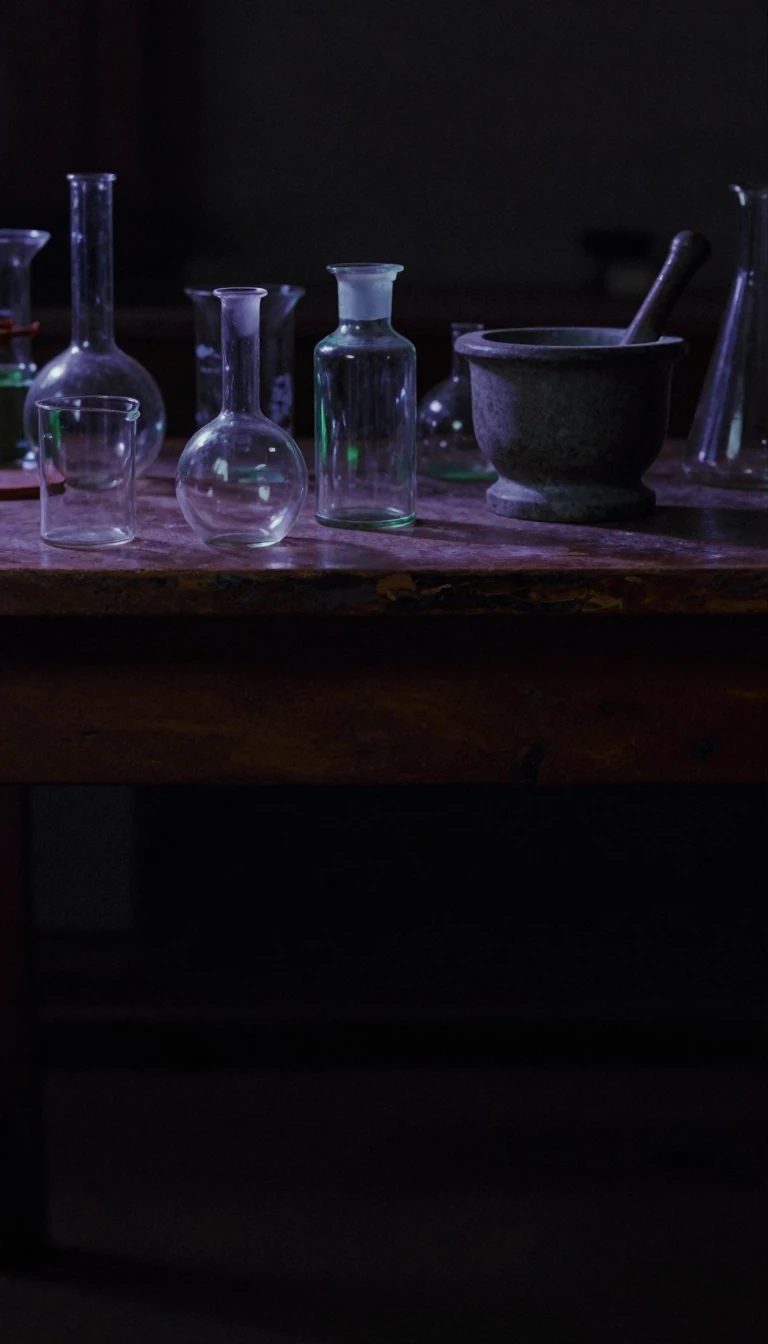 The ancient art of the apothecary: how pharmacy evolved into a modern sciencePharmacy began when the first human applied leaf juice to a wound. Over millennia, this practice transitioned from temple-based ritual to a distinct, regulated profession. Today, …
 Is political science actually a science, or just a collection of shifting trends?Political science seeks to systematically analyze governance, yet it lacks the universal laws found in chemistry. While it focuses on the mechanics of power, scholars debate wheth…
 Why the mathematical study of luck began at a gambling tableModern probability theory did not emerge from a quest for scientific truth, but from a gambler’s dispute over how to split winnings in an interrupted game. In 1654, two French mat…
 Radar was a theoretical certainty for decades before it became a military necessity.Radar is often viewed as a wartime invention, but its foundations were laid by 19th-century physicists. While the technology was proven early, it lacked a practical purpose until …
 Before steam engines roared, the world’s railways were built for coal and gravityLong before locomotives transformed global travel, mining operations relied on primitive tracks to move heavy ore. These early systems, using wooden rails and animal power, laid t…