Before factories, the home was the world's primary workshop
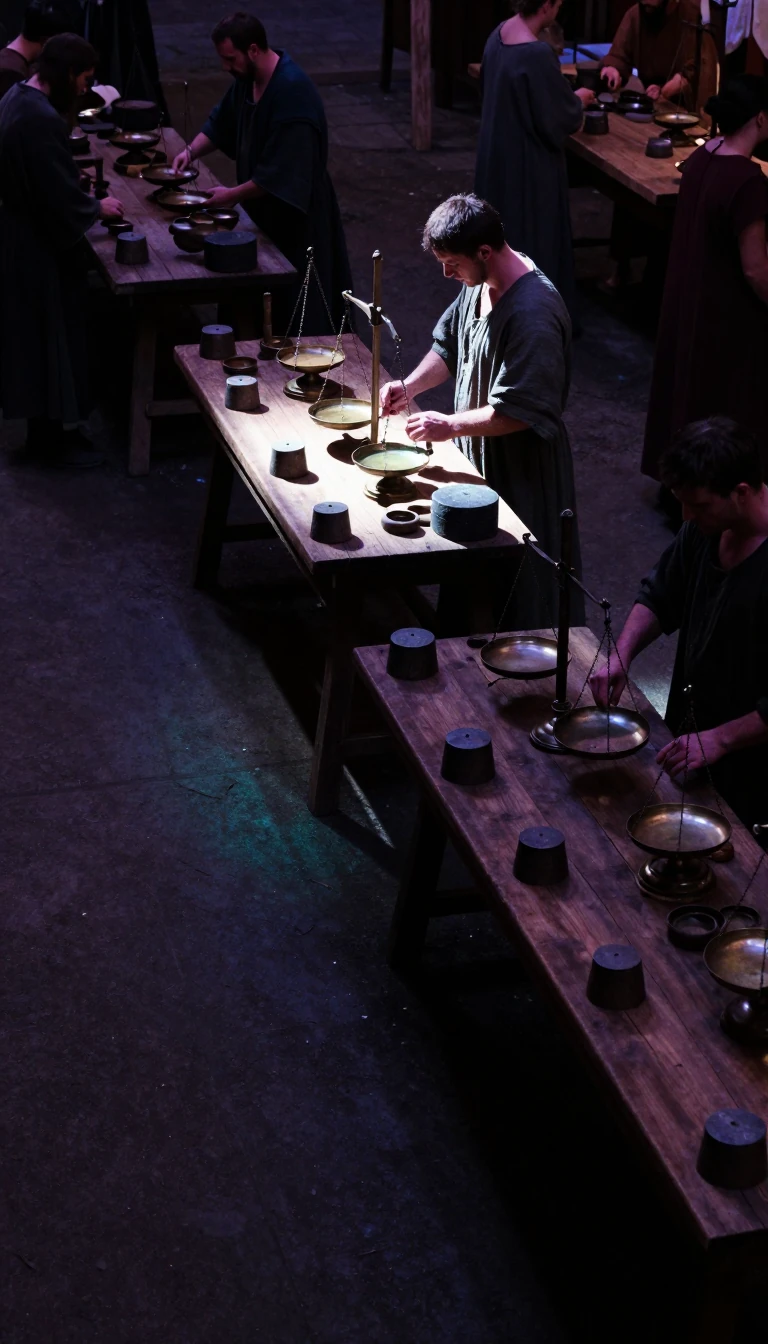
In short: Long before the smoke of the Industrial Revolution, Europe's economy ran on a decentralized web of domestic production. Merchants would 'put out' raw materials to rural families, who turned them into goods in their own kitchens and living rooms. It was a proto-industrial revolution that fundamentally reshaped the modern family.
The putting-out system, also known as the domestic or workshop system, was a cornerstone of pre-industrial economics. It functioned by having a central agent—typically a merchant capitalist—distribute raw materials to workers who completed production in their own homes or small workshops. This model flourished from the late Middle Ages through the 18th century, particularly in textiles, shoemaking, and small firearm parts. It served as a vital bridge between traditional artisanal production and the centralized factory system, allowing for the expansion of trade by bypassing the rigid, often cumbersome regulations of urban guilds.
The system was deeply embedded in agrarian life. For rural families, it provided a way to supplement income during the winter months when farming was dormant. In regions like Switzerland, where it was known as the Verlagssystem, it became a predominant mode of production. This system allowed merchants to scale operations rapidly by accessing a flexible, remote labor force. However, it also created complex dependencies. In some areas, like the Basel silk ribbon industry, merchants maintained tight control over tools and semi-finished goods, while in others, rural supervisors—often women—relied on commercial credit from urban merchants to manage home-based weavers.
While the system offered some advantages, such as allowing workers to set their own pace and providing a domestic environment for children, it also had a dark side. The human cost was stark; Thomas Hood's 1843 poem 'The Song of the Shirt' illustrates the plight of a widow forced to pawn her finished goods to feed her infants. Furthermore, the system is often cited as a catalyst for the rise of the nuclear family in Europe, as independent earnings made workers less dependent on extended kin, leading to increased prosperity in food and clothing for many, even as others struggled in poverty.
Opens the Intellect+ feed with this card first. Swipe up for the next one.
Sources
- Summary by Intellect · source: Putting-out system
To cite this card, link to https://intellectplus.co.uk/app/history-putting-out-system.
How we source, check and correct cards: Editorial standards.
General information, not professional advice. Spotted an error? Flag the card or see corrections and complaints.
Intellect Plus is a visual educational discovery platform for exploring fascinating facts and ideas. Brain Food, Not Brain Rot. What is Intellect Plus?
Related
More in History by country, small region and city · More in History · Latest · A–Z · All topics
