The Richelieu-class battleships were France's final, desperate attempt to match Italian and German naval power.
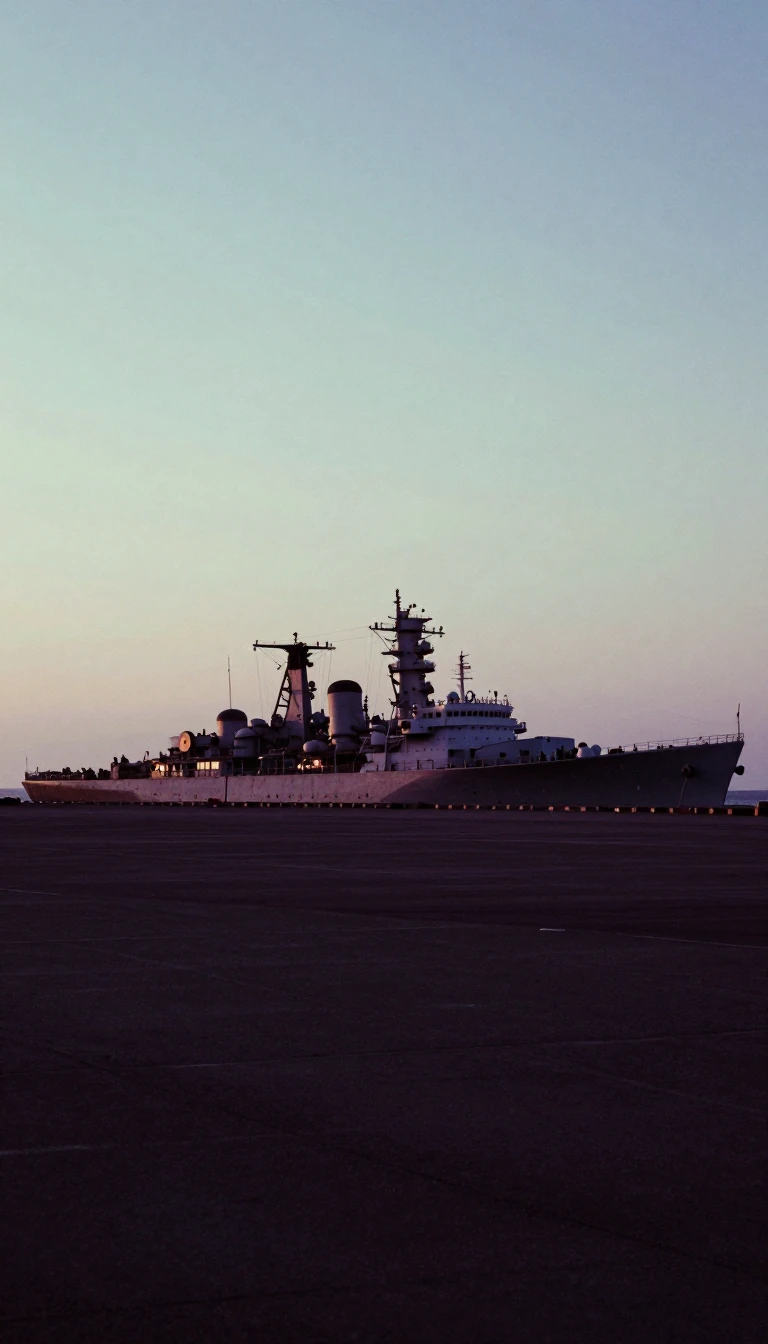
In short: Designed to counter the Italian Littorio-class, these French battleships packed eight 380 mm guns into a unique, forward-facing quadruple turret arrangement. Though they were the last of their kind for the French Navy, their compact, experimental engineering allowed them to defy treaty limits while maintaining formidable speed and heavy armor.
In the mid-1930s, the French Navy faced a strategic crisis. When Italy announced the construction of two 35,000-ton Littorio-class battleships armed with 381 mm guns, France felt compelled to respond. The resulting Richelieu class, ordered in 1935, was a scaled-up evolution of the earlier Dunkerque design. To keep within the 35,000-ton displacement limit imposed by the Washington Naval Treaty, designers adopted a highly concentrated layout, placing all eight main guns in two quadruple turrets forward of the superstructure. This unusual configuration saved significant weight, as did the use of experimental, compact Sural boilers that allowed for a shorter, more efficiently armored hull.
The class faced a turbulent operational history. Neither Richelieu nor Jean Bart was finished by the outbreak of World War II. After fleeing to African colonies, both ships suffered damage from former allies—the British at Dakar in 1940 and the Americans during Operation Torch in 1942. While Richelieu eventually served with the British Home and Eastern Fleets against Japanese forces, Jean Bart remained incomplete until 1955. Her late commissioning allowed her to participate in the 1956 Suez Crisis, but her career was brief; she was relegated to reserve status by 1957.
The technical ambition of the class was matched by its complexity. The ships utilized a unit system of machinery to improve damage resistance, splitting boilers and engines into two independent systems. Despite their innovative design, the secondary battery of 152 mm guns proved problematic, suffering from slow training speeds and jamming issues when elevated for anti-aircraft fire. By the 1960s, both vessels were used primarily for training and barracks duties. Richelieu was sold for scrap in 1968, followed by Jean Bart in 1970, marking the end of the battleship era for France.
Opens the Intellect+ feed with this card first. Swipe up for the next one.
Sources
- Summary by Intellect · source: Richelieu-class battleship
To cite this card, link to https://intellectplus.co.uk/app/history-richelieu-class-battleship.
How we source, check and correct cards: Editorial standards.
General information, not professional advice. Spotted an error? Flag the card or see corrections and complaints.
Intellect Plus is a visual educational discovery platform for exploring fascinating facts and ideas. Brain Food, Not Brain Rot. What is Intellect Plus?
Related
More in History by country · More in History · Latest · A–Z · All topics
