The Roman Forum was not built by design but evolved from a marshy cemetery.
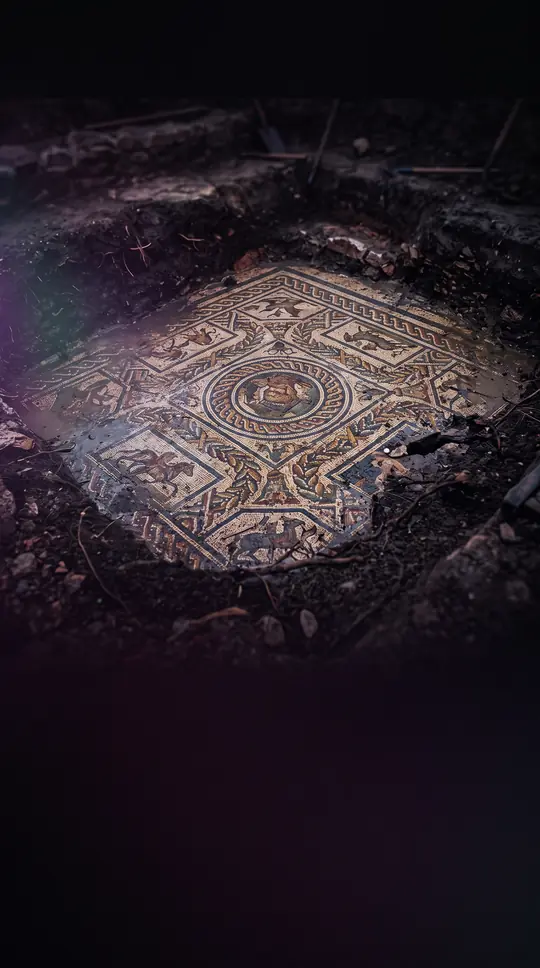
In short: Far from a planned architectural masterpiece, the heart of ancient Rome began as a soggy, low-lying burial ground between two hills. Over centuries, it transformed through organic, piecemeal development into the world's most celebrated meeting place, serving as the nucleus for Roman law, commerce, politics, and religious life.
The Roman Forum, or Forum Romanum, originated in a valley between the Palatine and Capitoline Hills that was once a marshy lake. Archaeological evidence from the Final Bronze Age, between 1200 and 975 BC, confirms human occupation in this area. By the 10th century BC, parts of the valley served as a cemetery, where the deceased were cremated and buried in large earthenware jars. This funerary function shifted in the 8th century BC, when the site began its transformation into a public space, marked by the paving of the ground and the construction of early shrines like the Regia and the Temple of Vesta.
The Forum's development was famously tied to the legendary alliance between Romulus and Titus Tatius, who met in the valley to end their conflict. As the city grew, the Forum became the center of daily life, hosting triumphal processions, criminal trials, and elections. Unlike the later, self-consciously modeled imperial fora, the Roman Forum grew organically. Its layout was defined by the Basilica Aemilia and the Basilica Julia, which constrained the central square to a rectangle of about 130 by 50 meters by the Imperial period. This space was constantly reshaped by leaders like Sulla, Julius Caesar, and Augustus, who sought to impose order on the cluttered, multi-layered site.
The site's physical elevation rose over centuries due to sediment from the Tiber and erosion from surrounding hills, leading residents to simply pave over debris. By the Middle Ages, the area had become a cattle field, or 'Campo Vaccino,' and its monuments were largely buried. During the Renaissance, the Forum was treated as a quarry for building materials, most notably for Saint Peter's Basilica under Pope Paul III. Despite this, the Forum remains a testament to the shifting priorities of Rome, from its archaic roots as a burial ground to its peak as the political and judicial heart of an empire.
Opens the Intellect+ feed with this card first. Swipe up for the next one.
Sources
- Summary by Intellect · source: Roman Forum
- Also: The Met — Roman Forum · CC0
To cite this card, link to https://intellectplus.co.uk/app/history-roman-forum.
How we source, check and correct cards: Editorial standards.
General information, not professional advice. Spotted an error? Flag the card or see corrections and complaints.
Intellect Plus is a visual educational discovery platform for exploring fascinating facts and ideas. Brain Food, Not Brain Rot. What is Intellect Plus?
Related
More in Ancient · More in History · Latest · A–Z · All topics
