Salami is a masterpiece of controlled decay, turning raw meat into shelf-stable luxury.
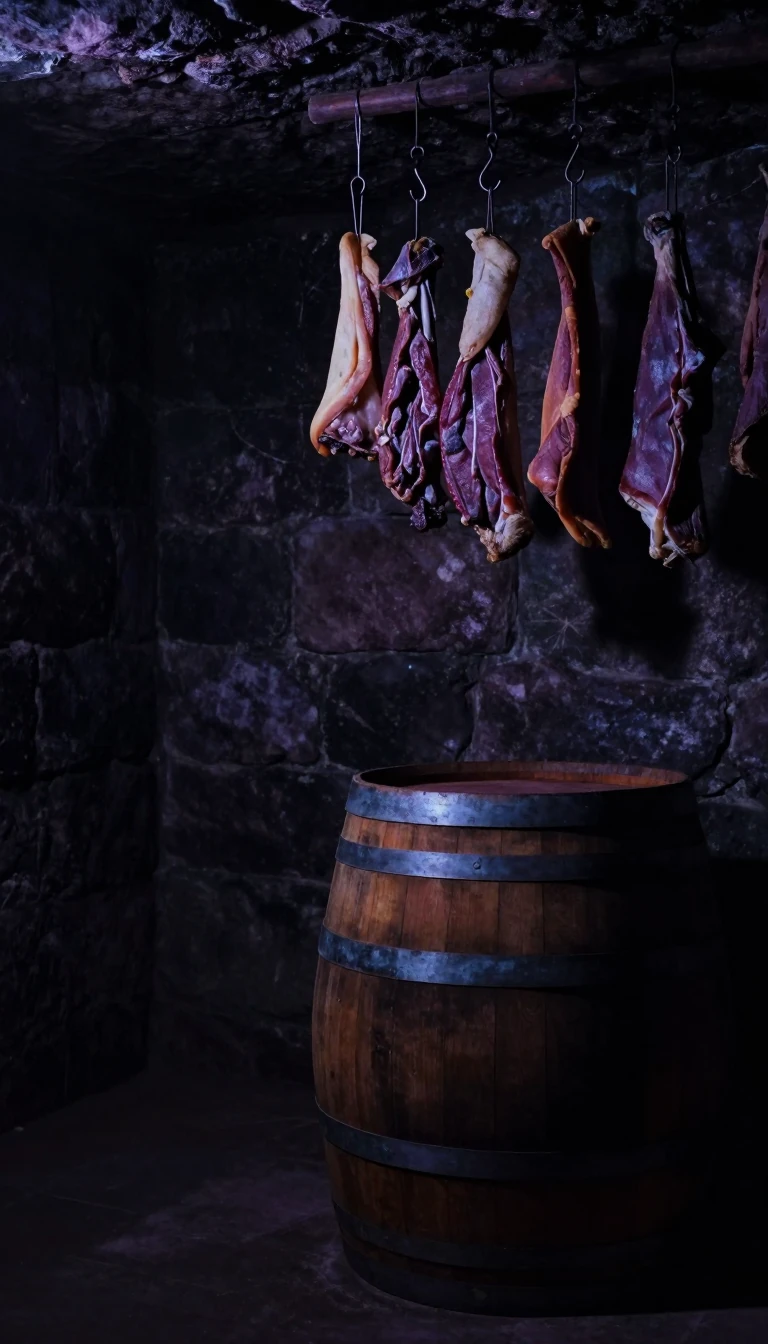
In short: Historically a peasant staple for preserving meat without refrigeration, salami is a complex product of fermentation and drying. By balancing salt, acidity, and specific microbial cultures, makers transform raw pork or beef into a stable, flavorful delicacy that has evolved from an expensive rarity into a global culinary tradition.
The essence of salami lies in its transformation through three stages: preparation, fermentation, and ripening. Unlike cooked sausages, traditional salami is cured through a slow acidification process. Makers grind raw meat—typically pork or beef—and mix it with salt, sugar, and starter cultures. These bacteria consume the sugars to produce lactic acid, which lowers the pH, coagulates proteins, and creates an environment hostile to pathogens. This process, which can take days, is essential for both safety and the development of the product's signature tangy flavor.
Following fermentation, the meat undergoes a drying phase where roughly half of its water content evaporates. This reduction in water activity, combined with the acidic environment and added nitrates or nitrites, ensures the product remains stable at room temperature. In many traditional methods, producers inoculate the casings with Penicillium mold. This white coating serves a dual purpose: it imparts flavor and acts as a protective barrier against photo-oxidation and rancidity. Modern manufacturing often uses strictly controlled temperature and humidity to ensure uniform drying and prevent the formation of a hard, unpalatable outer shell.
While the core principles remain consistent, regional variations are immense. Hungarian winter salami, for instance, is smoked and mold-ripened over several months, while Italian salame cotto is cooked to achieve specific sensory profiles. The flavor complexity is staggering; over 400 volatile compounds have been identified in various dry-fermented sausages. Researchers are now exploring natural alternatives to artificial preservatives, such as essential oils from oregano or clove, to inhibit fungal growth. Even the fat composition is being re-engineered, with experiments replacing pork back fat with olive oil to improve the fatty acid profile and further lower the pH for enhanced safety.
Opens the Intellect+ feed with this card first. Swipe up for the next one.
Sources
- Summary by Intellect · source: Salami
To cite this card, link to https://intellectplus.co.uk/app/history-salami.
How we source, check and correct cards: Editorial standards.
General information, not professional advice. Spotted an error? Flag the card or see corrections and complaints.
Intellect Plus is a visual educational discovery platform for exploring fascinating facts and ideas. Brain Food, Not Brain Rot. What is Intellect Plus?
Related
More in Post-classical · More in History · Latest · A–Z · All topics
