Was the ancient Andean capital of Tiwanaku a sprawling empire or a ritual network?
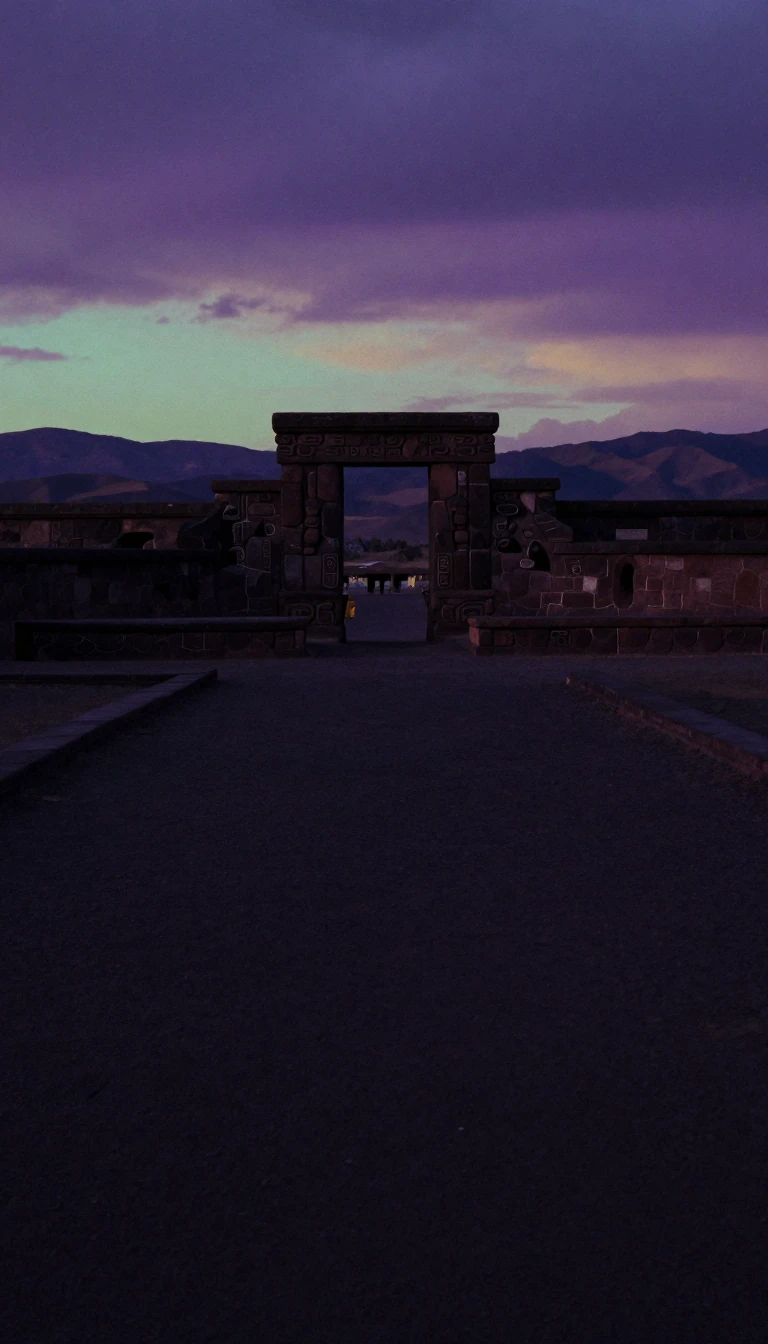
In short: Perched 3,800 meters high in the Andes, Tiwanaku was once viewed as a militaristic empire. Modern research suggests a more nuanced reality: a multi-cultural hub of religious festivals and agricultural innovation, held together by soft power and shared ideology rather than by defensive walls, standing armies, or state-mandated roads.
Flourishing between approximately 600 and 1000, Tiwanaku served as a monumental center in the southern Lake Titicaca Basin. While earlier scholarship compared it to the later Inca Empire, recent archaeological findings challenge this classification. The site lacks traditional hallmarks of an archaic state, such as defensive architecture, evidence of a ruling dynasty, or centralized market institutions. Instead, the city functioned as a magnet for diverse populations, who traveled hundreds of kilometers to participate in elaborate work feasts and ceremonies.
The city’s economic foundation relied on sophisticated, labor-intensive agriculture. The Tiwanaku developed 'suka qullu'—flooded-raised fields that utilized canal water to absorb solar radiation, providing thermal insulation against freezing night temperatures. Experimental recreations have shown these fields could produce yields significantly higher than traditional methods. However, the system was not hyper-productive in all contexts; it functioned as a strategic tool for managing labor schedules, allowing for two harvests per year to support both daily needs and the massive festivals that integrated the polity's far-flung network.
Tiwanaku’s influence was primarily cultural and religious, spreading through a 'soft power' hegemony rather than territorial conquest. Its distinctive iconography, including the 'Tiwanaku Camelid Sacrificer' and the Staff God, appeared on portable prestige goods like textiles and ceramics across Peru, Chile, and Argentina. This influence was supported by llama caravans that facilitated trade and religious exchange. Even the city's monumental construction—involving massive andesite stones transported across Lake Titicaca—demonstrates a high degree of social organization, yet the lack of contiguous territory suggests a federation of communities rather than a centralized, expansionist state.
The collapse of Tiwanaku around 1000 remains a subject of intense debate. While older theories pointed to a severe drought that crippled the raised-field systems, refined climate chronologies suggest the drought occurred after the decline. Evidence of intentional destruction—such as burned complexes and smashed storage jars—points toward internal social upheaval. Following this collapse, the abandonment of the urban core and its colonies triggered long-distance migrations, potentially diffusing Tiwanaku’s agricultural and religious practices into the wider Andean world.
Opens the Intellect+ feed with this card first. Swipe up for the next one.
Sources
- Summary by Intellect · source: Tiwanaku polity
To cite this card, link to https://intellectplus.co.uk/app/history-tiwanaku-polity.
How we source, check and correct cards: Editorial standards.
General information, not professional advice. Spotted an error? Flag the card or see corrections and complaints.
Intellect Plus is a visual educational discovery platform for exploring fascinating facts and ideas. Brain Food, Not Brain Rot. What is Intellect Plus?
Related
More in Post-classical · More in History · Latest · A–Z · All topics
