The First World War's opening shots were fired in a forgotten West African colony.
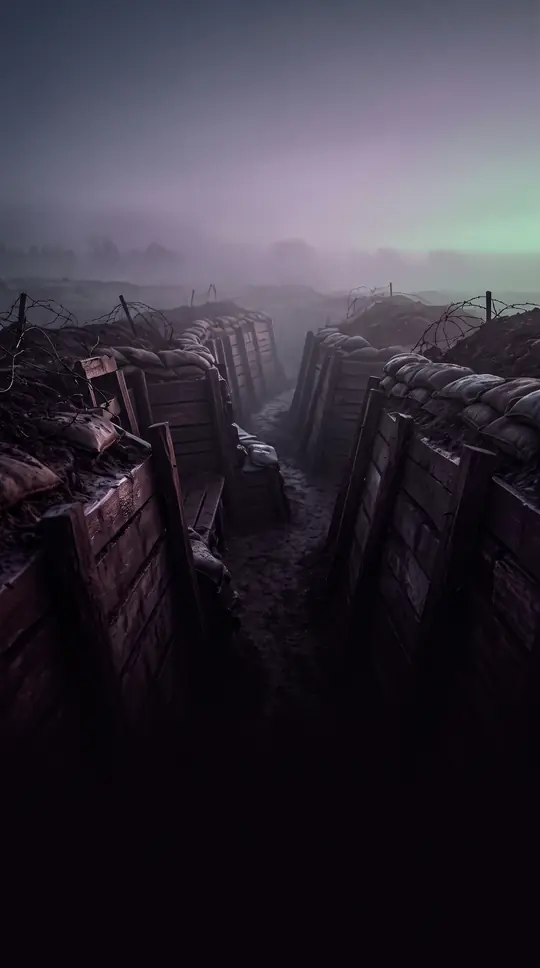
In short: In August 1914, British and French forces launched a lightning invasion of Togoland, a German protectorate. The objective was not territory, but a massive wireless station at Kamina, which linked Berlin to its global empire. The campaign ended in weeks, marking the beginning of the end for Germany's overseas colonies.
The Togoland campaign, lasting from 6 to 26 August 1914, was the first military operation involving British soldiers during the First World War. Togoland, a German protectorate established in 1884, was a highly developed colony featuring three metre-gauge railway lines and a sophisticated wireless transmitter at Kamina. This station was of immense strategic value, serving as a vital relay for the Imperial German Navy and communications between Berlin, South America, and other colonies. The British Admiralty sought to neutralize it to prevent the coordination of German attacks on Atlantic shipping.
The invasion was a joint effort by British forces from the Gold Coast and French troops from Dahomey. Despite the German acting-Governor, Major Hans-Georg von Doering, attempting to invoke the Congo Act to maintain neutrality, the Allies pressed forward. The German defense was exiguous, relying on about 693 Polizeitruppen and 300 trained colonists, eventually bolstered to 1,500 men. The Allies, totaling roughly 2,550 infantry and cavalry, faced harsh terrain, including coastal marshes and dense scrub, which restricted movement to existing roads and railways.
The campaign saw notable engagements at the Affair of Agbeluvoe and the Khra River. At Agbeluvoe, a British ambush derailed a German train, inflicting significant casualties. At the Khra River, German forces held a fortified position, repulsing an initial British attack and causing 17 per cent casualties, including the first British officer killed in the war, Lieutenant George Thompson. However, the German position was ultimately untenable as Allied columns converged from multiple directions. On 26 August, Doering surrendered the colony after destroying the Kamina wireless station.
The aftermath saw the partition of Togoland into British and French mandates in 1922, a division that ignored local administrative boundaries. The campaign was a precursor to the broader collapse of the German colonial empire, which lost all its overseas possessions by the end of the war. While the fighting was brief, it demonstrated the logistical challenges of colonial warfare, relying heavily on thousands of carriers to sustain the advance through tropical conditions.
Opens the Intellect+ feed with this card first. Swipe up for the next one.
Sources
- Summary by Intellect · source: Togoland campaign
To cite this card, link to https://intellectplus.co.uk/app/history-togoland-campaign.
How we source, check and correct cards: Editorial standards.
General information, not professional advice. Spotted an error? Flag the card or see corrections and complaints.
Intellect Plus is a visual educational discovery platform for exploring fascinating facts and ideas. Brain Food, Not Brain Rot. What is Intellect Plus?
Related
More in Modern (1800-1945) · More in History · Latest · A–Z · All topics
