 Intellect Plus
Modern (1800-1945)
244 cards. Each one is a 40-second story with a five-minute read behind it.
 A Viking longship sails the Danube, Main, and Rhine riversThis episode follows a Viking longship as it navigates Europe's iconic waterways, facing tight locks, river traffic, and unpredictable weather. Discover the engineering behind its…
 The virtuous citizen soldier: how a political bias shaped American warBefore the modern draft, the United States relied on a unique military structure: the Regular Army, the militia, and the Volunteers. This third group wasn't just an extra force; i…
 The storm damage detective who mapped the invisible physics of windBefore satellites and radar became common, Ted Fujita reconstructed the physics of tornadoes by acting as a forensic detective. By meticulously measuring debris and wreckage, he d…
 The face of a killer in one of history's most haunting photosFor decades, the identity of the gunman in the iconic 'Last Jew in Vinnitsa' photograph remained a mystery. Now, using artificial intelligence and open-source sleuthing, historian…
 The Sufi order that forged a nation from the desertIn the 19th century, a theologian founded a Sufi order that would transcend tribal lines to build a modern state. From fighting Ottoman rule to leading a national resistance again…
 The department store that birthed a global retail empireBefore it was a global powerhouse, Mitsukoshi was a revolutionary marketing experiment. By moving from door-to-door sales to a fixed location where customers could pay cash on the…
 How a hidden underground network crippled a Japanese occupationBy the end of World War II, the Japanese military controlled only twelve of the Philippines' forty-eight provinces. This staggering loss of territory was not just a result of conv…
 The secret failure of England's 'Invincible' counter-attack on SpainAfter defeating the Spanish Armada in 1588, Queen Elizabeth I sought to strike a decisive blow against King Philip II. But her ambitious follow-up expedition—the English Armada—be…
- From a theoretical empire to the world capital of imagingIn 1683, the land that is now Monroe County was part of a county so vast it theoretically extended to the Pacific Ocean. Today, it has traded that continental scale for a global r…
 The failed coup that nearly redrew the map of Central EuropeIn July 1934, Austrian Nazis launched a violent uprising to overthrow the government and unify with Germany. It was a high-stakes gamble that ended in a bloody stalemate, only hal…
 The moment an Ottoman province decided it would rather be a nationIn 1878, the Ottoman Empire was fracturing. While European powers carved up the Balkans like a cake, Albanian leaders faced a terrifying choice: be partitioned by their neighbors …
 The rarest home run is a sprint, not a swingMost home runs are feats of pure power, launched over fences to allow for a leisurely trot. But the inside-the-park home run is a different beast entirely. It requires a perfect s…
 The only U.S. law ever to ban immigration based on raceIn 1882, the United States passed a law that fundamentally altered the trajectory of Chinese history in America. It wasn't just a temporary pause; it was a targeted legal weapon o…
 From battlefields to ballparks: the evolution of the guard of honourA guard of honour is a powerful visual of respect, but its roots are far more martial than a simple sporting courtesy. While modern fans see it as a gesture of sportsmanship, the …
 The grueling history of baseball's doubleheaders and the logic of the 'split'In the early 20th century, baseball teams routinely played two games in a single day. Today, these grueling marathons are rare relics, often replaced by 'split' doubleheaders wher…
 Why the weakest thread determines the strength of the wholeIn the early 20th century, a textile researcher discovered a profound statistical truth: the integrity of a cotton thread isn't defined by its average strength, but by its weakest…
 The elite multiracial class that out-read the white population of LouisianaIn 1850, a specific group of Louisiana residents boasted a literacy rate of 80%—significantly higher than the white population of the state at that time. These were the Creoles of…
 From protected status to 'the Jewish threat': tracing Arab anti-SemitismBefore the 20th century, Jews in the Muslim world often held a specific legal standing. But a shift toward modern anti-Semitism was fueled by radical propaganda, colonial tensions…
 The Lesser of Two Evils: Why Millions Joined the Nazi War MachineDuring World War II, the German invasion of the Soviet Union triggered a massive wave of collaboration. Estimates suggest around 1 million Soviet citizens joined the Nazi military…
 The town that became Australia's mango capital by accidentWhile most of Australia knows Bowen for its tropical fruit, the town's identity was forged by a failed reward, a shipwrecked sailor, and a secretive farmer who refused to share hi…
 The high-stakes diplomacy and ultimate fate of the Banu QurayzaIn the 7th-century oasis of Medina, the Banu Qurayza were a tribe of immense wealth and military prestige. Their complex web of alliances, religious identity, and strategic negoti…
 The 'Mad Dog' Mindset: How Abolitionists Weaponized a Medical MetaphorIn the 19th century, the fight against slavery birthed a chilling linguistic invention. Abolitionists didn't just describe racism as a social ill; they framed it as a contagious, …
 The year that revealed a liquid ocean and a medical hoax1998 was a pivot point for human knowledge. It was the year we confirmed liquid water hidden beneath Jupiter's icy moon Europa, witnessed the first evidence of an accelerating uni…
- The failed bomber that gave birth to a legendary iconIn the high-stakes race for heavy bombers, one aircraft was destined to be a disaster. The Avro Manchester was plagued by unreliable engines and poor performance, yet its failure …
 The actor who traded 'cinema beefcake' status for Shakespearean depthSebastian Shaw spent the 1930s as a high-earning film lead, famously dismissing himself as a 'rotten actor' who relied on good looks. It took a stint in the Royal Air Force and a …
 From Soviet Legacy to a Modernized Defense ForceArmenia's military is currently undergoing a top-to-bottom transformation. While its roots stretch back to 1918, its modern structure was forged from the remnants of the Soviet Ar…
 The first successful gas-operated machine gun was a 'potato digger'In 1895, the Colt–Browning changed warfare forever. It was the first machine gun to use expanding gases to cycle its action, replacing manual cranking with automated power. Yet, i…
 The blueprint for an empire: how a 1787 law shaped the MidwestBefore the United States was a unified nation, it had to solve a massive problem: how to turn a wild frontier into a structured country. The Northwest Ordinance of 1787 provided t…
- The private police force that shaped American labor and lawBefore the FBI, there was the Pinkerton Agency. From thwarting assassinations to infiltrating secret societies and crushing labor unions, this private powerhouse became the world'…
 India's tourism boom: From 2,705 arrivals to a 1,987% surgeIn just one year, India's tourism landscape underwent a radical transformation. By introducing a streamlined electronic visa system, the country saw a staggering nearly 2,000% inc…
 Germany's 'Brandmauer': A political firewall designed to isolate the far-rightIn German politics, the 'Brandmauer' is more than a metaphor; it is a deliberate strategy of noncooperation. By creating a barrier between mainstream parties and the far-right, th…
 The 1883 eruption of Krakatoa remains the loudest sound ever recorded in modern history.When Krakatoa erupted in 1883, it unleashed a cataclysmic series of explosions that collapsed the island into the sea. The final blast was so powerful that it was heard thousands …
 Why the 1887 Yellow River flood remains one of history's deadliest natural disastersIn late September 1887, the Yellow River in China breached its dikes, triggering a catastrophic flood that claimed nearly a million lives. This disaster, which devastated vast agr…
- The 1900s: A Decade of Imperial Expansion, Technological Breakthroughs, and Unprecedented Global UpheavalThe first decade of the twentieth century was a period of violent colonial expansion, mass famine, and rapid technological advancement. From the birth of powered flight and cinema…
 When a Caribbean city vanished in seconds, modern volcanology was born from the ashes.On May 8, 1902, a ground-hugging cloud of superheated gas and ash obliterated Saint-Pierre, Martinique, in under a minute. The disaster killed nearly 28,000 people, leaving only a…
- Why the 1906 San Francisco earthquake changed how we understand the planetAt 5:12 a.m. on April 18, 1906, a massive rupture along the San Andreas Fault leveled San Francisco. While the subsequent four-day fire is often blamed for the destruction, the ea…
 The 1910s: A Decade of Global Collapse, Revolution, and the End of EmpiresThe 1910s were defined by the violent disintegration of centuries-old monarchies and the birth of a new world order. From the assassination of an archduke to the rise of the first…
- A daring raid on the Sublime Porte reshaped the Ottoman Empire's final decadeOn January 23, 1913, a group of determined officers stormed the Ottoman government headquarters. This sudden coup d'état ousted the incumbent grand vizier and installed a new regi…
 How the 1919 Egyptian Revolution united a nation against the British EmpireWhile Egypt is famous for its 2011 uprising, the 1919 revolution was the true twentieth-century turning point. Triggered by the forced exile of nationalist leaders, this massive, …
- The 1920 Haiyuan earthquake was so powerful it caused waves in Norwegian fjordsOn December 16, 1920, a massive earthquake struck China’s Ningxia Province, claiming over 250,000 lives. While the devastation across the region was absolute, the seismic energy w…
 The 1920s were far more than just jazz, flappers, and economic prosperity.While the Roaring Twenties conjure images of urban excess and Art Deco, the decade was defined by a jarring duality. Beneath the surface of rapid technological adoption and newfou…
 The 1930s: A decade of profound economic despair, cultural innovation, and global drift toward war.The 1930s began with a global population exceeding 2 billion and ended on the brink of total war. Between the Great Depression’s crushing unemployment and the rise of authoritaria…
- Why the 19th century invented the vocabulary we use to describe our modern worldThe 19th century was not just a period of time; it was a seismic shift in human consciousness. Driven by the French and Industrial Revolutions, the era shattered traditional struc…
 The 20th century: A hundred years of unprecedented growth, destruction, and radical transformationThe 20th century was a period of extreme contradiction. It saw the human population explode from 1.6 billion to over 6 billion, while simultaneously witnessing the deadliest confl…
 How Japan dismantled its feudal past to build a modern centralized stateIn 1871, Japan executed a radical transformation, dissolving centuries-old feudal domains in favor of a centralized prefecture system. This transition, known as the abolition of t…
 World War I in Africa was a complex web of colonial conquest and local resistance.Beyond the trenches of Europe, the First World War ignited across Africa. While European powers fought to seize German colonies and secure vital wireless stations, indigenous popu…
 Why Japan’s air defenses failed to stop the devastating Allied bombing campaign of 1945By 1945, Japan’s cities were defenseless against American firebombing. Despite early preparations, the nation’s military lacked the radar, high-altitude interceptors, and coordina…
 How Allied strategic bombing campaigns reshaped the air war over Nazi GermanyStarting in 1942, the RAF and later the U.S. 8th Air Force launched a massive strategic air offensive against Germany. By shifting to area bombing and industrial targeting, they a…
 Could a single economic plan have unified the early American republic through sectional interdependence?Devised by Henry Clay, the American System aimed to harmonize agriculture, commerce, and industry into a single, integrated national market. By combining protective tariffs, a nat…
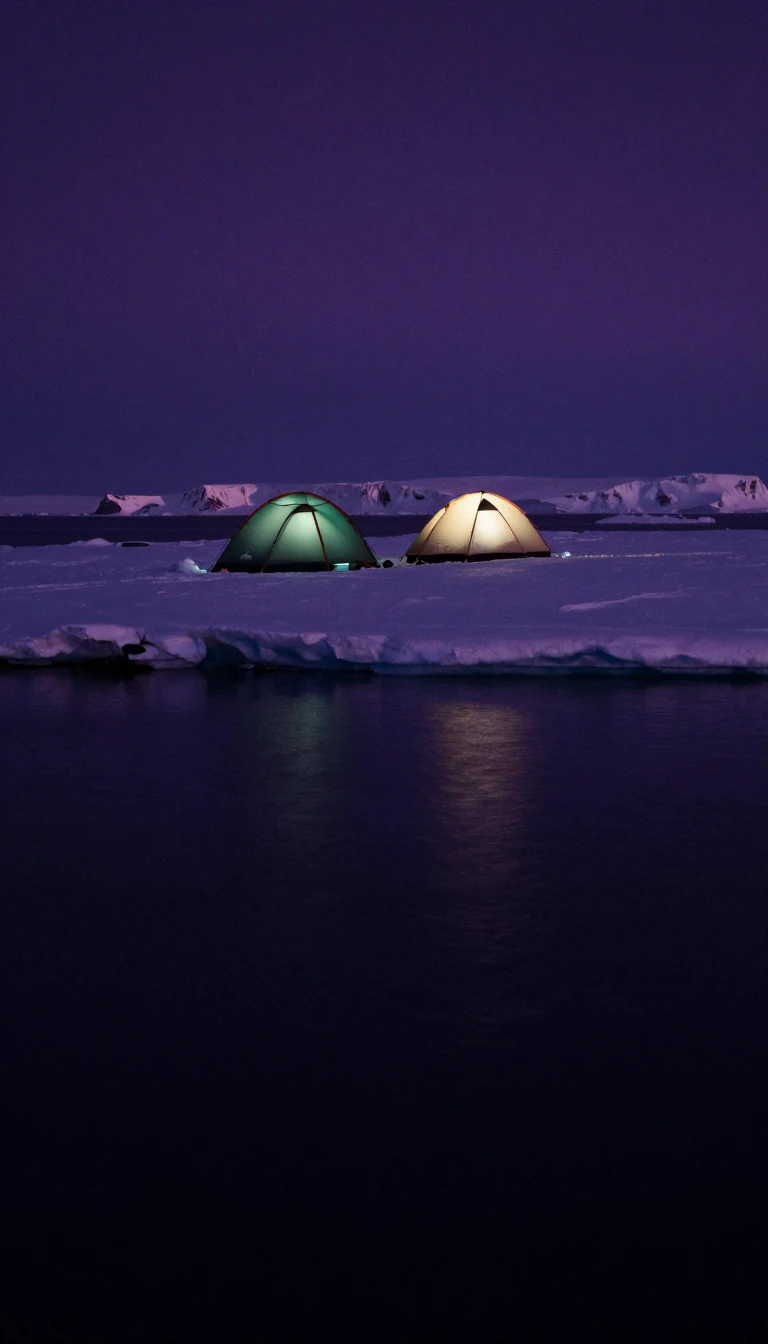 How a secret change of plans won the race to the South PoleRoald Amundsen set out for the North Pole, but mid-voyage, he pivoted to the South Pole. By keeping his true destination secret from his crew, his backers, and his British rivals,…
 How Russia annexed 350,000 square miles of Chinese territory without firing a shotBetween 1858 and 1860, the Russian Empire secured vast swathes of Outer Manchuria from the Qing dynasty. By leveraging the chaos of the Second Opium War and the diplomatic maneuve…
 How a 1824 treaty drew the modern borders of Malaysia, Singapore, and IndonesiaThe Anglo-Dutch Treaty of 1824 was a geopolitical masterstroke that resolved decades of colonial friction. By carving Maritime Southeast Asia into distinct British and Dutch spher…
 Was the slave-based economy of the Antebellum South actually profitable or a failing relic?The Antebellum South relied on a plantation system that defined its social hierarchy and economic trajectory. While some historians argue it was a profitable engine of growth, oth…
 From Indonesia to Latin America, anti-communist purges claimed millions of lives in the 20th century.Throughout the 20th century, anti-communist campaigns orchestrated by governments and paramilitary groups resulted in widespread massacres. Often backed by Western powers, these o…
- From deadly ice-bound traps to a new global shipping lane: the Arctic's transformation.For centuries, the Arctic was a formidable, frozen barrier that claimed the lives of countless explorers seeking a shortcut to Asia. Today, climate change is rapidly melting the s…
 Why has the Turkish state spent a century denying the 1915 Armenian genocide?The Armenian genocide was not merely an event of the past; it was a foundational act for the modern Turkish state. By systematically destroying evidence and framing mass murder as…
 From Imperial Subjects to Sovereignty: The Long Arc of the Armenian National MovementThe Armenian national movement evolved from a quest for civil rights within the Ottoman and Russian Empires into a struggle for statehood. Spanning two centuries, it transformed f…
 How Sultan Mahmud II Orchestrated the Violent Destruction of His Own Elite Military CorpsIn June 1826, the Ottoman Empire faced a pivotal turning point. Sultan Mahmud II, desperate to modernize his military, provoked a revolt among the Janissaries—the empire's once-el…
 How a ravine in Kyiv became the site of a massive Nazi atrocityBetween 1941 and 1943, the Babi Yar ravine on the edge of Kyiv served as a mass grave for victims of Nazi SS squads. While Soviet accounts estimated 100,000 deaths, the true scale…
 How a failed Italian invasion forced Hitler to rewrite his plans for World War IIHitler originally intended to invade the Soviet Union in 1943, but a series of regional crises in the Balkans forced him to accelerate his timeline. When Mussolini launched an ill…