Did a medieval theologian use logic to challenge the Church's most sacred mystery?
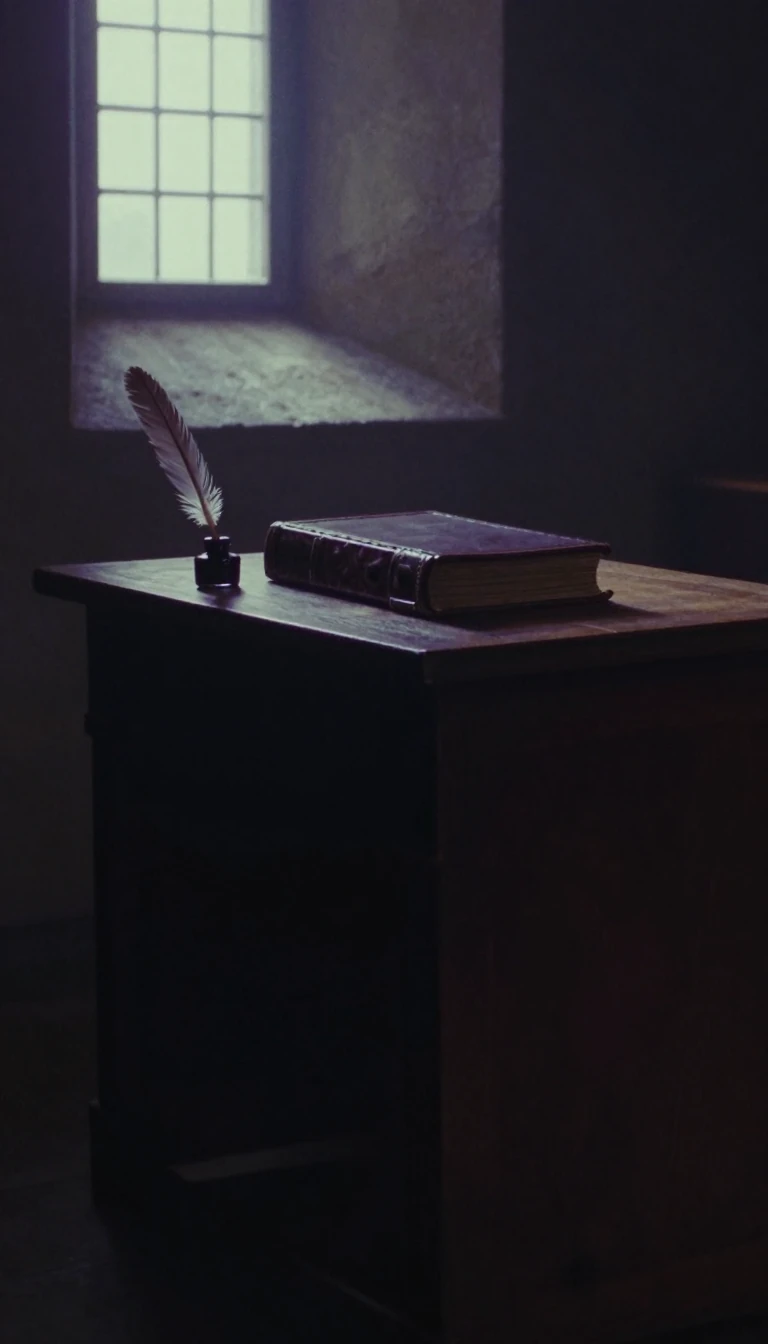
In short: Berengar of Tours was an 11th-century intellectual who dared to apply dialectic to the Eucharist. By rejecting the doctrine of transubstantiation in favor of a symbolic interpretation, he sparked a decades-long firestorm of synods, excommunications, and forced recantations that defined the limits of medieval dissent and the power of reason.
Berengar of Tours, born around 999, was a prominent theologian who led the School of Saint-Martin at Tours. Having studied under the celebrated Fulbert at Chartres, Berengar became a canon and later the archdeacon of Angers. He was known for his independence of thought and his application of dialectic—the art of logical argument—to theological development, a method that set him apart from his contemporaries.
The core of the controversy lay in his rejection of the 9th-century view held by Paschasius Radbertus, which asserted that bread and wine literally became the body and blood of Christ after consecration. Instead, Berengar favored the perspective of the monk Ratramnus, who argued that the elements became Christ's body and blood in a symbolic sense. Berengar maintained that the literalist view contradicted the Scriptures, the Church Fathers, and the fundamental principles of reason.
This stance triggered a relentless cycle of condemnation. Beginning with his excommunication by Pope Leo IX at the Easter Synod of 1050, Berengar faced a series of trials, including councils at Vercelli, Paris, Poitiers, and Rome. Despite being forced to sign various recantations and vague statements under extreme pressure, he often returned to his original position, even publishing a treatise against the Roman council of 1059. His life became a struggle between his intellectual convictions and the overwhelming institutional authority of the Church.
Following his final trial at Bordeaux in 1080, Berengar retired to the priory of Saint-Cosme, where he lived in ascetic solitude until his death on January 10, 1088. His legacy remains a subject of historical debate, as scholars continue to analyze whether he truly denied the Real Presence or merely the specific mechanism of transubstantiation. His life illustrates the friction between emerging scholastic inquiry and established dogma in the medieval world.
Opens the Intellect+ feed with this card first. Swipe up for the next one.
Sources
- Summary by Intellect · source: Berengar Of Tours | French Theologian & Heresy Debater | Britannica
- Also: Berengar of Tours
To cite this card, link to https://intellectplus.co.uk/app/ideas-berengar-of-tours.
How we source, check and correct cards: Editorial standards.
General information, not professional advice. Spotted an error? Flag the card or see corrections and complaints.
Intellect Plus is a visual educational discovery platform for exploring fascinating facts and ideas. Brain Food, Not Brain Rot. What is Intellect Plus?
Related
More in Philosophers · More in Ideas & Philosophy · Latest · A–Z · All topics
