Edward William Lane: The Victorian Scholar Who Lived as a Turk in Cairo
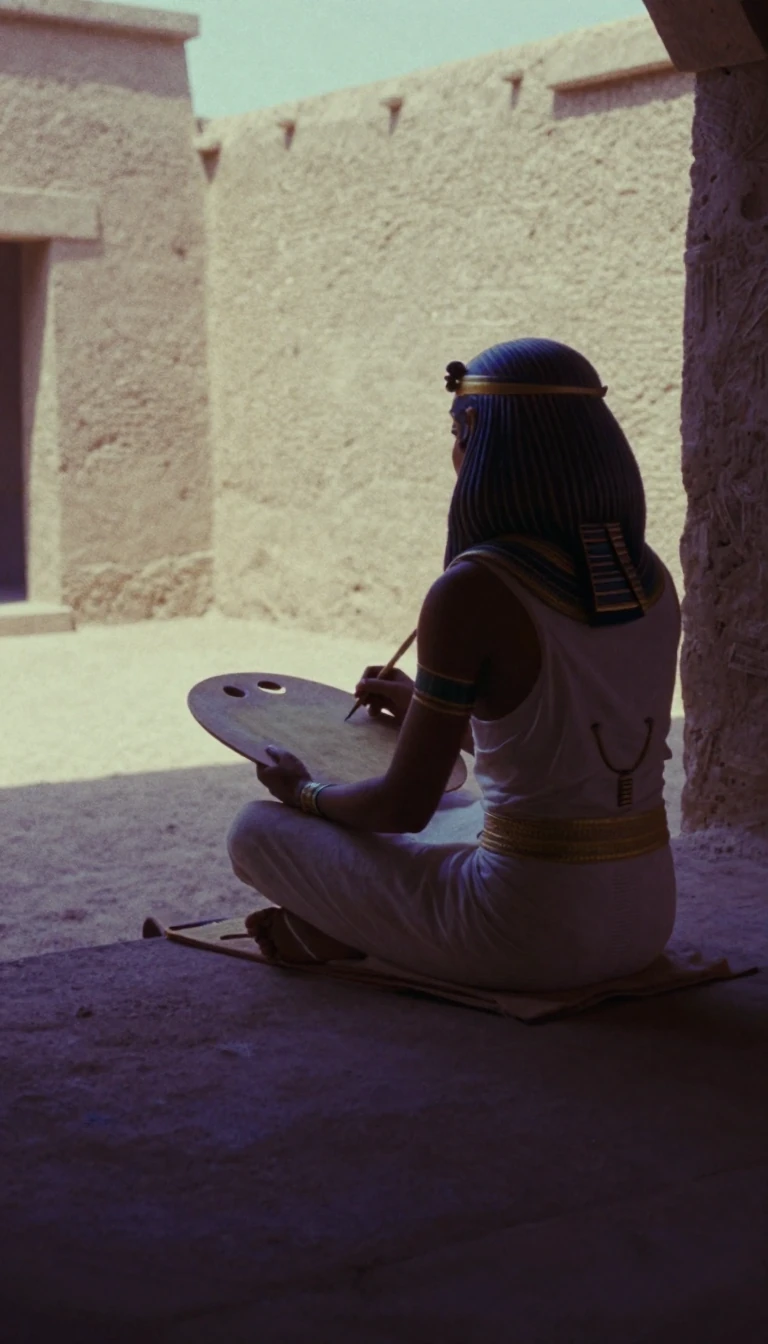
In short: Edward William Lane was a British orientalist who immersed himself in 19th-century Egypt, adopting local dress and customs to document a vanishing world. While his work became foundational, his legacy remains deeply contested, caught between his status as a pioneer of ethnography and his reliance on flawed, biased sources.
Born in 1801, Lane initially studied engraving in London before his deteriorating health prompted a move to Egypt in 1825. He spent years living in Cairo, mingling with locals and studying Arabic with Sheikh Muhammad 'Ayyad al-Tantawi. His observations were so granular that he devoted five chapters of his Description of Egypt—a work that remained unpublished until 2000—solely to the topography and urban life of the city. He even spent 32 days sketching the Giza pyramids and 15 days sleeping inside the tomb of Ramses X.
Lane’s most famous work, Manners and Customs of the Modern Egyptians (1836), became a bestseller, though it was limited by the gender segregation of the era. Unable to access women-only spaces like hareems, he relied on his sister, Sophia Lane Poole, to gather information. Her own book, The Englishwoman in Egypt, was published anonymously and contained large sections of Lane’s work, subtly altered to fit her perspective. This collaborative, if deceptive, approach highlights the lengths Lane went to for comprehensive documentation.
His later years were consumed by the massive Arabic-English Lexicon, a project he worked on six days a week for years. However, the work was incomplete at his death in 1876, and modern scholars like Manfred Ullmann have harshly criticized its methodology, labeling it an uncritical copy of existing Arabic dictionaries. Furthermore, Lane’s reputation is marred by his prejudiced descriptions of Egypt’s Coptic minority, which he based on the testimony of an interlocutor who may have been a Muslim, not a Copt. Today, Lane stands as a complex figure whose meticulous efforts to capture Egyptian life are inseparable from the colonial biases and personal limitations of his time.
Opens the Intellect+ feed with this card first. Swipe up for the next one.
Sources
- Summary by Intellect · source: Edward William Lane
To cite this card, link to https://intellectplus.co.uk/app/ideas-edward-william-lane.
How we source, check and correct cards: Editorial standards.
General information, not professional advice. Spotted an error? Flag the card or see corrections and complaints.
Intellect Plus is a visual educational discovery platform for exploring fascinating facts and ideas. Brain Food, Not Brain Rot. What is Intellect Plus?
Related
More in Writers · More in Ideas & Philosophy · Latest · A–Z · All topics
