The physics of homeopathy: How a 30C dilution would require a planet-sized container
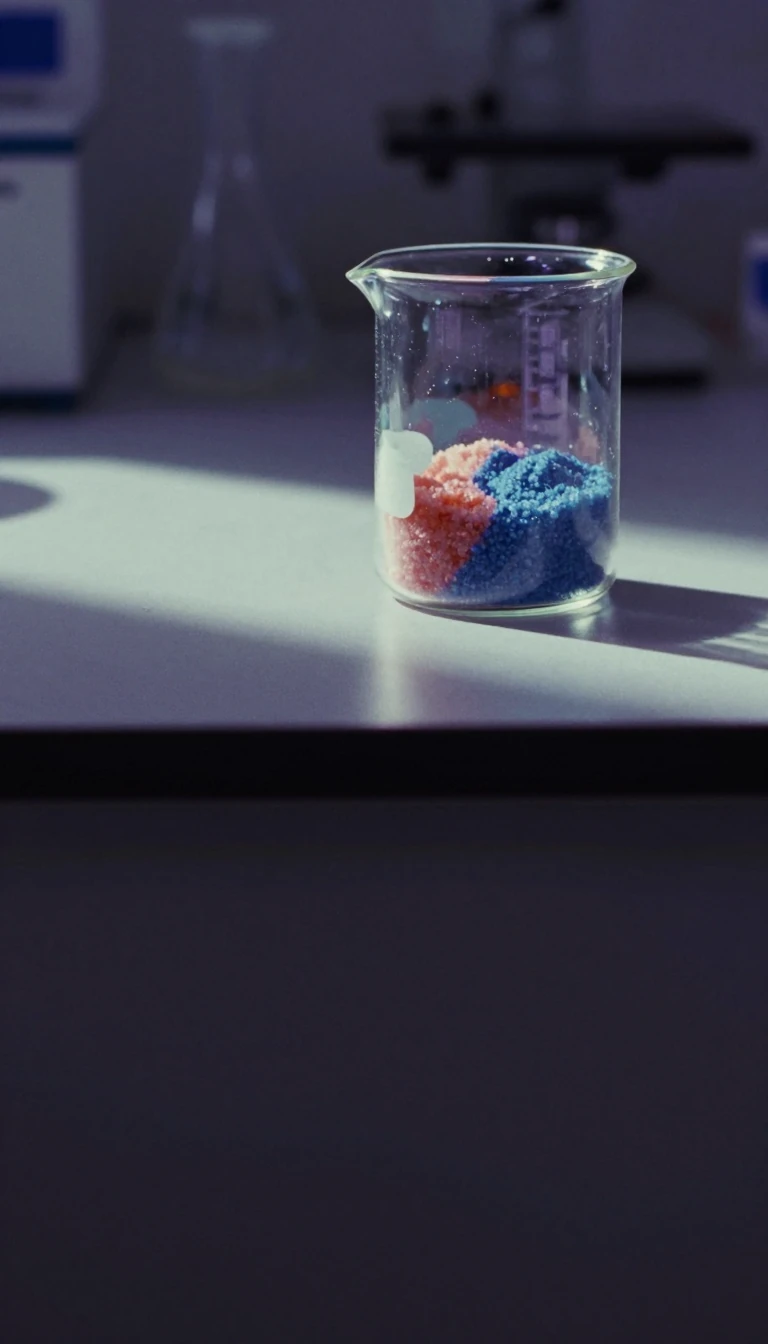
In short: Homeopathy relies on the idea that extreme dilution creates a medicinal effect. However, at certain potencies, the preparations lack even a single molecule of the original substance. To find one molecule in a 30C solution, you would theoretically need a container 30 billion times larger than the Earth.
The fundamental tension in homeopathy lies in the 'dose-response relationship.' In conventional pharmacology, a drug's effect depends on its concentration in the body. Homeopathy contradicts this by claiming that higher dilutions—described as 'higher potencies'—produce stronger effects. This is inconsistent with observed biological data in humans, rats, and nematodes, where effects decline as concentration decreases. Critics point out that the laws of chemistry set a hard limit on dilution: once you exceed roughly 12C or 24X (1 part in 1,024), the original substance is effectively gone due to the Avogadro constant.
To explain how water could 'remember' these missing substances, some advocates propose 'water memory.' However, this concept is inconsistent with our current understanding of matter. Physical experiments, including nuclear magnetic resonance studies, have found no evidence of stable water clusters or memory. Additionally, water's short-range order lasts merely around 1 picosecond. Some have even tried to use quantum physics—invoking entanglement or nonlocality—to justify the practice, but these explanations are often offered by non-specialists and are dismissed by physicists as 'patent nonsense' because quantum states are too delicate to survive such processes.
Despite these physical hurdles, homeopathy remains a point of significant public and political debate. Major government reviews in Switzerland (2005), the UK (2009), Australia (2015), and the European Academies (2017) have all concluded there is no reliable evidence of efficacy beyond the placebo effect. The UK's NHS, for example, stopped funding homeopathic medicines in 2017 to save £200m annually. While some individual trials show positive results, researchers note that with a 5% chance of false positives, 1 in 20 tests will appear successful even if the treatment is inert. This is compounded by publication bias, where journals are significantly more likely to publish positive results over null findings.
The lack of active ingredients was famously demonstrated by James Randi's 10:23 campaign, where hundreds of people took 'overdoses' of homeopathic products without injury or cure. Ultimately, the mainstream medical community regards homeopathy as quackery because it lacks a biologically plausible pharmacological agent or mechanism, and high-quality trials consistently fail to differentiate it from a placebo.
Opens the Intellect+ feed with this card first. Swipe up for the next one.
Sources
- Summary by Intellect · source: Evidence and efficacy of homeopathy
To cite this card, link to https://intellectplus.co.uk/app/ideas-evidence-and-efficacy-of-homeopathy.
How we source, check and correct cards: Editorial standards.
General information, not professional advice. Spotted an error? Flag the card or see corrections and complaints.
Intellect Plus is a visual educational discovery platform for exploring fascinating facts and ideas. Brain Food, Not Brain Rot. What is Intellect Plus?
Related
More in Evidence · More in Ideas & Philosophy · Latest · A–Z · All topics
