Why the universe speaks in repeating shapes, from river meanders to fractal forests
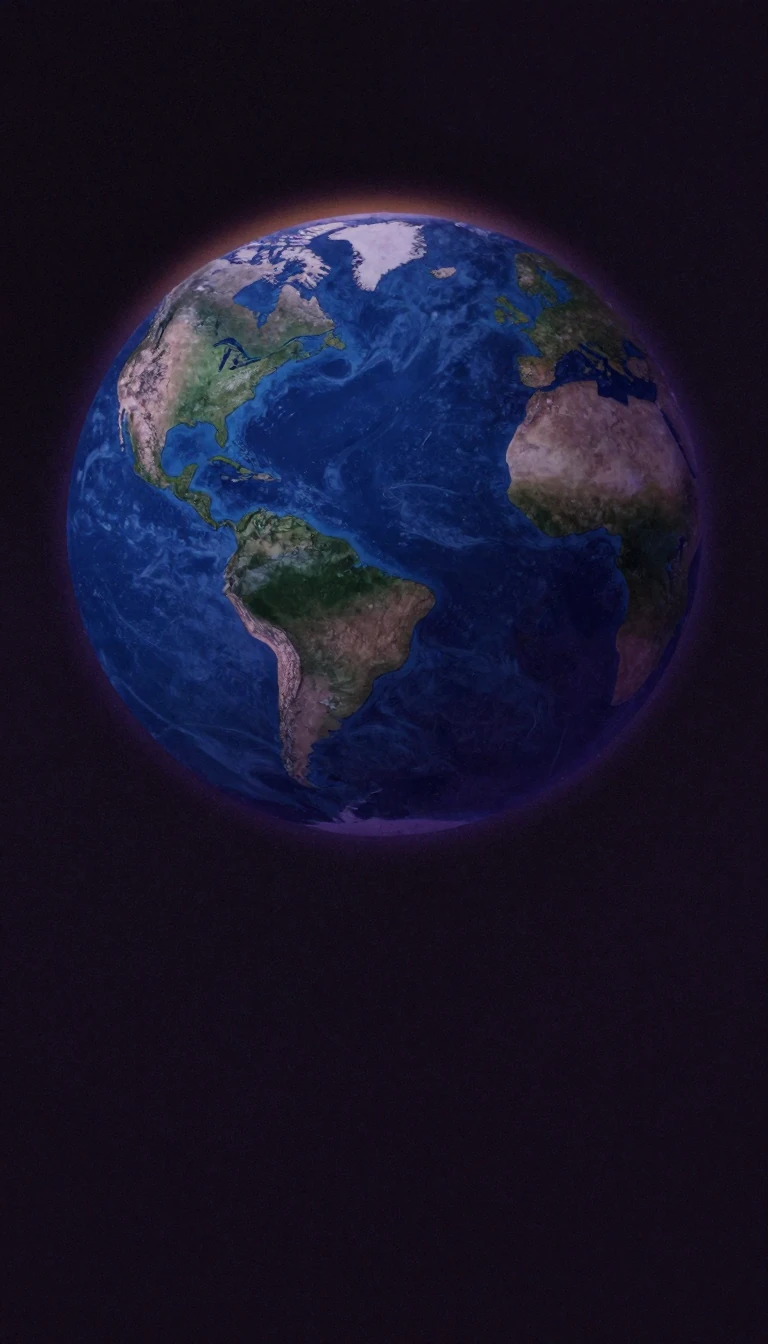
In short: Patterns are the fundamental language of reality, appearing in everything from the symmetry of starfish to the chaotic flow of wind-swept dunes. Whether through the lens of mathematics, biology, or art, these regularities organize our world, offering a way to compress complex information into predictable, meaningful structures.
At its core, a pattern is a regularity that repeats in a logical manner. While we often perceive these through our senses—such as the sixfold symmetry of a snowflake or the spiral phyllotaxis of a pineapple—many patterns remain hidden, observable only through mathematical analysis. Mathematics is frequently described as the 'Science of Pattern,' providing the tools to model phenomena ranging from the orbit of planets to the complex, scale-invariant shapes known as fractals.
Nature generates these structures through specific physical mechanisms. Reaction-diffusion systems, as described by Alan Turing, explain how simple chemical interactions create the stripes and spots on animal skins. Similarly, cracks in materials reveal their physical properties: 120-degree joints indicate elasticity, while 90-degree angles suggest inelasticity. Even chaos theory, which deals with systems that never exactly repeat due to sensitivity to initial conditions, reveals that complex dynamics emerge from the interplay between energy injection and dissipation.
Beyond mere description, patterns serve a functional purpose in human cognition and design. Daniel Dennett’s concept of 'real patterns' argues that we identify them because of their predictive utility and efficiency in compressing data. In architecture and art, repeating motifs organize surfaces to achieve specific aesthetic effects. Recent research, such as a 2021 study on fractal-based design, suggests that these patterns can even influence psychological well-being, balancing the human desire for engagement with a need for relaxation.
Ultimately, pattern theory, pioneered by Ulf Grenander, seeks to describe the world in a computationally friendly way. By viewing science and mathematics as collections of patterns, researchers can better understand the underlying structure of the universe. Whether in the meanders of a river or the grammar of a language, these regularities provide the skeleton upon which our understanding of reality is built.
Opens the Intellect+ feed with this card first. Swipe up for the next one.
Sources
- Summary by Intellect · source: Pattern
To cite this card, link to https://intellectplus.co.uk/app/ideas-pattern.
How we source, check and correct cards: Editorial standards.
General information, not professional advice. Spotted an error? Flag the card or see corrections and complaints.
Intellect Plus is a visual educational discovery platform for exploring fascinating facts and ideas. Brain Food, Not Brain Rot. What is Intellect Plus?
Related
More in Philosophy · More in Ideas & Philosophy · Latest · A–Z · All topics
