Why are you you, and not someone else? The philosophy of the self.
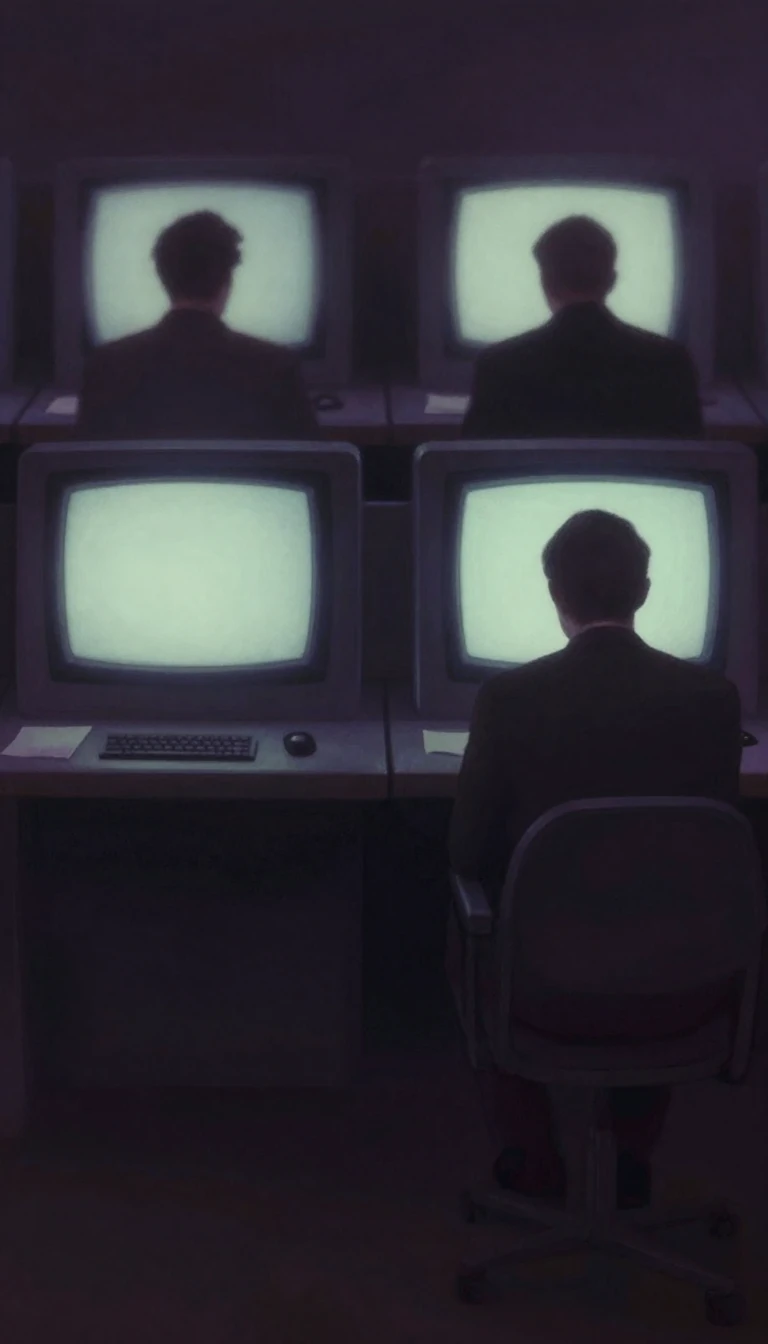
In short: You are a subject of experience, but why is it your consciousness that is live? Philosophers call this the vertiginous question. From the Buddhist doctrine of non-self to the teletransportation paradox, the search for an enduring, unique identity reveals that what we call the self may be a complex illusion.
At its core, the self is the individual's own being, knowledge, and values. Modern psychology often splits this into two elements: the 'I', which is the subjective knower, and the 'Me', which is the subject that is known. While we often assume this self is a permanent, unified essence, various traditions and thought experiments challenge that stability. In Buddhism, the concept of anattā suggests that no unchanging self exists, viewing attachment to the idea of a permanent soul as a primary cause of suffering. Conversely, some Hindu schools assert the existence of Ātman, an eternal witness-consciousness.
The problem of personal identity asks what makes a person at one time the same as a person at another. Derek Parfit’s teletransportation paradox, detailed in his 1984 book Reasons and Persons, pushes this to the limit. If a machine could disassemble you and recreate an exact replica on Mars, would that be travel or death? Parfit argues that our search for a definitive 'sameness' of person is futile because there is no 'further fact' beyond psychological connectedness—what he calls 'Relation R'.
Neuroscience attempts to ground these philosophical inquiries in biology, identifying regions like the medial prefrontal cortex and posterior cingulate cortex as key to self-reflection. However, the subjective experience remains elusive. Even the 'Even Harder Problem of Consciousness'—why a specific organism happens to be you—remains a central mystery. Whether viewed through the lens of Jungian archetypes, where the self is a transpersonal center of totality, or open individualism, which posits that there is only one subject who is everyone, the self remains a shifting, multifaceted construct rather than a simple, static fact.
Opens the Intellect+ feed with this card first. Swipe up for the next one.
Sources
- Summary by Intellect · source: Self
To cite this card, link to https://intellectplus.co.uk/app/ideas-self.
How we source, check and correct cards: Editorial standards.
General information, not professional advice. Spotted an error? Flag the card or see corrections and complaints.
Intellect Plus is a visual educational discovery platform for exploring fascinating facts and ideas. Brain Food, Not Brain Rot. What is Intellect Plus?
Related
More in Philosophy · More in Ideas & Philosophy · Latest · A–Z · All topics
