Can music be composed by rolling dice or listening to the silence of time?
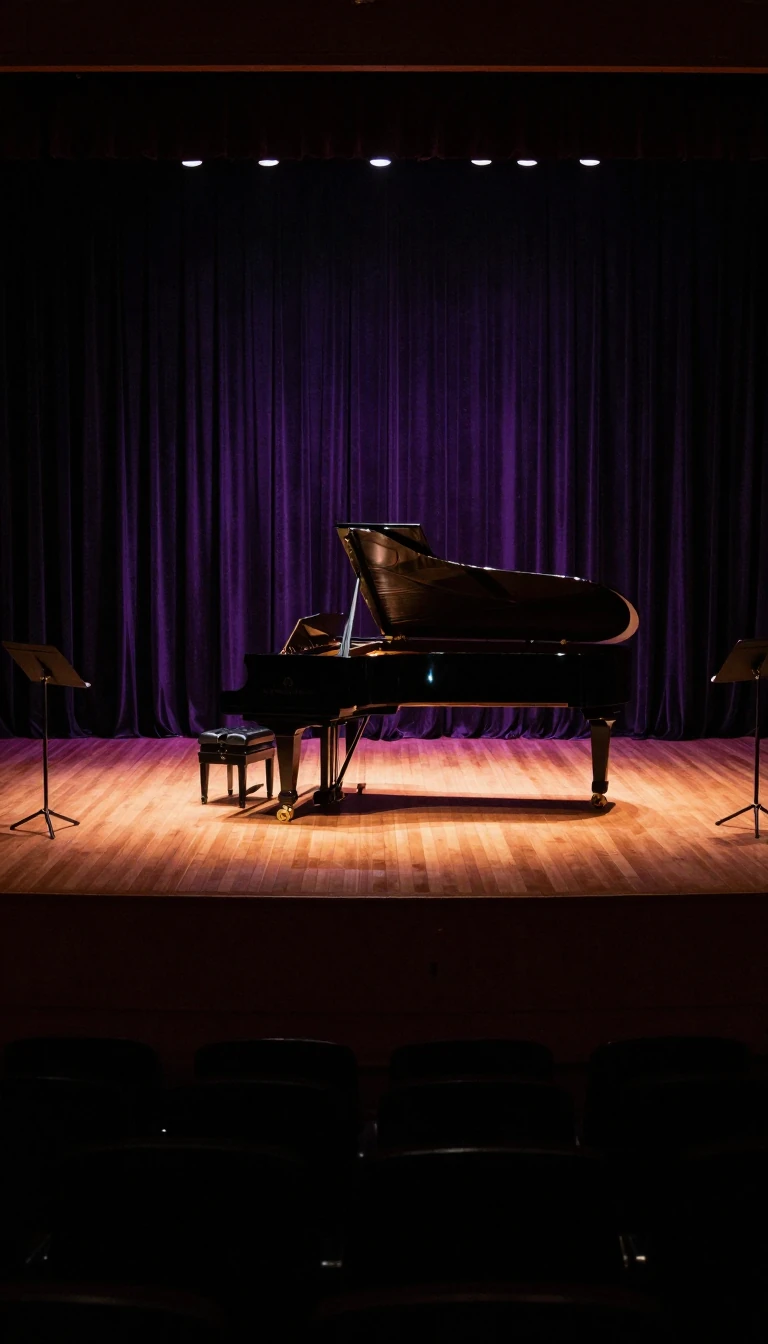
In short: Aleatoric music, derived from the Latin word for dice, invites chance into the compositional process. By relinquishing control over specific elements—like duration, sequence, or instrumentation—composers move beyond personal taste. This radical approach transforms music from a fixed score into a living, unpredictable process that unfolds in the moment.
The concept of aleatory music, or chance music, suggests that a composition’s course is generally determined while its details remain subject to randomness. While the term gained traction in the 1950s through the work of acoustician Werner Meyer-Eppler, the practice has deeper roots. Precedents include the 18th-century Musikalisches Würfelspiel, or musical dice games, where composers like Mozart and Haydn used dice to select sequences of musical measures. In the early 20th century, artists like Marcel Duchamp and composers such as Charles Ives and Henry Cowell further explored these unpredictable structures, challenging the traditional Western reliance on rigid notation.
John Cage stands as the most prominent figure in this movement. Influenced by Zen Buddhism, Cage sought to eliminate personal preference from his work, viewing all sounds as potential music. He employed randomizing tools, including the Chinese Yijing, to dictate sequences and durations. His 1951 work, Music of Changes, is often cited as the first composition largely determined by random procedures. Cage’s philosophy extended to the audience, encouraging them to perceive sonic phenomena as a natural process rather than a curated experience. His 1952 piece, 4′33″, famously pushed this to its limit by requiring the performer to remain silent for the duration of the work.
The legacy of aleatoric music continues in ambitious, long-form experiments. Cage’s Organ²/ASLSP, originally composed in 1985, is currently being performed in Halberstadt, Germany. The performance began in 2001 and is scheduled to conclude in 2640, a duration of 639 years chosen to reflect the time between the invention of the first modern organ keyboard in 1361 and the year 2000. This project highlights the core of aleatory philosophy: the music is not a static object, but a process limited only by the lifespan of the instrument and the commitment of those who sustain it.
Opens the Intellect+ feed with this card first. Swipe up for the next one.
Sources
- Summary by Intellect · source: Aleatory music | Aleatory Composition, Chance Music, Improvisation | Britannica
- Also: Aleatoric music
To cite this card, link to https://intellectplus.co.uk/app/music-aleatoric-music.
How we source, check and correct cards: Editorial standards.
General information, not professional advice. Spotted an error? Flag the card or see corrections and complaints.
Intellect Plus is a visual educational discovery platform for exploring fascinating facts and ideas. Brain Food, Not Brain Rot. What is Intellect Plus?
Related
More in Music · More in Music · Latest · A–Z · All topics
