Can you hear a melody or see a lemon without them being present?
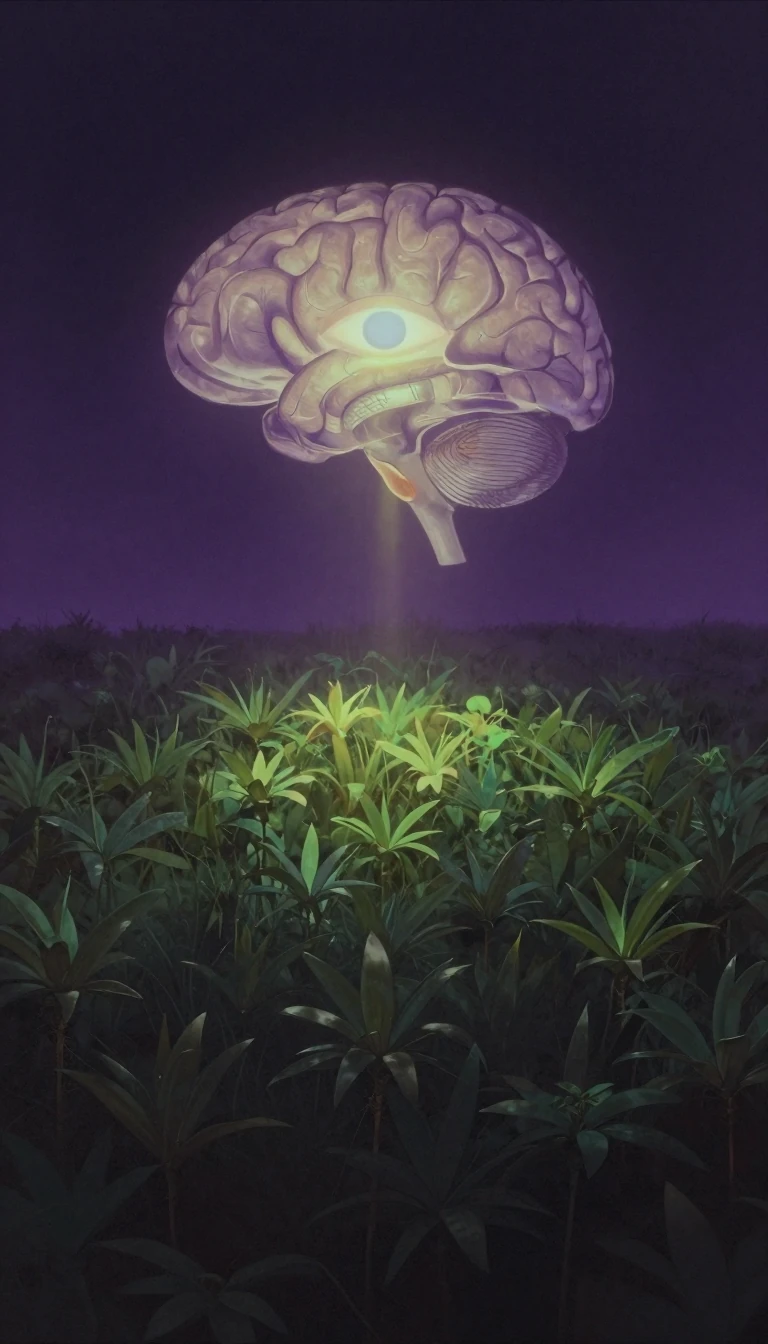
In short: Mental imagery allows us to represent the world without direct sensory stimulation. Whether it is the brightness of a yellow lemon or the phantom pattern of a shape, these quasi-perceptual experiences sit in the mysterious tension between pure perception and pure imagination.
Mental imagery is often defined as the simulation of perception. This simulation operates on three levels: procedurally, by using the same cognitive mechanisms as actual perception; phenomenologically, by mimicking the 'what it is like' of an experience; and functionally, by performing the same roles in our mental economy. While these images share brain regions and networks with actual sight—such as the V1 area of the visual cortex and the lateral geniculate nucleus—the exact extent of this overlap remains a subject of intense debate among neuroscientists.
The history of the concept is long, with Aristotle arguing that thought is impossible without 'phantasmata', or sensory traces. The Latin concept of 'mentis oculi', or the mind's eye, was famously discussed by Cicero regarding an orator's use of simile. By the late 19th century, experimental psychologists like Wundt and Titchener began studying the vividness and stability of these images. In 1910, researcher Perky demonstrated that mental imagery could be so potent that subjects could not distinguish between imagined objects and faint, projected images of those same objects.
Despite its importance, the field saw a decline in the 1920s due to the rise of behaviorism, which prioritized observable actions over internal introspection, and the discovery of 'imageless thought'. Interest was revived in the 1960s through new research into REM sleep and hallucinogenic drugs. Today, scholars continue to debate whether mental imagery is a subset of imagination or a distinct process, and whether the experience is identical to the neural representations that drive it.
Opens the Intellect+ feed with this card first. Swipe up for the next one.
Sources
- Summary by Intellect · source: Mental Imagery — OECS
- Also: Mental image
To cite this card, link to https://intellectplus.co.uk/app/music-mental-image.
How we source, check and correct cards: Editorial standards.
General information, not professional advice. Spotted an error? Flag the card or see corrections and complaints.
Intellect Plus is a visual educational discovery platform for exploring fascinating facts and ideas. Brain Food, Not Brain Rot. What is Intellect Plus?
Related
More in Memory · More in Music · Latest · A–Z · All topics
