Why one of the 20th century's greatest conductors refused to release his own recordings.
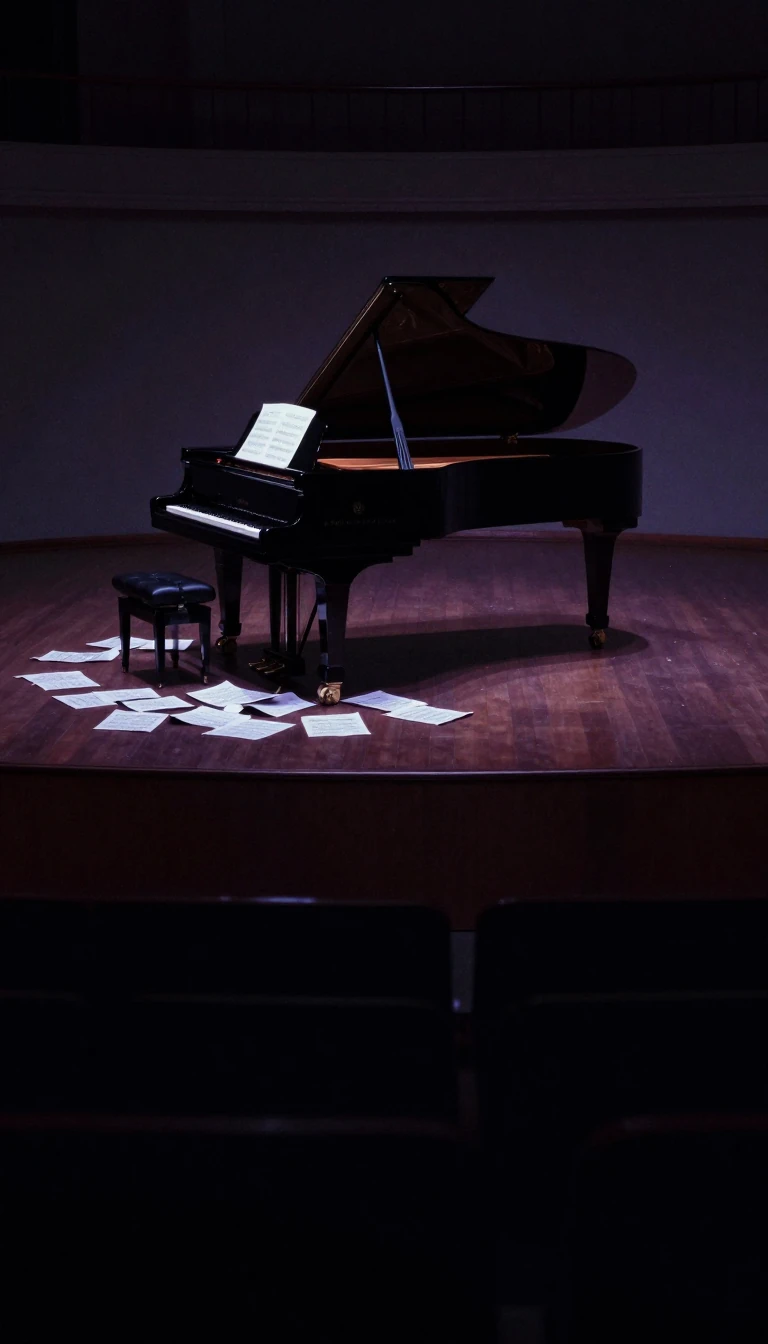
In short: Sergiu Celibidache believed music was a fleeting, transcendental experience that could only exist in the concert hall. By rejecting commercial recordings, he sought to protect the sanctity of the live moment, arguing that a static playback could never replicate the unique, evolving energy of a performance in real time.
Born in Romania in 1912, Sergiu Celibidache became a towering figure in classical music, leading prestigious ensembles including the Berlin Philharmonic and the Munich Philharmonic. His approach was deeply influenced by Zen Buddhism, which emphasized the concept of 'ichi-go ichi-e'—the idea that every encounter is unique and will never be repeated. For Celibidache, this philosophy meant that a musical performance was not a fixed object to be preserved, but a living, breathing event that required the specific acoustic conditions of a concert hall to truly manifest.
This conviction led to his famous, categorical refusal to authorize commercial recordings during his lifetime. He argued that the listener could not achieve a 'transcendental experience' outside the immediate presence of the orchestra. He viewed recordings as mere transcriptions, stripped of the essential ambience and the 'now' that defined his work. Despite this stance, his concerts were frequently recorded for radio broadcasts, and his family eventually consented to posthumous releases that have since become prized collector's items, noted for their unconventional tempi and intense, spirited interpretations.
Celibidache’s career was marked by both immense acclaim and significant friction. He was known for demanding exhaustive rehearsal times and held controversial views on the capabilities of his musicians, most notably in a prolonged legal battle with trombonist Abbie Conant over her role in the Munich Philharmonic. Yet, his influence as a teacher was profound, with courses that were often free and open to all. His legacy remains a paradox: a man who fought to keep music ephemeral, only to be remembered through the very recordings he spent his life trying to avoid.
Opens the Intellect+ feed with this card first. Swipe up for the next one.
Sources
- Summary by Intellect · source: Sergiu Celibidache
To cite this card, link to https://intellectplus.co.uk/app/music-sergiu-celibidache.
How we source, check and correct cards: Editorial standards.
General information, not professional advice. Spotted an error? Flag the card or see corrections and complaints.
Intellect Plus is a visual educational discovery platform for exploring fascinating facts and ideas. Brain Food, Not Brain Rot. What is Intellect Plus?
Related
More in Musicians and composers · More in Music · Latest · A–Z · All topics
