How one British captain systematically renamed the Pacific Northwest, ignoring millennia of Indigenous history.
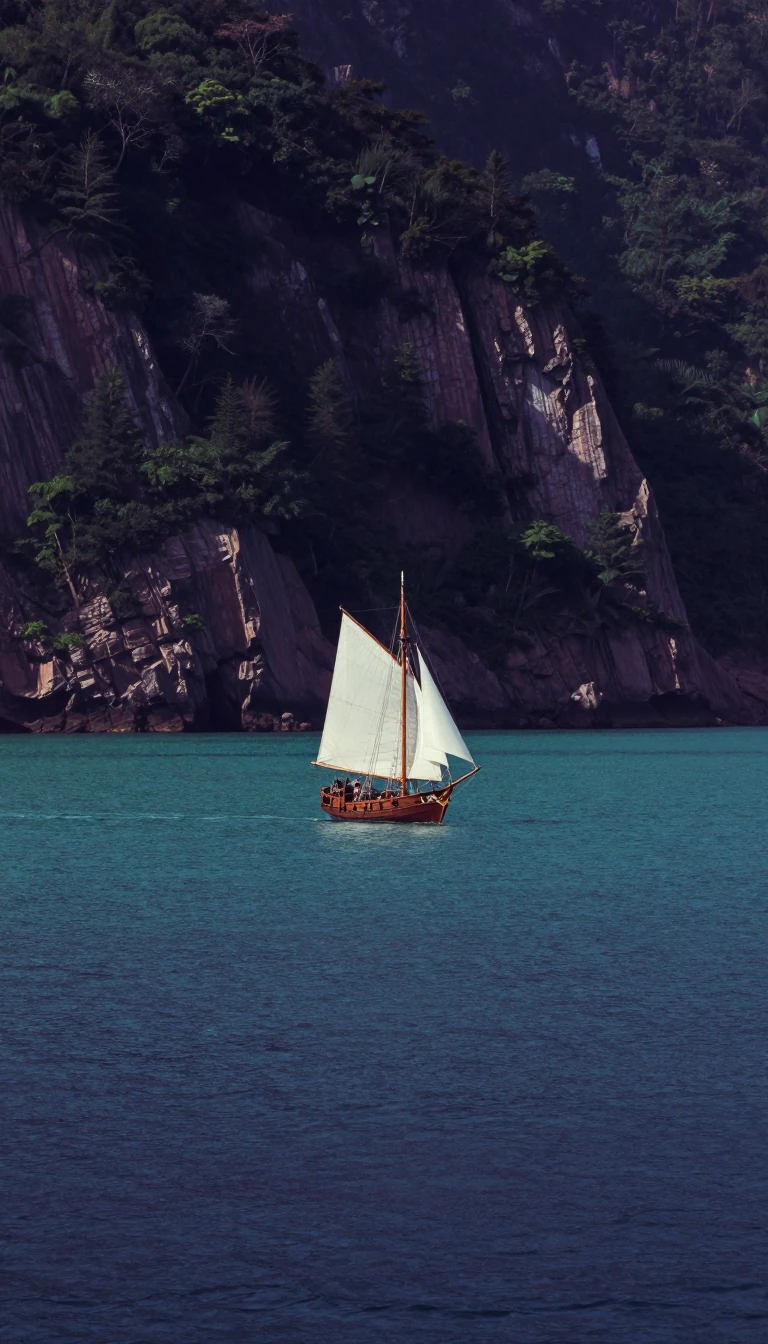
In short: In 1792, George Vancouver arrived on the North American coast with a mission to map the region and assert British imperial control. Over months of exploration, he systematically applied European names to 75 geographical features, effectively overwriting the deep-rooted traditions and complex societies of the Indigenous peoples already living there.
The British Admiralty commissioned Vancouver to survey the Pacific Northwest, a region where colonial powers like Spain, Russia, and Britain were competing for dominance. Driven by the search for a fabled Northwest Passage and the lucrative trade in sea otter pelts, these nations viewed the landscape through a lens of acquisition. Vancouver’s expedition, which departed England in 1791 with the ships Discovery and Chatham, was tasked with mapping the coast and securing Nootka Sound. By the time he reached the Strait of Juan de Fuca in April 1792, he was already an experienced navigator, having previously served under Captain James Cook.
Vancouver’s approach to the land was one of total renaming. He ignored existing Indigenous knowledge, instead applying names derived from his own social circle, his officers, and his ship. Features like Mount Rainier, Puget Sound, and Burrard Inlet were christened to honor his associates and friends. This process was not merely cartographic; it was an assertion of imperial authority. While Vancouver recorded that he encountered Indigenous groups—such as the Makah, who greeted his crew with civility—he proceeded to impose a new European taxonomy upon the geography, regardless of the thousands of people who had occupied the region for millennia.
The Pacific Northwest was far from an empty wilderness. Indigenous societies were organized into complex, village-based networks with broad, sophisticated family structures. For instance, the Puyallup Tribe maintained wide-reaching connections, and the Makah, or Qih-dihch-chuh-ahtX, had long resided at the northwest tip of present-day Washington. Despite the existence of these established cultures, Vancouver’s maps prioritized European imperial ambitions. Today, these names remain as a legacy of that era, reflecting a time when colonial powers debated ownership of the continent with little regard for the people who had called it home for generations.
Opens the Intellect+ feed with this card first. Swipe up for the next one.
Sources
- Summary by Intellect · source: How Captain George Vancouver Mapped and Shaped the Modern Pacific Northwest
- Also: George Vancouver
To cite this card, link to https://intellectplus.co.uk/app/nature-george-vancouver.
How we source, check and correct cards: Editorial standards.
General information, not professional advice. Spotted an error? Flag the card or see corrections and complaints.
Intellect Plus is a visual educational discovery platform for exploring fascinating facts and ideas. Brain Food, Not Brain Rot. What is Intellect Plus?
Related
More in Physical geography · More in Nature · Latest · A–Z · All topics
