Your body knows where it is in space without you ever needing to look.
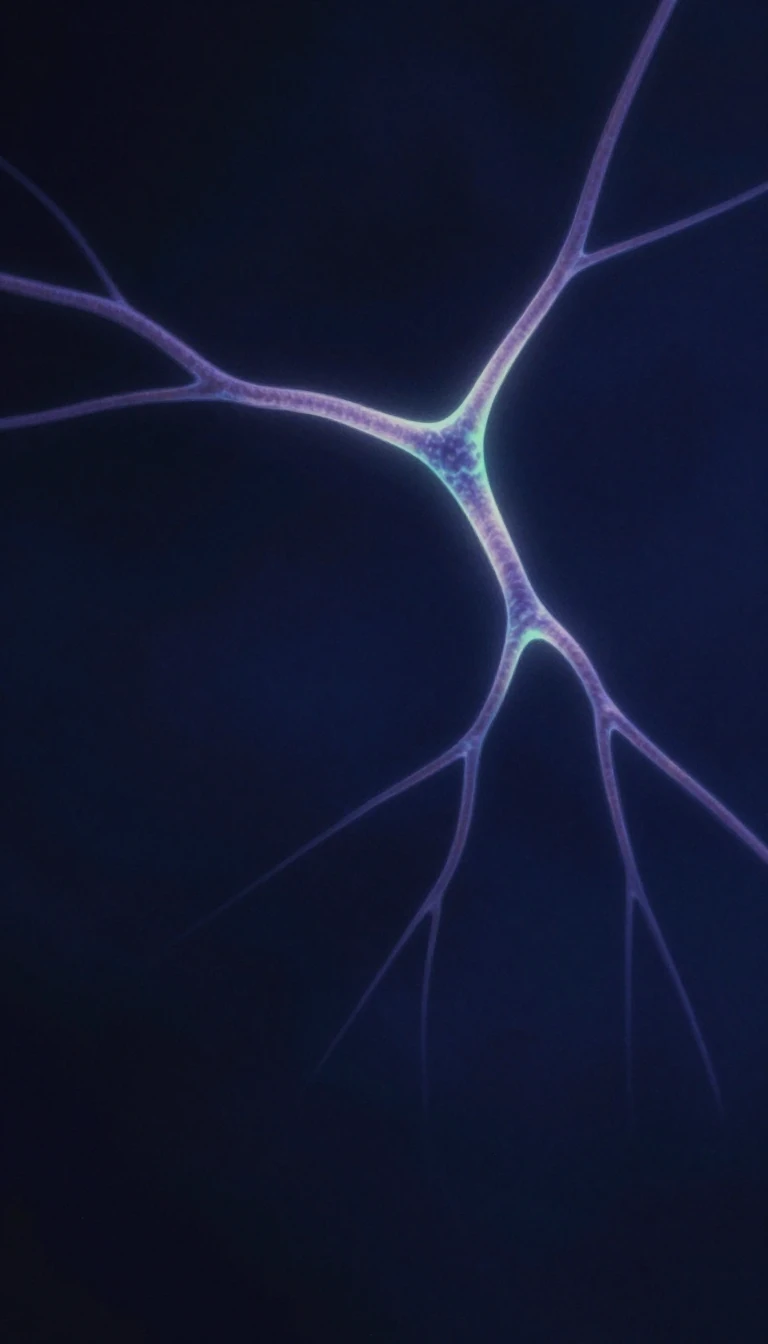
In short: Proprioception is the silent sense that tracks your body's movement, force, and position. From the muscle spindles in your limbs to the receptors in your inner ear, this internal feedback loop allows you to walk, balance, and reach for objects without conscious effort, even in total darkness.
Proprioception is mediated by specialized sensory receptors called proprioceptors, which are distributed throughout muscles, tendons, joints, and vestibular organs. These receptors translate the mechanical state of the body into neural activity, providing the central nervous system with constant updates on limb position, velocity, and force. While vertebrates rely on muscle spindles and Golgi tendon organs, invertebrates utilize analogous structures like chordotonal neurons and campaniform sensilla. This system is so fundamental that it is ubiquitous across all mobile animals, acting as the essential foundation for motor coordination.
The process involves both conscious and nonconscious pathways. Conscious proprioception travels to the cerebrum, while nonconscious signals are processed by the cerebellum to manage balance and posture. A classic example of this nonconscious control is the righting reflex, where the body automatically adjusts the head to level the eyes against the horizon. These reflex loops are incredibly fast, allowing the spinal cord to trigger muscle contractions to oppose sudden stretches or perturbations before the brain even registers the event. This speed is vital for maintaining stability during locomotion on uneven terrain.
Modern research has moved beyond simple anatomical descriptions to complex mathematical modeling. Early models, such as those by Poppele and Bowman, used linear system theory to describe how muscle spindles respond to stretch. However, recent studies suggest these systems are more nuanced, exhibiting nonlinear behaviors like history-dependence and rate relaxation. Furthermore, researchers like Blum et al. have proposed that muscle spindles may actually track the force of inactive muscle rather than just length. Understanding these mechanisms is not just academic; it has practical applications in creating realistic virtual haptic feedback and improving control systems for prosthetic limbs, where the degree of proprioceptive feedback directly correlates to a user's ability to manipulate a virtual limb.
The molecular basis of this sense is also coming into focus. The PIEZO2 gene, which encodes a nonselective cation channel, is essential for mechanosensitivity in many proprioceptors. Humans with loss-of-function mutations in this gene suffer from specific deficits in joint proprioception, touch, and vibration discrimination. By integrating these mechanical signals with visual and vestibular data, the nervous system constructs a coherent representation of the body, allowing for the fluid, stereotyped movements we often take for granted.
Opens the Intellect+ feed with this card first. Swipe up for the next one.
Sources
- Summary by Intellect · source: Proprioception
To cite this card, link to https://intellectplus.co.uk/app/nature-proprioception.
How we source, check and correct cards: Editorial standards.
General information, not professional advice. Spotted an error? Flag the card or see corrections and complaints.
Intellect Plus is a visual educational discovery platform for exploring fascinating facts and ideas. Brain Food, Not Brain Rot. What is Intellect Plus?
Related
More in Organisms · More in Nature · Latest · A–Z · All topics
