A supercell is a rotating thunderstorm capable of dominating weather for over thirty kilometers.
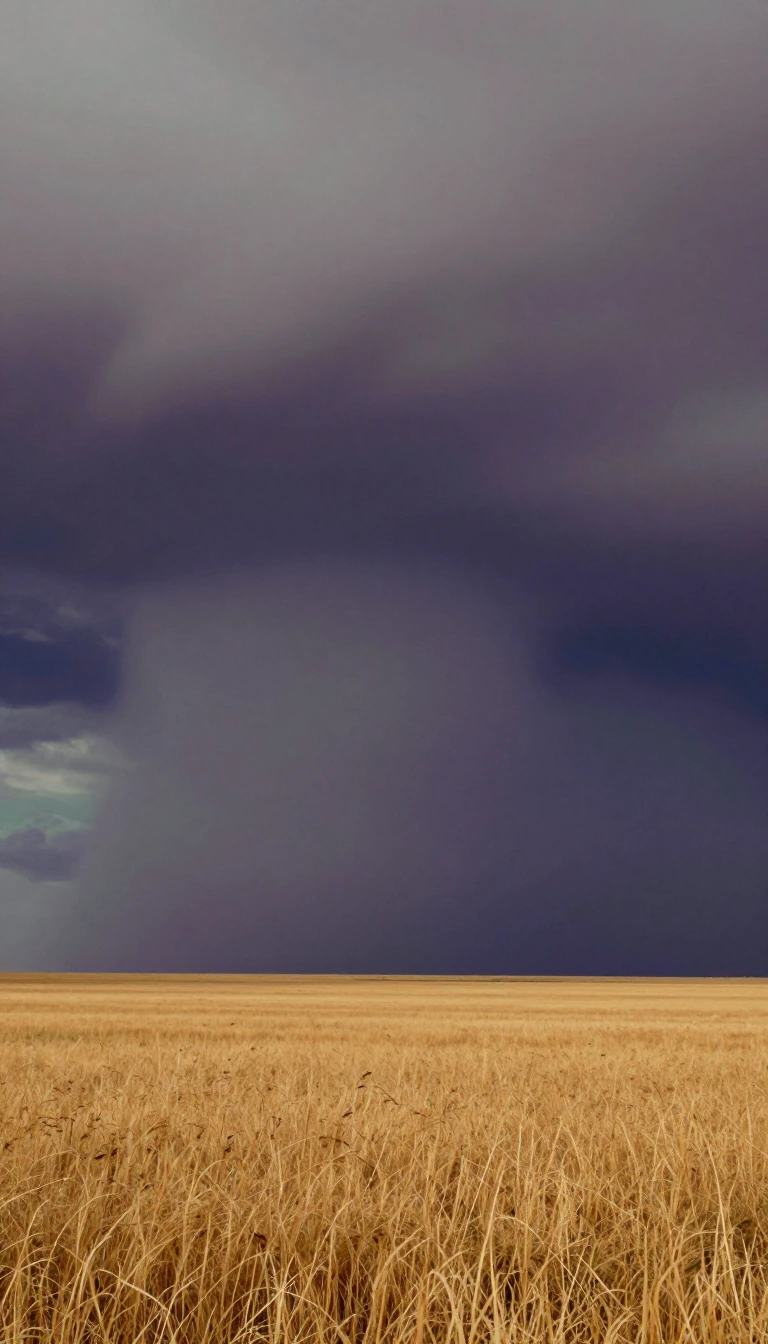
In short: While most thunderstorms are fleeting, supercells are quasi-steady-state machines that can persist for hours. Defined by a deep, rotating updraft known as a mesocyclone, these storms are the least common but most severe of all thunderstorm types, capable of spawning tornadoes, massive hail, and torrential, destructive rainfall.
At the heart of a supercell lies the mesocyclone, a persistently rotating updraft formed when horizontal vorticity—created by wind shear—is tilted into a vertical orientation. This process requires a capping inversion, a layer of warm air that prevents surface air from rising until enough instability builds up for an explosive breakthrough. Once this cap weakens, the storm can reach heights of up to 21,000 meters, punching through the troposphere into the lower stratosphere.
Meteorologists classify these storms into three main types based on their precipitation regimes: classic, low-precipitation (LP), and high-precipitation (HP). Classic supercells are the standard model, while LP supercells, formally described by Howard Bluestein in the early 1980s, are often sought by storm chasers for their clear, sculpted structure. Conversely, HP supercells are particularly dangerous because their heavy rain cores can wrap around the mesocyclone, effectively hiding potential tornadoes from view.
The destructive potential of these storms is well-documented. In 1999, a supercell in New South Wales dropped an estimated 500,000 tonnes of hail, resulting in A$2.3 billion in damage. Similarly, a 2010 storm in Melbourne caused over $220 million in losses and triggered 40,000 insurance claims in a single event. While only about 30% or fewer of supercells produce tornadoes, their ability to deviate from mean wind patterns and sustain themselves for seven or more hours makes them one of the most formidable phenomena in atmospheric science.
Opens the Intellect+ feed with this card first. Swipe up for the next one.
Sources
- Summary by Intellect · source: Supercell
To cite this card, link to https://intellectplus.co.uk/app/nature-supercell.
How we source, check and correct cards: Editorial standards.
General information, not professional advice. Spotted an error? Flag the card or see corrections and complaints.
Intellect Plus is a visual educational discovery platform for exploring fascinating facts and ideas. Brain Food, Not Brain Rot. What is Intellect Plus?
Related
More in Air · More in Nature · Latest · A–Z · All topics
