Why volcanic glass is a fleeting masterpiece in the history of our planet
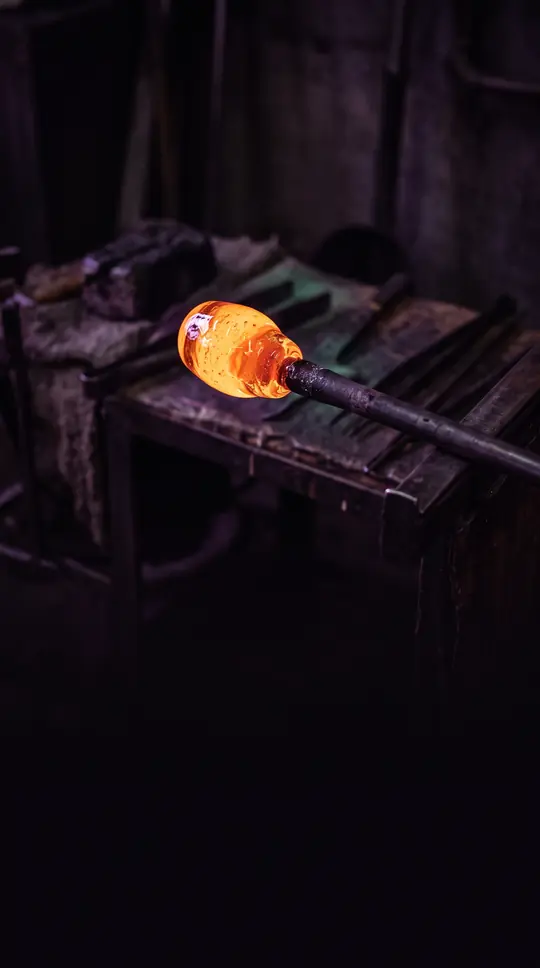
In short: Volcanic glass is a geological anomaly. Formed when molten lava cools too rapidly to crystallize, it exists in a state of suspended animation. Yet, this beauty is inherently unstable. Over time, it inevitably transforms into stone, making ancient specimens a rare find in the record of Earth's deep history.
Volcanic glass forms when magma, typically rich in silica and low in water, cools so quickly that its atoms cannot arrange themselves into the orderly structures of a crystal. This process creates an amorphous solid, a state of matter sitting between the rigid order of a crystal and the disorder of a liquid. Because high viscosity prevents the movement required for crystallization, the material effectively freezes in place. This transition occurs at a specific glass transition temperature, which is heavily influenced by the cooling rate and the chemical composition of the molten rock.
The most effective way to trigger this rapid cooling is through quenching in water, such as in phreatomagmatic eruptions or the formation of pillow lavas. Cooling by entrained air in an eruption column is also common, while cooling at the base of a lava flow is the least efficient method. Because basalt has a lower silica content than granite-like magmas, it is much harder to turn into glass; when it does, it often contains quench crystals. Forms of basaltic glass include the opaque tachylite and the more transparent sideromelane, which is frequently found in rapid-cooling environments.
The inherent instability of volcanic glass is its defining trait. Because it lacks a crystal structure, it is prone to devitrification, a process where it spontaneously converts into fine crystalline aggregates of quartz, tridymite, and alkali feldspar. This transformation often begins along cracks or around existing crystals, eventually consuming the entire mass. Geologically speaking, this happens quickly. Consequently, most volcanic glass found today is from the Paleogene period or younger—less than 65.5 million years old. While ancient glasses were likely abundant in the past, almost all have since devitrified, leaving behind stony remnants of what were once glassy flows.
Opens the Intellect+ feed with this card first. Swipe up for the next one.
Sources
- Summary by Intellect · source: Volcanic glass | Obsidian, Pumice & Scoria | Britannica
- Also: Volcanic glass
To cite this card, link to https://intellectplus.co.uk/app/nature-volcanic-glass.
How we source, check and correct cards: Editorial standards.
General information, not professional advice. Spotted an error? Flag the card or see corrections and complaints.
Intellect Plus is a visual educational discovery platform for exploring fascinating facts and ideas. Brain Food, Not Brain Rot. What is Intellect Plus?
Related
More in Geology · More in Nature · Latest · A–Z · All topics
