The skyscraper designed to be a machine that makes the land pay
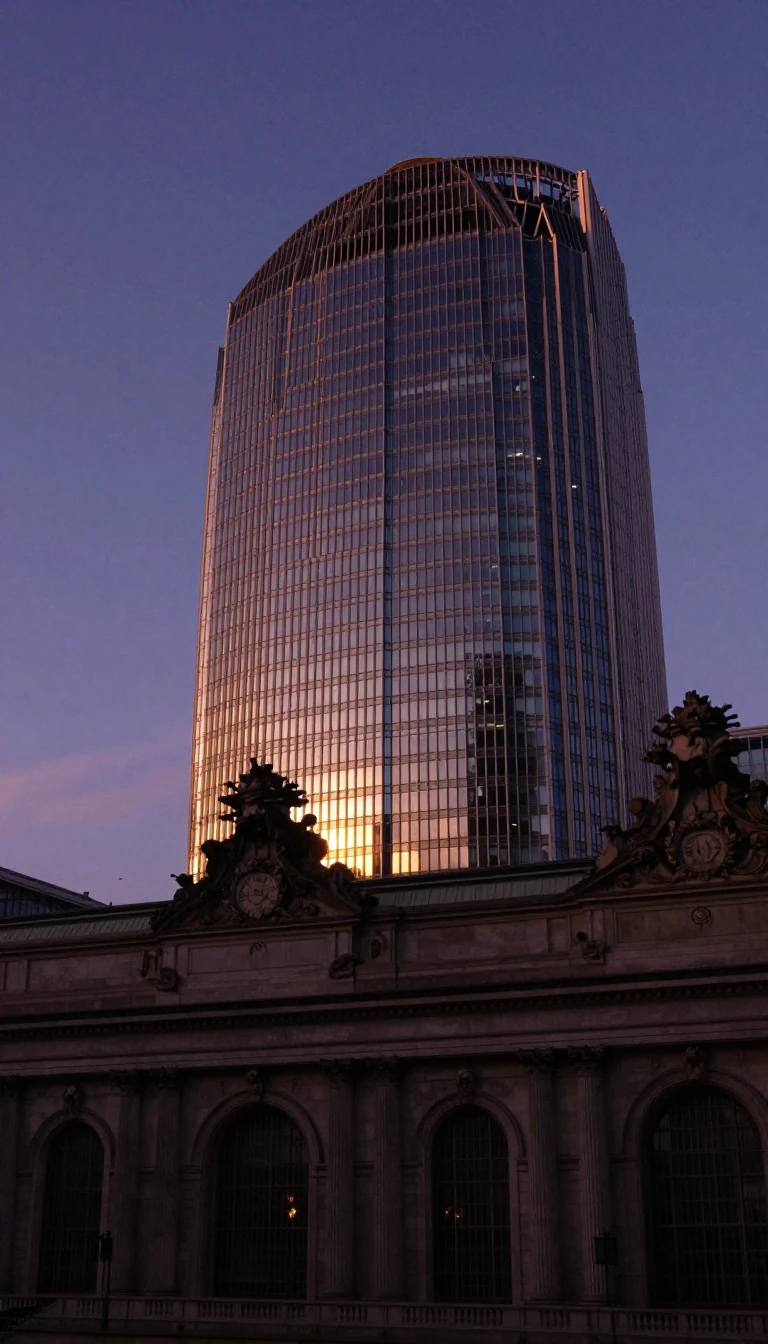
In short: In 1905, architect Cass Gilbert didn't just want to build a beautiful skyscraper; he wanted to create a high-yielding economic engine. 90 West Street was designed to maximize every inch of its difficult waterfront lot, blending high-art Gothic aesthetics with rigorous industrial engineering to turn vertical space into profit.
Designed by Cass Gilbert and completed in 1907, 90 West Street represents a pivotal transition in American architecture. It bridged the gap between the 19th-century 'classical column' style—which divided buildings into distinct base, shaft, and capital sections—and Gilbert's later 'romantic tower' designs. To achieve this, the building utilizes a reduced tripartite layout: a three-story granite base, a tall vertical shaft emphasized by piers, and a crown featuring a seven-story upper section topped with a copper-clad mansard roof.
The building's aesthetic was heavily influenced by European Gothic models, specifically the St. Rumbold's Cathedral in Mechelen and the Brussels Town Hall. It was among the first skyscrapers to consistently employ neo-Gothic decoration, featuring a facade of beige terracotta tiles accented with red, green, blue, and gold. While Gilbert originally planned a five-story tower to rival the Flatiron Building, the owner, Howard Carroll, canceled it to save costs, resulting in the building's unique current proportions.
Engineering the structure was a feat of survival against New York's geography. The site sat on a precarious mix of mud, silt, and sand, with bedrock averaging 50 feet down. Rather than using dangerous pneumatic caissons, structural engineer Gunvald Aus opted for pilings. To satisfy the Metropolitan Life Insurance Company's fears of uneven settling, Aus conducted a test proving a pile could support 35 short tons of pig iron with only 3/8 inch of movement. This foundation work, performed by the Sicilian Asphalt Paving Company, required extensive waterproofing as the site sat just below the Hudson River's mean high water.
The building has survived significant historical shifts, from being marketed as home to the world's highest restaurant to enduring severe damage during the September 11 attacks. Today, it stands as a designated landmark, a testament to Gilbert's belief that architectural beauty holds inherent income-bearing value.
Opens the Intellect+ feed with this card first. Swipe up for the next one.
Sources
- Summary by Intellect · source: 90 West Street
- Also: Wikidata — 90 West Street · CC0
To cite this card, link to https://intellectplus.co.uk/app/places-90-west-street.
How we source, check and correct cards: Editorial standards.
General information, not professional advice. Spotted an error? Flag the card or see corrections and complaints.
Intellect Plus is a visual educational discovery platform for exploring fascinating facts and ideas. Brain Food, Not Brain Rot. What is Intellect Plus?
Related
More in World Heritage Sites · More in Countries & Cities · Latest · A–Z · All topics
