A bluff of smoke and signals sank a German battleship without a shot.
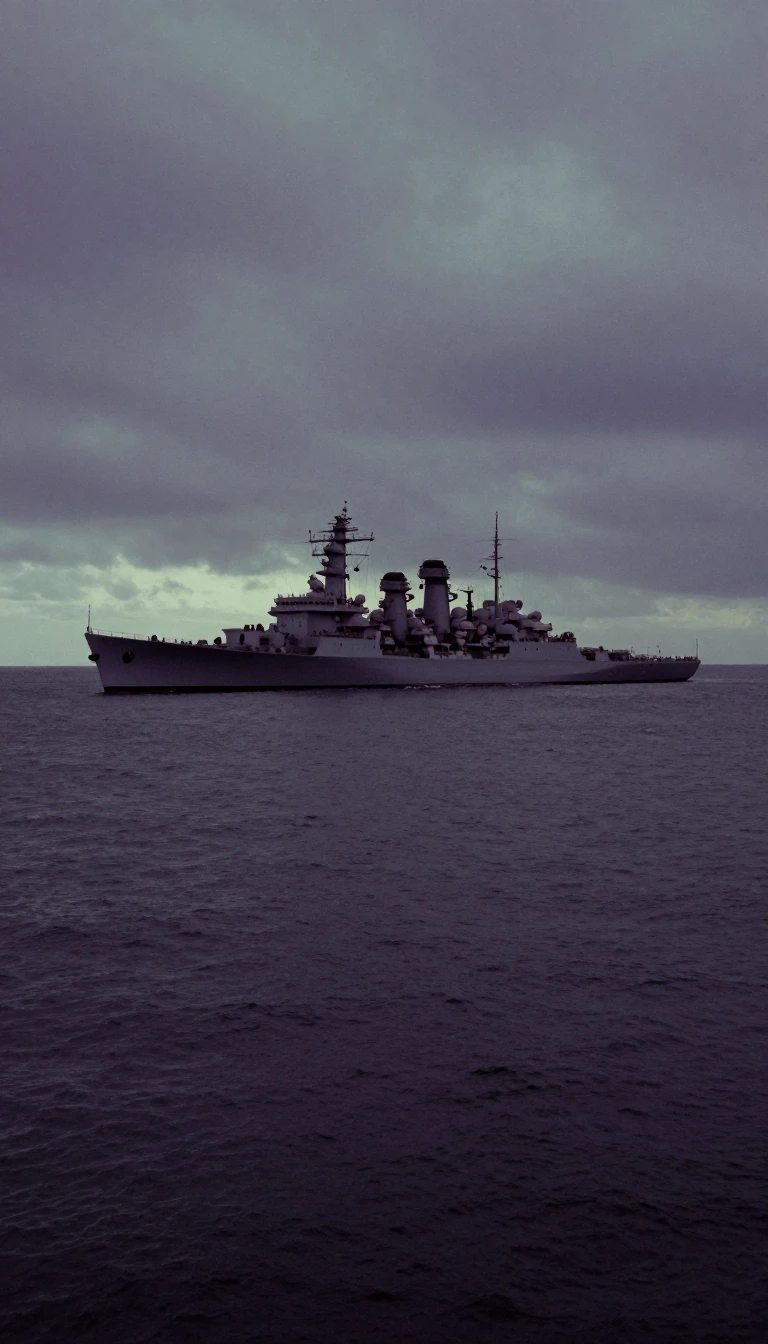
In short: In December 1939, the German pocket battleship Admiral Graf Spee was cornered in neutral Montevideo. Despite being low on fuel and ammunition, the ship was still a formidable threat. The British victory was secured not through superior firepower, but by a masterful psychological bluff that convinced the Germans they were outnumbered.
The Battle of the River Plate began on 13 December 1939, when a British squadron led by Commodore Henry Harwood intercepted the German raider Admiral Graf Spee off the coast of Uruguay. The engagement was the first major naval battle of the Second World War. While the British cruisers HMS Exeter, HMS Ajax, and HMNZS Achilles were outgunned, they executed a pre-planned strategy of splitting their forces to divide the German ship's fire. Exeter was severely damaged, but a decisive hit to the German vessel's fuel processing system left her unable to return to Germany.
Seeking refuge in the neutral port of Montevideo, Captain Hans Langsdorff faced a 72-hour deadline to depart. British diplomats, led by Eugen Millington-Drake, exploited international maritime law to delay the ship, arranging for merchant vessels to depart at intervals that triggered a 24-hour waiting period for the German warship. Meanwhile, the British Admiralty broadcasted false intelligence suggesting an overwhelming force was assembling to intercept the raider. In reality, only the cruiser HMS Cumberland had arrived to reinforce the damaged Ajax and Achilles.
Believing he faced a superior force and unable to repair his crippled ship, Langsdorff scuttled the Admiral Graf Spee in the River Plate estuary on 17 December 1939. The decision infuriated Adolf Hitler, and Langsdorff took his own life two days later. The battle served as a significant strategic victory for the British, who used propaganda and diplomatic maneuvering to neutralize a capital ship that could have otherwise continued its commerce-raiding campaign in the South Atlantic.
The aftermath saw the internment of the German crew in Argentina, with many later settling in South America. The wreck of the Admiral Graf Spee eventually subsided into the mud of the estuary, leaving only the mast visible. While Harwood faced some criticism for not being more aggressive during the pursuit, the engagement remains a classic study in how strategic deception can overcome tactical disadvantages in naval warfare.
Opens the Intellect+ feed with this card first. Swipe up for the next one.
Sources
- Summary by Intellect · source: Battle of the River Plate
- Also: Wikidata — Battle of the River Plate · CC0
- Also: Wikidata — The Battle of the River Plate · CC0
To cite this card, link to https://intellectplus.co.uk/app/places-battle-of-the-river-plate.
How we source, check and correct cards: Editorial standards.
General information, not professional advice. Spotted an error? Flag the card or see corrections and complaints.
Intellect Plus is a visual educational discovery platform for exploring fascinating facts and ideas. Brain Food, Not Brain Rot. What is Intellect Plus?
Related
More in Cities · More in Countries & Cities · Latest · A–Z · All topics
