Bishkek: A Soviet-era capital built on the ruins of a Silk Road fortress
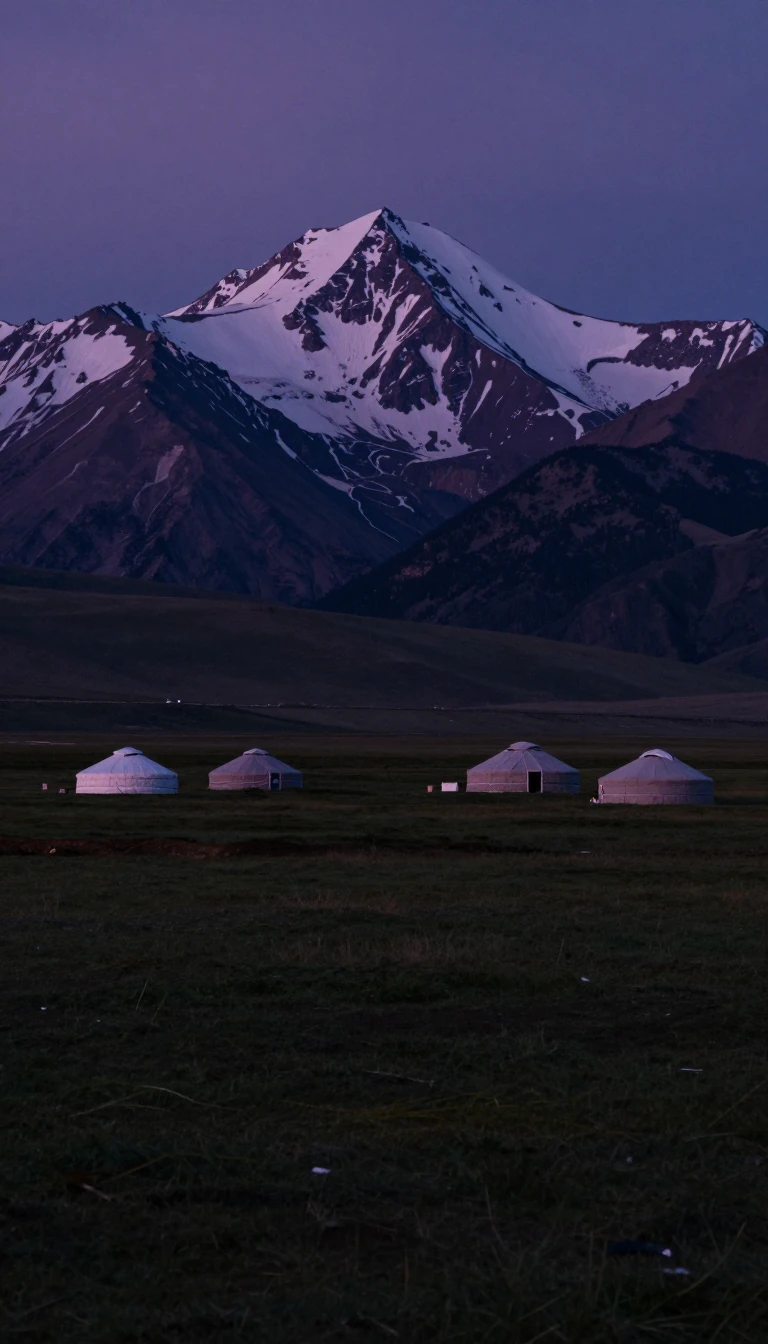
In short: Nestled against the towering Kyrgyz Ala-Too range, Bishkek is a city of sharp contrasts. Once a nomadic caravan stop and later a Soviet industrial hub named Frunze, it has evolved into a modern capital where marble government buildings share space with traditional bazaars and the echoes of a complex history.
The site of modern Bishkek has served as a strategic crossroads for centuries. Originally a Silk Road rest stop, it was fortified in 1825 by the Khanate of Kokand to control caravan routes and collect tribute. By 1860, Imperial Russian forces under Colonel Apollon Zimmermann razed the mud fortress, eventually establishing a Russian settlement that grew into the city of Pishpek. The city's name itself remains a point of local legend, often linked to the paddle used for churning kumis, though its official history is deeply tied to the Soviet era.
In 1926, the city was renamed Frunze in honor of Bolshevik leader Mikhail Frunze, who was born there. For much of the 20th century, it functioned as the capital of the Kirghiz Soviet Socialist Republic, defined by wide boulevards, Soviet-style apartment blocks, and industrial plants. The transition to independence in 1991 brought a return to the name Bishkek and a demographic shift; while the city was once majority European, it is now predominantly Kyrgyz. Despite this, Russian remains the primary language of daily life.
Today, Bishkek faces the challenges of rapid urbanization. The city center, laid out on a strict grid, is home to the White House and the Academy of Sciences, yet the outskirts are marked by informal settlements and significant air quality concerns. Hydrogeologist Zheenbek Kulbekov notes that coal-heating in these areas, combined with vehicle exhaust and poor air circulation caused by haphazard high-rise construction, has led to pollution levels that occasionally exceed safety limits by a factor of four.
Despite these modern pressures, the city remains the financial and cultural heart of Kyrgyzstan. It hosts all 21 of the country's commercial banks and serves as a gateway to the Tian Shan mountains. From the historic Dordoy Bazaar to the som-based economy, Bishkek continues to balance its industrial legacy with its identity as a young, evolving capital at the edge of the steppe.
Opens the Intellect+ feed with this card first. Swipe up for the next one.
Sources
- Summary by Intellect · source: Bishkek
- Also: Wikidata — Bishkek · CC0
- Also: Wikidata — Bishkek · CC0
To cite this card, link to https://intellectplus.co.uk/app/places-bishkek.
How we source, check and correct cards: Editorial standards.
General information, not professional advice. Spotted an error? Flag the card or see corrections and complaints.
Intellect Plus is a visual educational discovery platform for exploring fascinating facts and ideas. Brain Food, Not Brain Rot. What is Intellect Plus?
Related
More in Cities · More in Countries & Cities · Latest · A–Z · All topics
