How a giant fiberglass lion mouth nearly doomed the world's largest hotel casino
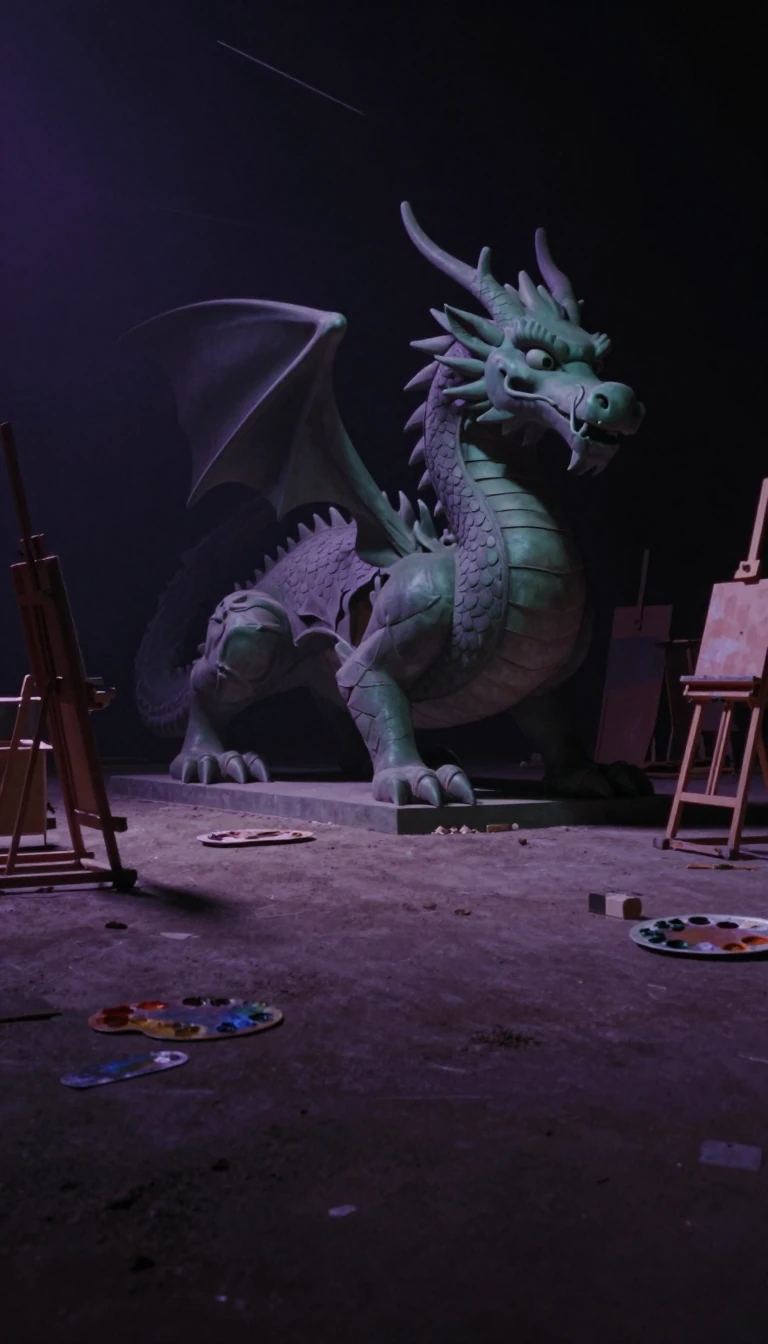
In short: When the MGM Grand opened in 1993, it was the world's largest hotel, featuring a massive lion-head entrance. However, the design inadvertently offended Asian gamblers who believed walking through a lion's mouth brought bad luck. The resort quickly pivoted, replacing the cartoonish facade with a massive bronze statue.
Developed by Kirk Kerkorian, the MGM Grand opened on December 18, 1993, on the site of the former Marina Hotel and Tropicana Country Club. At its debut, the $1 billion resort boasted 5,005 rooms and a 171,500-square-foot casino, both setting world records at the time. Its original aesthetic was heavily inspired by the 1939 film The Wizard of Oz, featuring themed gaming areas like the Emerald City Casino, complete with animatronics and a hydraulic moving floor.
The resort's initial branding faced immediate cultural friction. The entrance, a 88-foot-tall fiberglass lion head, was criticized by architecture critic Blair Kamin as cartoonish and confusing. More significantly, the design was perceived as bad luck by Asian gamblers who viewed entering through the lion's mouth as an ominous act. By 1996, management initiated a massive, multi-phase renovation to shed the Wizard of Oz theme and replace the controversial lion entrance. The replacement, a 50-ton bronze lion statue designed by Snellen Johnson, remains the largest bronze statue in the United States.
Over the decades, the MGM Grand has continuously reinvented itself to remain competitive. It transitioned from a family-friendly destination—once featuring the MGM Grand Adventures theme park—into a high-end hub for luxury dining and entertainment. It has hosted everything from the Mansion for high rollers to the Skylofts, and has featured residencies from world-renowned chefs like Joël Robuchon. Despite its size and constant evolution, including a 2025 room renovation that reduced the total count to 4,762, the resort maintains its status as a central fixture of the Las Vegas Strip.
The property's history is also marked by its shifting ownership and operational experiments. After being sold to a joint venture between MGM Growth Properties and The Blackstone Group in 2020, it was eventually acquired by Vici Properties. The resort has also served as a testing ground for unique concepts, such as the short-lived private gaming salons introduced in 2002 and the long-running Lion Habitat, which closed in 2012. Today, it stands as a testament to the rapid, iterative nature of Las Vegas development.
Opens the Intellect+ feed with this card first. Swipe up for the next one.
Sources
- Summary by Intellect · source: MGM Grand Las Vegas
- Also: Wikidata — MGM Grand Las Vegas · CC0
To cite this card, link to https://intellectplus.co.uk/app/places-mgm-grand-las-vegas.
How we source, check and correct cards: Editorial standards.
General information, not professional advice. Spotted an error? Flag the card or see corrections and complaints.
Intellect Plus is a visual educational discovery platform for exploring fascinating facts and ideas. Brain Food, Not Brain Rot. What is Intellect Plus?
Related
More in Cities · More in Countries & Cities · Latest · A–Z · All topics
