How a foggy Newfoundland headland became the cradle of Earth's earliest complex life
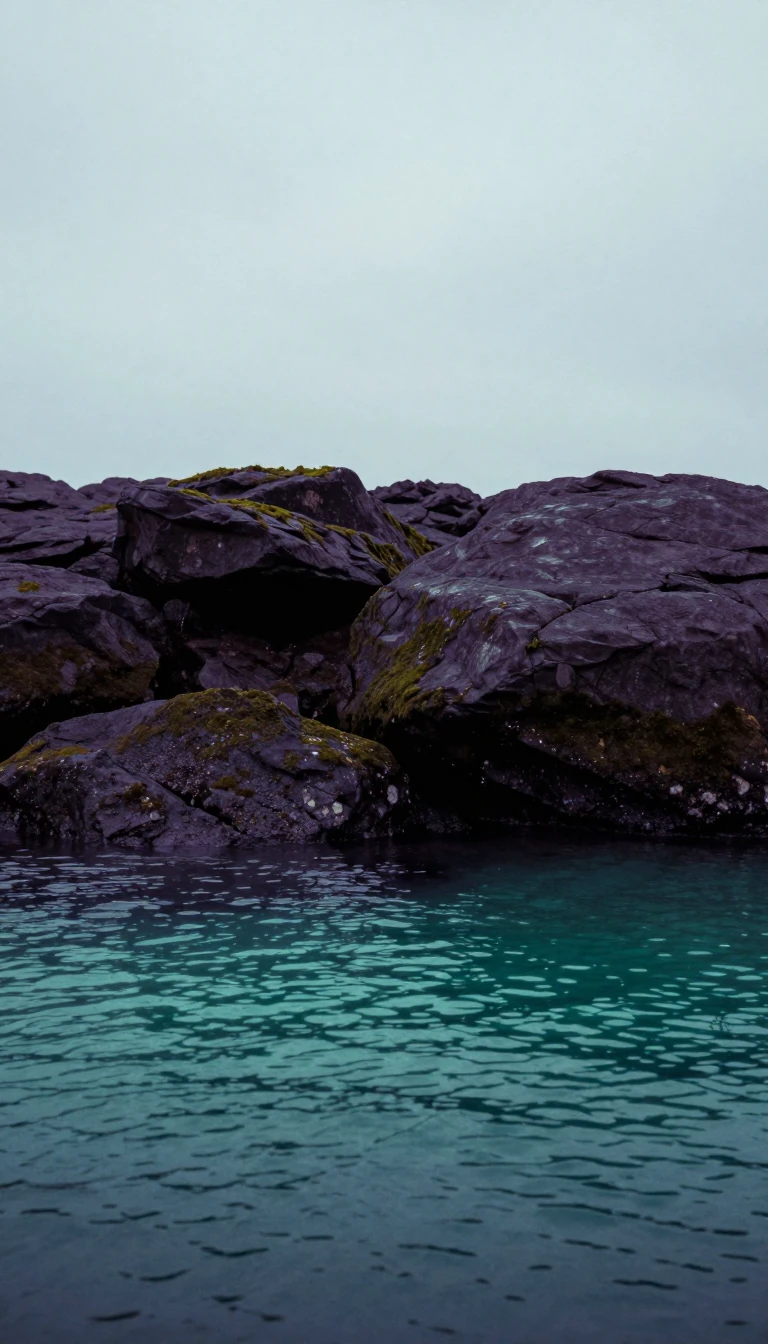
In short: Mistaken Point was once a sailor's nightmare, where thick fog led ships to crash against treacherous rocks. Today, it is a UNESCO World Heritage Site housing the oldest known multicellular fossils on Earth. These ancient organisms, preserved in the rock, reveal the moment life first became large and architecturally complex.
Located at the southeastern tip of Newfoundland's Avalon Peninsula, Mistaken Point holds a unique place in geological history. The site is defined by the Mistaken Point Formation, which contains an exceptionally diverse and well-preserved collection of Precambrian fossils. These Ediacaran remnants, discovered in the area, represent the oldest known examples of multicellular life on the planet. Scientists consider these fossils to be the most ancient deep-water marine organisms ever found, marking a pivotal era when life first achieved significant size and structural complexity.
The discovery of these fossils dates back to June 1967, when Shiva Balak Misra, a geology graduate student at Memorial University of Newfoundland, identified the first specimen, Fractofusus misrai. Following this breakthrough, the site gained recognition in the mid-1980s as a critical location for understanding early animal evolution. The provincial government established a five-kilometre stretch of coastline as a provisional reserve in 1984, granting it permanent status in 1987. The reserve was later expanded in 2009 to protect further fossil finds, and in July 2016, it was officially inscribed as a UNESCO World Heritage Site.
The geological significance of the area extends beyond Canada. The fossil terrane found at Mistaken Point is linked to the Avalonian terrane present in Western Europe, formed during the early Cambrian period when the supercontinent Pannotia separated from Gondwana. In October 2022, the International Union of Geological Sciences (IUGS) recognized the site as one of 100 premier 'geological heritage sites' worldwide. This designation highlights Mistaken Point as a key reference point for scientific research, celebrating it as the world's best example of an Ediacaran community where complex, large-scale metazoan life first bloomed on Earth.
Opens the Intellect+ feed with this card first. Swipe up for the next one.
Sources
- Summary by Intellect · source: Mistaken Point Ecological Reserve
To cite this card, link to https://intellectplus.co.uk/app/places-mistaken-point-ecological-reserve.
How we source, check and correct cards: Editorial standards.
General information, not professional advice. Spotted an error? Flag the card or see corrections and complaints.
Intellect Plus is a visual educational discovery platform for exploring fascinating facts and ideas. Brain Food, Not Brain Rot. What is Intellect Plus?
Related
More in World Heritage Sites · More in Countries & Cities · Latest · A–Z · All topics
