The world's longest parallel sand dunes are held in place by desert vegetation
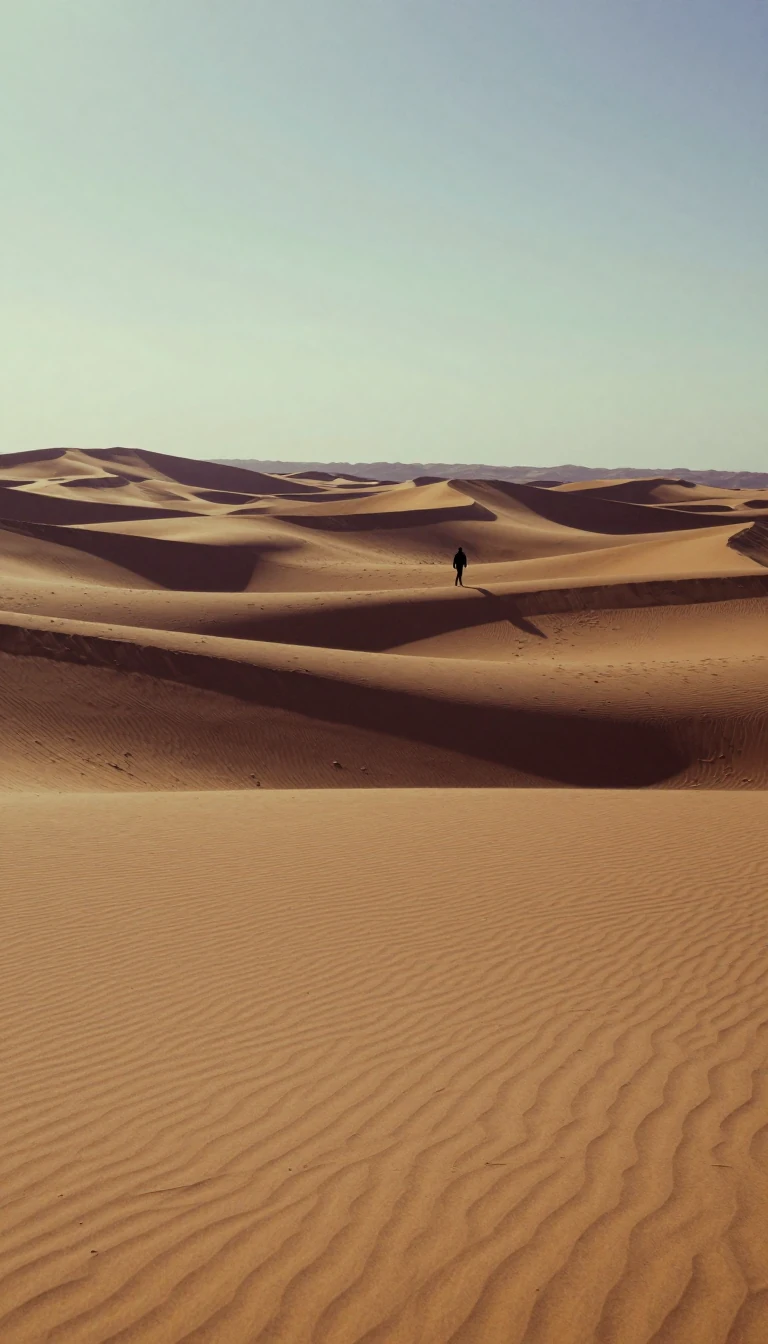
In short: Spanning 55,000 square miles of central Australia, the Simpson Desert is a landscape defined by massive, static sand ridges. While often perceived as a barren, uninhabited expanse, this arid region is a complex ecosystem shaped by rare flooding, ancient indigenous knowledge, and a history of daring, unsupported human crossings.
The Simpson Desert is a vast, arid region covering approximately 55,000 square miles across the Northern Territory, Queensland, and South Australia. Its most striking geological feature is a series of parallel sand dunes that stretch from the northwest to the southeast. These ridges, which can reach heights of up to 120 feet, are remarkably stable, held in their fixed positions by desert vegetation such as Triodia, or spinifex grass. While the desert is largely uninhabited, it is not devoid of life; it serves as a critical refuge for rare species like the fat-tailed marsupial mouse.
The region’s climate is exceedingly dry, with most areas receiving five inches of precipitation or less annually. However, the desert is not entirely waterless. It sits atop the Great Artesian Basin, which provides water to small cattle-raising settlements on the desert's fringes. Furthermore, the landscape experiences periodic, temporary flooding caused by rainfall that originates outside the desert and flows into its basin. This influx of water can trigger sudden, vibrant blooms of wildflowers, temporarily transforming the harsh, red sandy plains.
Human interaction with the Simpson Desert has evolved significantly over time. Aboriginal peoples, including the Wangkangurru, have inhabited the area for at least 5,000 years, utilizing hand-dug wells known as mikiri to survive. In contrast, early European explorers often misjudged the region as entirely uninhabitable. It was not until the 20th century that the desert became a focal point for adventurous exploration. Following the first recorded European crossing by camel in the 1930s, the region has attracted long-distance walkers and vehicular expeditions, testing the limits of human endurance in one of the world's most challenging environments.
Opens the Intellect+ feed with this card first. Swipe up for the next one.
Sources
- Summary by Intellect · source: Simpson Desert | Animals, Plants, & Facts | Britannica
- Also: Simpson Desert
To cite this card, link to https://intellectplus.co.uk/app/places-simpson-desert.
How we source, check and correct cards: Editorial standards.
General information, not professional advice. Spotted an error? Flag the card or see corrections and complaints.
Intellect Plus is a visual educational discovery platform for exploring fascinating facts and ideas. Brain Food, Not Brain Rot. What is Intellect Plus?
Related
More in Vegetation features · More in Countries & Cities · Latest · A–Z · All topics
