Denmark’s massive migrating dune is a living monument to a forgotten environmental battle
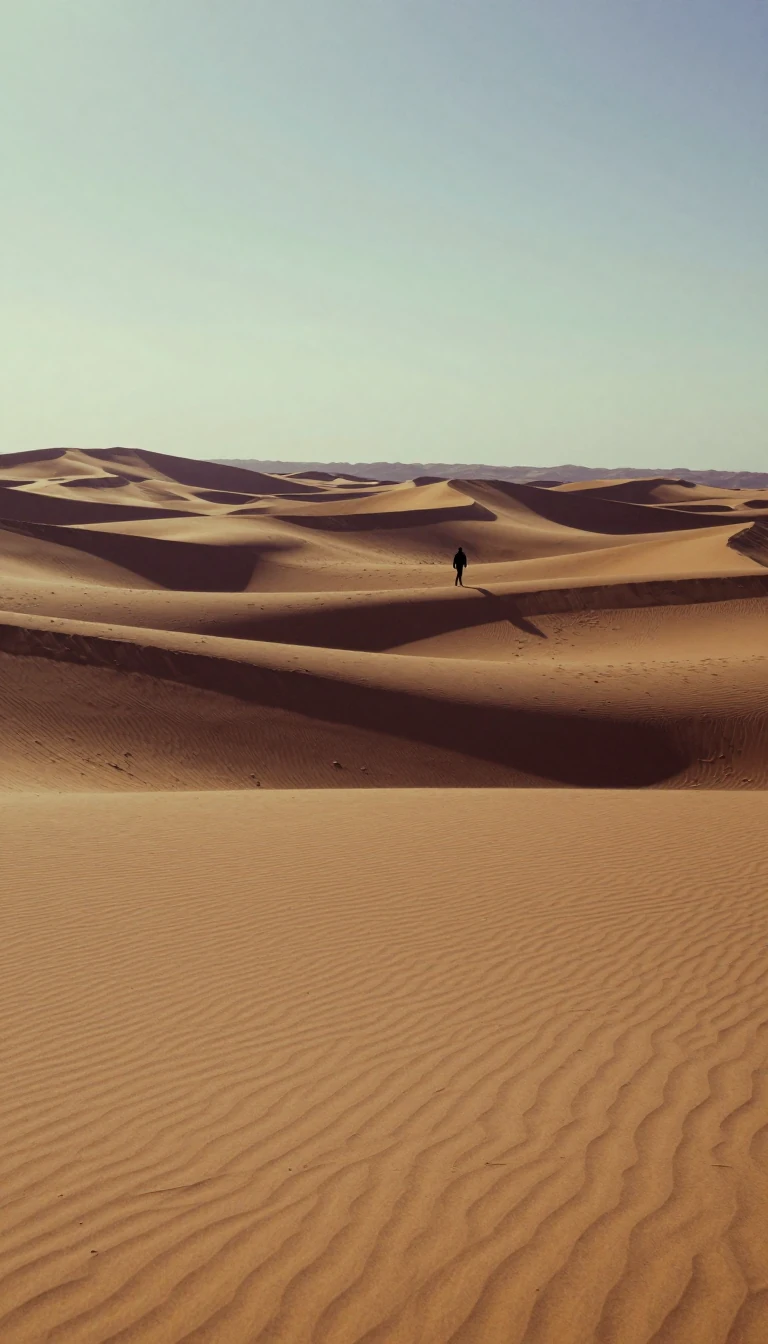
In short: Råbjerg Mile is Northern Europe’s largest moving dune, a towering desert of four million cubic meters of sand. While most of Denmark’s once-menacing drifts were tamed by government-mandated planting in the 19th century, this specific stretch was left wild, serving as a stark, shifting reminder of a landscape that once swallowed churches.
Located between Skagen and Frederikshavn, Råbjerg Mile stands 40 meters above sea level and covers approximately two square kilometers. Formed over 300 years ago, the dune is driven by the wind in a north-easterly direction, advancing up to 18 meters annually. As it migrates, it leaves behind a moist, low-lying trail of sand that stretches back toward the Skagerrak coast.
During the 16th and 17th centuries, these migrating sands were a severe threat to northern Jutland, forcing local populations to abandon coastal settlements. The power of this drift is best illustrated by the Sand-Covered Church, dedicated to Saint Lawrence of Rome. Originally constructed in the late 14th century, the structure was so thoroughly buried by the 18th century that it was abandoned by 1795, leaving only its tower visible above the encroaching dunes.
In response to the crisis, the Danish government passed the Sand Drift Act in 1857, which empowered the state to acquire and stabilize drifting sands. By planting dune grasses and conifers—a practice that became widespread after 1880—authorities had largely brought the drifts under control by the 1950s. Råbjerg Mile was uniquely spared from this stabilization effort to preserve a historical record of the phenomenon. The state purchased the central area in 1900, with further protections following the Conservation of Nature Act in 1917. Today, as the dune drifts beyond these protected boundaries, the challenge of managing this living, moving landscape continues to spark legislative debate.
Beyond its geological significance, the area serves as a vital ecological hub. It is an internationally recognized staging ground for migrating raptors and provides essential breeding grounds for the Eurasian golden plover and the wood sandpiper. Despite its barren appearance, the dune remains a major attraction, drawing over 250,000 visitors annually who come to witness the relentless, slow-motion power of the shifting sands.
Opens the Intellect+ feed with this card first. Swipe up for the next one.
Sources
- Summary by Intellect · source: Råbjerg Mile
- Also: Wikidata — Råbjerg Mile · CC0
- Also: Wikidata — Råbjerg Mile · CC0
To cite this card, link to https://intellectplus.co.uk/app/places-r-bjerg-mile.
How we source, check and correct cards: Editorial standards.
General information, not professional advice. Spotted an error? Flag the card or see corrections and complaints.
Intellect Plus is a visual educational discovery platform for exploring fascinating facts and ideas. Brain Food, Not Brain Rot. What is Intellect Plus?
Related
More in Vegetation features · More in Countries & Cities · Latest · A–Z · All topics
