Why your brain is a master of time despite having no dedicated sense organ
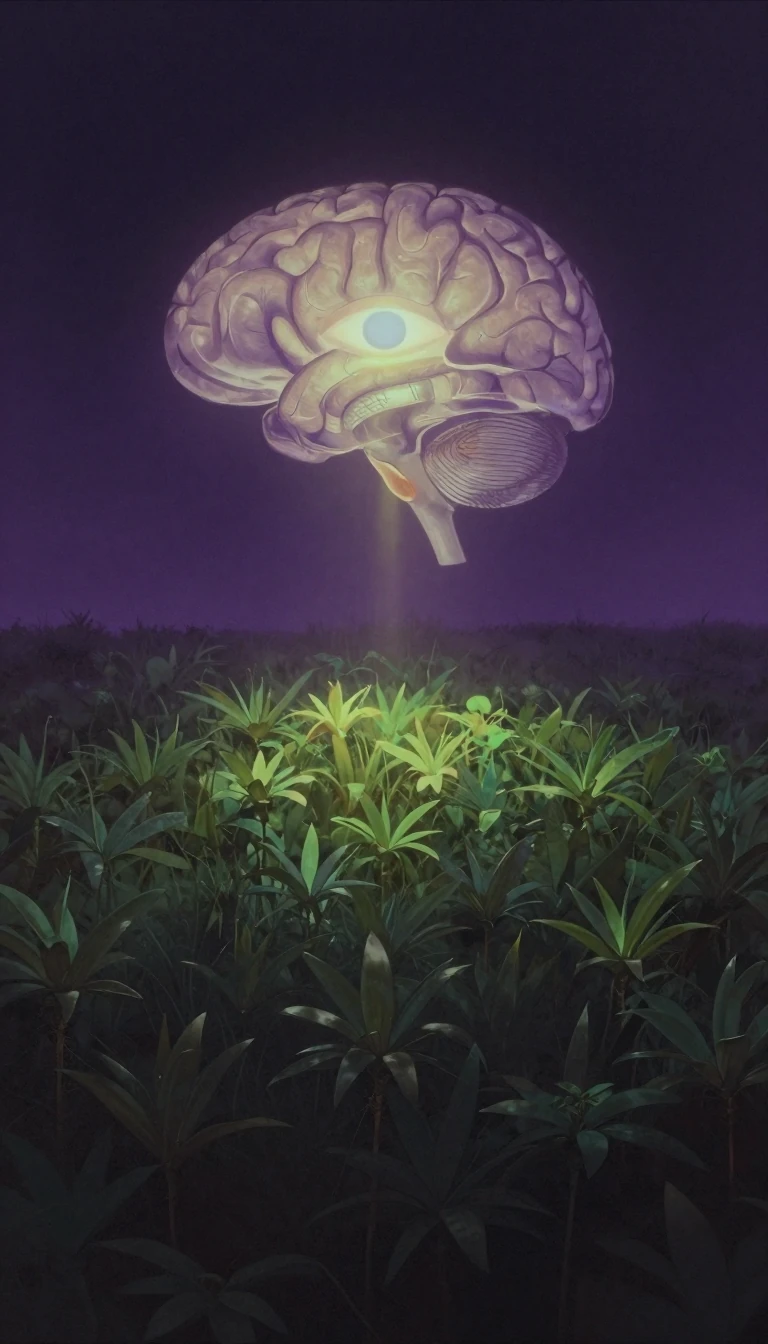
In short: We perceive time as a seamless flow, yet we lack a specific sensory organ for it. Instead, our experience of duration and sequence emerges from a complex, distributed system. From the specious present to biological stopwatches, how does the mind construct the feeling of a passing moment?
Time perception is the study of how we experience temporal properties like succession, order, and duration. Unlike vision or hearing, there is no single 'sense organ' for time. Philosophers like Immanuel Kant famously argued that time is a 'form of inner sense'—a necessary framework for human experience rather than an objective physical thing we observe. This philosophical puzzle drove 19th-century pioneers like Wundt and Helmholtz to turn time perception into a rigorous experimental science, seeking to measure how we distinguish between simultaneous and successive events.
A foundational concept in this field is the 'specious present,' popularized by William James in 1890. It suggests that our conscious experience is not a razor-thin point, but a short, immediate interval that allows us to perceive change and movement. Edmund Husserl later expanded this into a tripartite structure: the 'primal impression' of the now, the 'retention' of the just-past, and the 'protention' of what is about to happen. Together, these mechanisms allow us to bridge the gap between discrete moments.
Modern research has moved toward formal models, such as the 'internal clock' hypothesis, which posits that the brain tallies pulses to track intervals. Neuroscientists have found that timekeeping is highly distributed, involving the prefrontal cortex, cerebellum, and basal ganglia. Researchers like Warren Meck have distinguished between explicit timing—estimating the duration of a stimulus—and implicit timing, which helps us prepare for impending events. While we can distinguish events separated by mere milliseconds, the field remains fragmented, still searching for an agreed-upon framework to explain how these temporal aspects unify our consciousness.
Opens the Intellect+ feed with this card first. Swipe up for the next one.
Sources
- Summary by Intellect · source: Time Perception — OECS
- Also: Time perception | Cognitive Science, Psychology & Neuroscience | Britannica
- Also: Time perception
To cite this card, link to https://intellectplus.co.uk/app/places-time-perception.
How we source, check and correct cards: Editorial standards.
General information, not professional advice. Spotted an error? Flag the card or see corrections and complaints.
Intellect Plus is a visual educational discovery platform for exploring fascinating facts and ideas. Brain Food, Not Brain Rot. What is Intellect Plus?
Related
More in Basics · More in Countries & Cities · Latest · A–Z · All topics
