Why physicists measure the probability of subatomic collisions using the humble barn
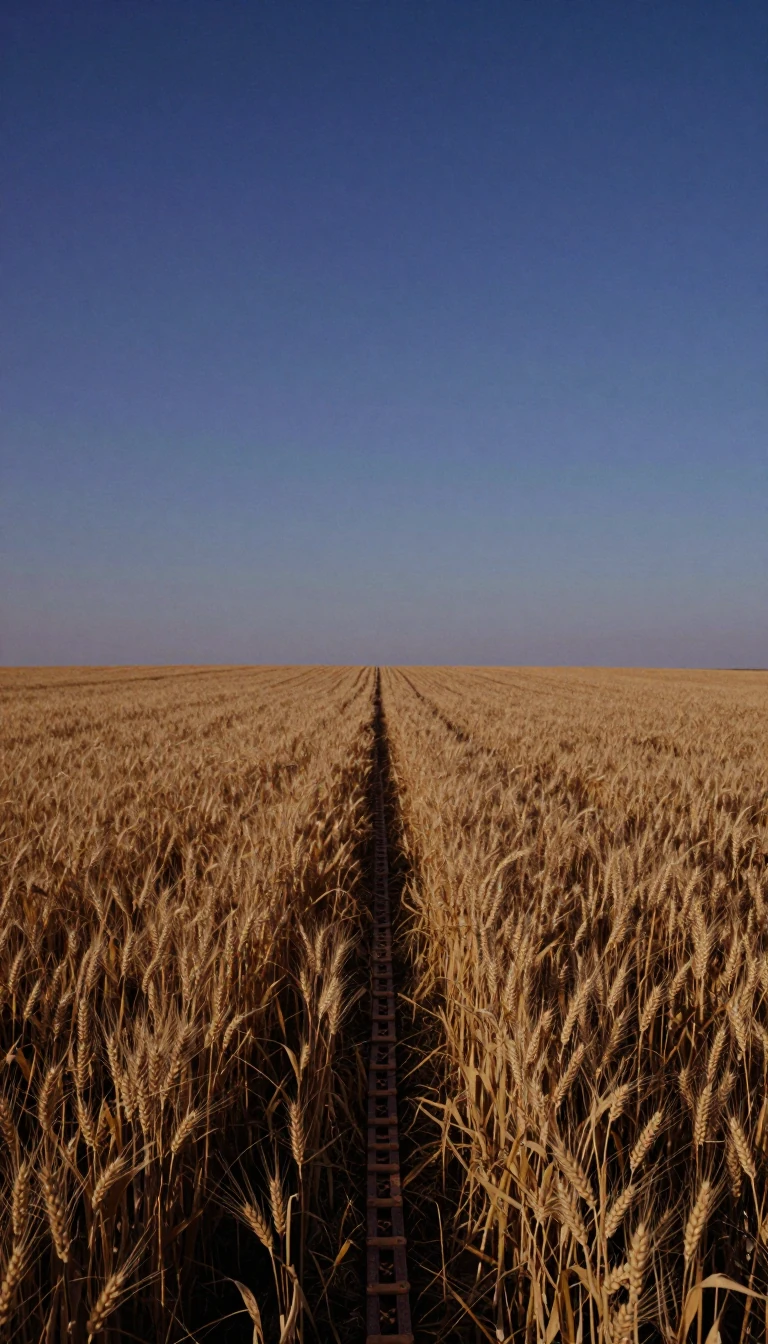
In short: In the world of high-energy physics, the barn is a standard unit of area. It is not a measurement of farmland, but a clever way to quantify the likelihood of particles colliding. Born from a cafeteria joke during the Manhattan Project, this unit remains essential for tracking collider productivity today.
The barn, symbolized as b, is a non-SI metric unit defined as 10⁻²⁸ square meters. This tiny area roughly corresponds to the cross-sectional size of a uranium nucleus. While it originated in nuclear physics to describe the probability of nuclear reactions, it has since become the standard for expressing cross sections in any scattering process. Though never an official SI unit, it was acknowledged by the SI standards body in the 8th SI Brochure due to its ubiquity in particle research.
The term has a surprisingly informal history. In December 1942, physicists Marshall Holloway and Charles P. Baker were working on Manhattan Project research at Purdue University. During a cafeteria lunch, they lamented the lack of a name for their unit of cross section. They rejected several names after famous colleagues, finding them either too long or confusing. Eventually, they settled on barn, joking that the unit was as big as a barn—a humorous nod to the rural background of one of the scientists. The first published use of the term appeared in a secret Los Alamos report in late June 1943.
Today, the unit is vital for measuring the performance of particle accelerators. Scientists often use the inverse femtobarn (fb⁻¹) to describe time-integrated luminosity, which indicates the number of collision events per unit of cross-section. This metric serves as a key indicator of a collider's productivity. For instance, while Fermilab’s Tevatron took about four years to reach 1 fb⁻¹ in 2005, the LHC experiments ATLAS and CMS achieved over 5 fb⁻¹ in 2011 alone. By 2012, the LHC was delivering 1 fb⁻¹ per week, and the second run of the LHC delivered approximately 150 fb⁻¹ to both experiments between 2015 and 2018, far exceeding earlier benchmarks.
The unit is not without its quirks. Because the symbol 'b' is also the standard IEEE symbol for a bit, ambiguity can arise when using SI prefixes. Furthermore, researchers sometimes express cross sections in inverse squared gigaelectronvolts (GeV⁻²) in natural units, where the conversion factor is 0.3894 mb. Interestingly, the same group of scientists who coined the barn also created a unit of time called a 'shake' during the same period.
Opens the Intellect+ feed with this card first. Swipe up for the next one.
Sources
- Summary by Intellect · source: Barn (unit)
To cite this card, link to https://intellectplus.co.uk/app/science-barn-unit.
How we source, check and correct cards: Editorial standards.
General information, not professional advice. Spotted an error? Flag the card or see corrections and complaints.
Intellect Plus is a visual educational discovery platform for exploring fascinating facts and ideas. Brain Food, Not Brain Rot. What is Intellect Plus?
Related
More in Measurement · More in Science · Latest · A–Z · All topics
