The Nobel laureate who discovered a vital cellular organelle but was ignored for decades.
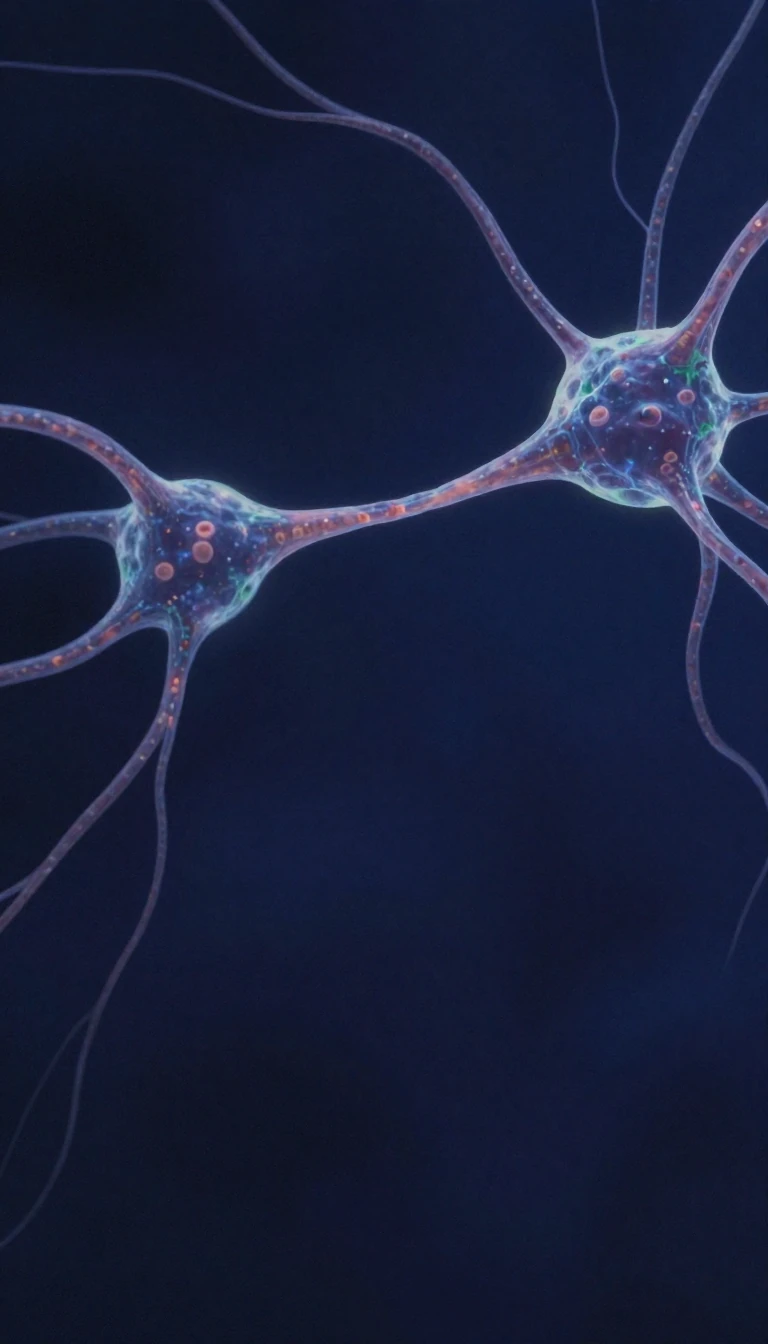
In short: Camillo Golgi revolutionized neuroscience with a staining technique that revealed the brain's hidden architecture. Yet, his most enduring discovery—the Golgi apparatus—was dismissed by his peers as a mere optical illusion. It took fifty years and the invention of the electron microscope to prove this brilliant Italian biologist was right.
Born in 1843, Camillo Golgi spent his career at the University of Pavia, where he transformed histology. In 1873, while working in a makeshift laboratory inside a hospital kitchen, he developed the 'black reaction.' By using potassium dichromate and silver nitrate, he could selectively stain individual neurons, finally allowing scientists to trace the intricate structure of the nervous system. This breakthrough earned him the 1906 Nobel Prize in Physiology or Medicine, which he shared with his rival, Santiago Ramón y Cajal.
Despite his success, Golgi remained doggedly committed to the 'reticular theory,' which posited that the brain was a single, continuous network of fibers rather than a collection of discrete cells. Even as Cajal used Golgi’s own staining method to prove the neuron doctrine—the idea that individual cells are the fundamental units of the brain—Golgi refused to yield. Their professional relationship was so acrimonious that they reportedly refused to speak to one another, even while standing together in Stockholm to receive their shared Nobel Prize.
Golgi’s scientific legacy extends far beyond his neural staining. In 1898, he identified an internal reticular apparatus within the cells of a barn owl's cerebellum, now known universally as the Golgi apparatus. At the time, the scientific community largely rejected this finding, arguing that the organelle was simply a staining artifact caused by his chemicals. It was not until the 1950s, when electron microscopy provided the necessary resolution, that his discovery was finally validated. Today, the Golgi apparatus is recognized as a fundamental component of eukaryotic cells, essential for processing and packaging proteins.
Beyond his work on the nervous system and cellular organelles, Golgi made significant contributions to medicine, including identifying the erythrocytic cycle of the malaria parasite. He served as a senator and rector, and his influence remains embedded in the terminology of modern anatomy, from the Golgi tendon organ to the Golgi-Mazzoni corpuscles. He died in 1926, leaving behind a complex legacy of pioneering discoveries that were often decades ahead of the technology required to confirm them.
Opens the Intellect+ feed with this card first. Swipe up for the next one.
Sources
- Summary by Intellect · source: Camillo Golgi
To cite this card, link to https://intellectplus.co.uk/app/science-camillo-golgi.
How we source, check and correct cards: Editorial standards.
General information, not professional advice. Spotted an error? Flag the card or see corrections and complaints.
Intellect Plus is a visual educational discovery platform for exploring fascinating facts and ideas. Brain Food, Not Brain Rot. What is Intellect Plus?
Related
More in Biology · More in Science · Latest · A–Z · All topics
