Why the bright, dancing patterns on a swimming pool floor are called caustics
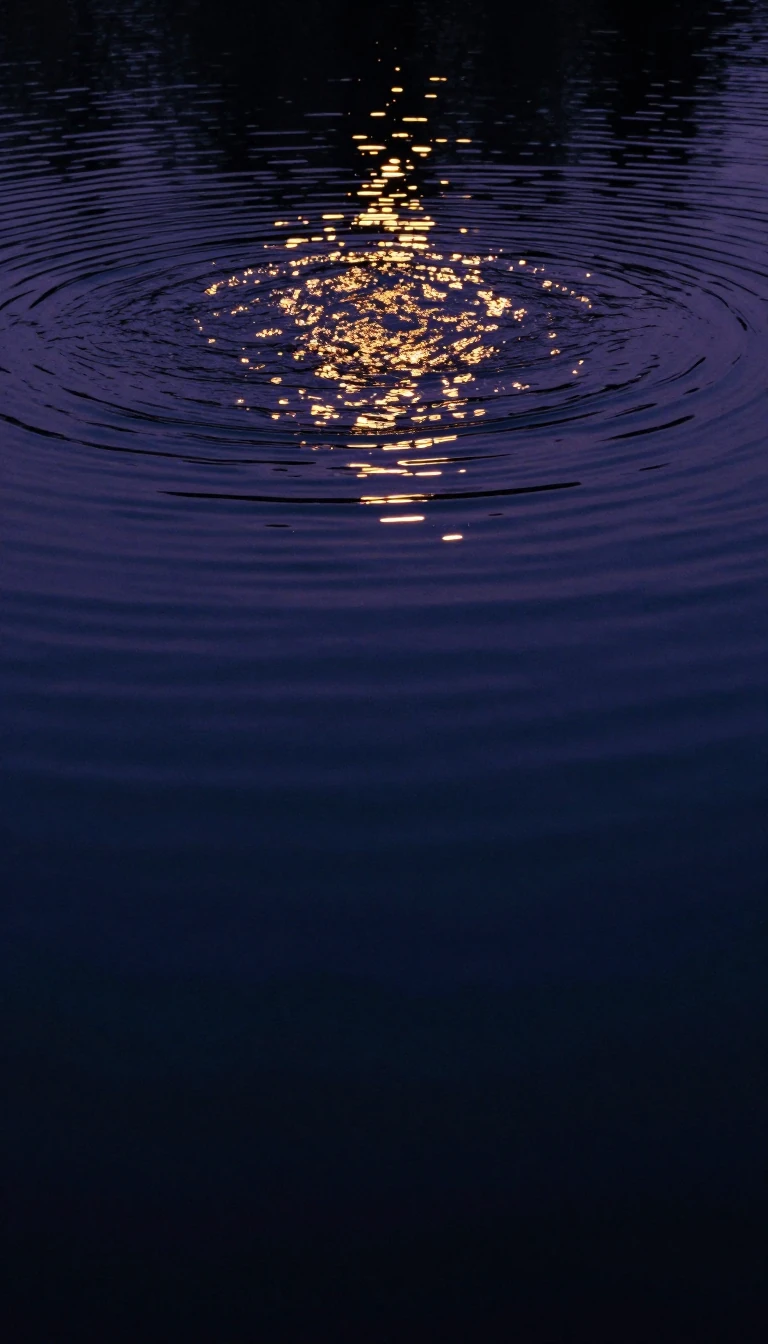
In short: When light hits a curved surface, it does not just bounce or pass through; it concentrates into intense, shimmering envelopes of energy. These patterns, known as caustics, are named for the Greek word for burning. From rainbows to drinking glasses, they reveal the hidden, mathematical architecture of light.
At its core, a caustic is an envelope of light rays that have been reflected or refracted by a curved object. Each ray becomes tangent to a specific curve or surface, creating a boundary where light is highly concentrated. These shapes often feature cusp singularities, which are the sharp, bright points or lines we observe in everyday life, such as the nephroid-shaped patch of light cast by a drinking glass or the rippling patterns dancing on the floor of a pool.
The phenomenon is not merely a visual curiosity; it is a fundamental interaction of physics. The term itself, derived from the Greek 'kaustos' for burnt, hints at the intensity of these concentrations, which can be powerful enough to singe materials. While we often see them in nature—like the scattering of light through raindrops that forms a rainbow—modern technology has turned the study of these patterns into a precise engineering discipline.
In computer graphics, creating realistic caustics requires complex calculations. Systems use techniques like photon mapping, where light particles are modeled as they bounce through a scene, or ray tracing to determine how light paths converge. Because these calculations are computationally expensive, many real-time applications, such as video games, rely on pre-calculated textures rather than physically accurate simulations. However, the field of 'caustic engineering' is now reversing this process. By solving inverse problems, researchers can design specific surface geometries that, when hit by light, refract or reflect to form a desired target image.
This design process often utilizes optimal transport theory to map incoming light rays to a target pattern. By iteratively adjusting the surface using Snell's law of refraction, engineers can create transparent materials that project complex, intentional images. Once the mathematical description is finalized, these designs are brought to life through manufacturing methods like machining, using materials ranging from acrylic and polycarbonate to gold and titanium.
Opens the Intellect+ feed with this card first. Swipe up for the next one.
Sources
- Summary by Intellect · source: Caustic (optics)
To cite this card, link to https://intellectplus.co.uk/app/science-caustic-optics.
How we source, check and correct cards: Editorial standards.
General information, not professional advice. Spotted an error? Flag the card or see corrections and complaints.
Intellect Plus is a visual educational discovery platform for exploring fascinating facts and ideas. Brain Food, Not Brain Rot. What is Intellect Plus?
Related
More in Waves · More in Science · Latest · A–Z · All topics
