Cleopatra the Alchemist: The Mysterious Sage Who Never Actually Existed as One Person
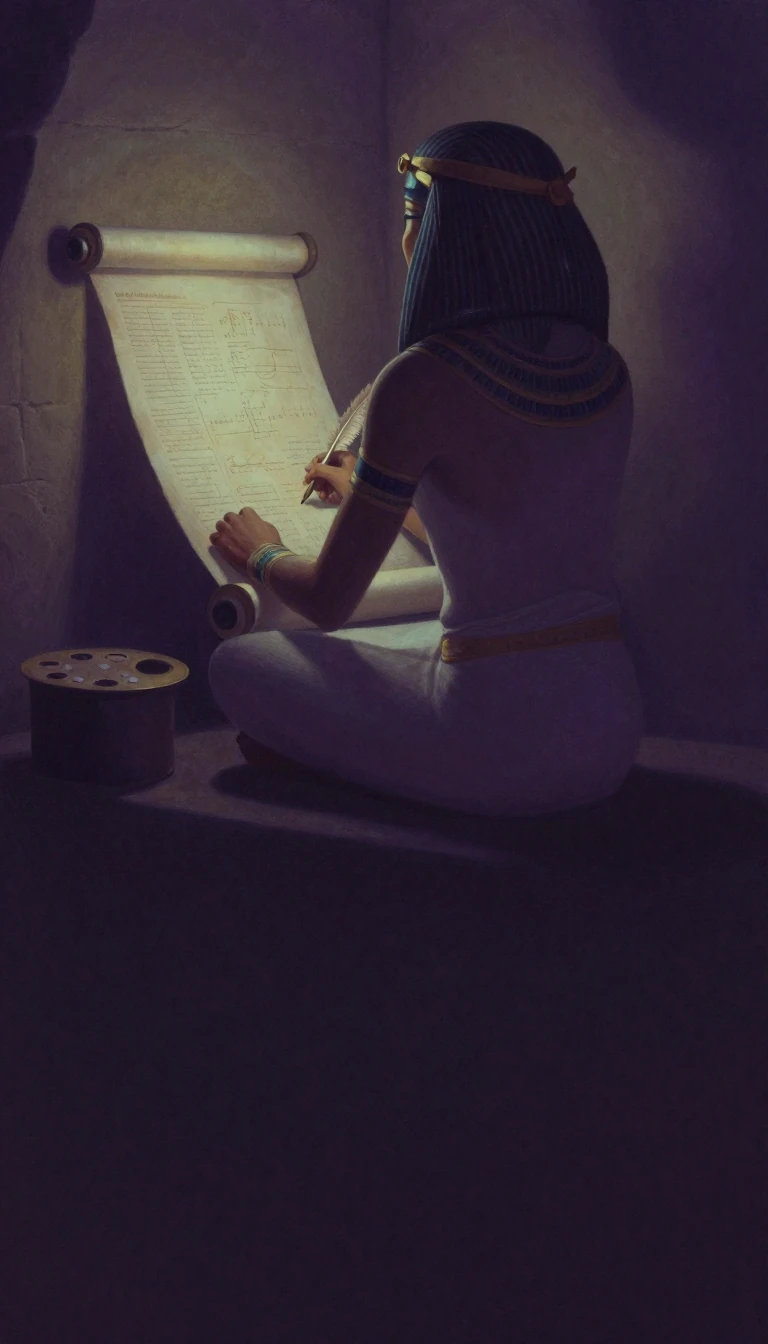
In short: Cleopatra the Alchemist was not the famous Egyptian queen, but a pseudonym for unknown authors in ancient Alexandria. Revered as a master who could produce the philosopher's stone, this enigmatic figure left behind symbolic texts that shaped alchemy, including the iconic Ouroboros, the serpent devouring its own tail.
Active in Alexandria during the 3rd or 4th century AD, Cleopatra the Alchemist remains a foundational, albeit elusive, figure in the history of science. Scholars emphasize that she was not a single individual but a pseudonym used by various writers. She is frequently conflated with Cleopatra the Physician, another historical figure with whom she shares a penchant for grand, evocative imagery. Despite her shadowy origins, she was held in high regard by later generations, appearing in the 988 Arabic encyclopedia Kitab al-Fihrist and cited by 17th-century thinkers like Michael Maier as one of the four women capable of creating the philosopher's stone.
Her work, particularly the Chrysopoeia of Cleopatra—or Gold-Making—is celebrated for its dense symbolic language rather than prose. Found in a 10th-to-11th-century manuscript, this single-sheet document features the Ouroboros, a serpent consuming itself that represents the unity of the cosmos and the eternal cycle where the end is the beginning. Alongside this, the text includes depictions of alchemical apparatuses like the dibikos and kerotakis, as well as an eight-banded star, which some interpret as a pictorial guide for transmuting lead into silver. Her focus on weights and measures suggests a desire to quantify the experimental processes of her time.
Cleopatra’s legacy is deeply tied to the development of practical alchemy, with some historians crediting her with the invention of the alembic, a distillation device. Her writing often employed metaphors of conception and birth, comparing the alchemist’s labor to a mother nurturing a child. While three texts are attributed to her—including the Dialogue of the Philosophers and Cleopatra—these are considered imaginative discourses rather than personal records. By the 17th century, her influence was cemented in works like Johann Daniel Mylius’s 1618 Basilica Philosophica, where her seal was used to symbolize the hidden nature of divine wisdom.
Opens the Intellect+ feed with this card first. Swipe up for the next one.
Sources
- Summary by Intellect · source: Cleopatra the Alchemist
To cite this card, link to https://intellectplus.co.uk/app/science-cleopatra-the-alchemist.
How we source, check and correct cards: Editorial standards.
General information, not professional advice. Spotted an error? Flag the card or see corrections and complaints.
Intellect Plus is a visual educational discovery platform for exploring fascinating facts and ideas. Brain Food, Not Brain Rot. What is Intellect Plus?
Related
More in Pre-modern figures · More in Science · Latest · A–Z · All topics
