A criticality accident is an uncontrolled nuclear chain reaction, but never a nuclear explosion.
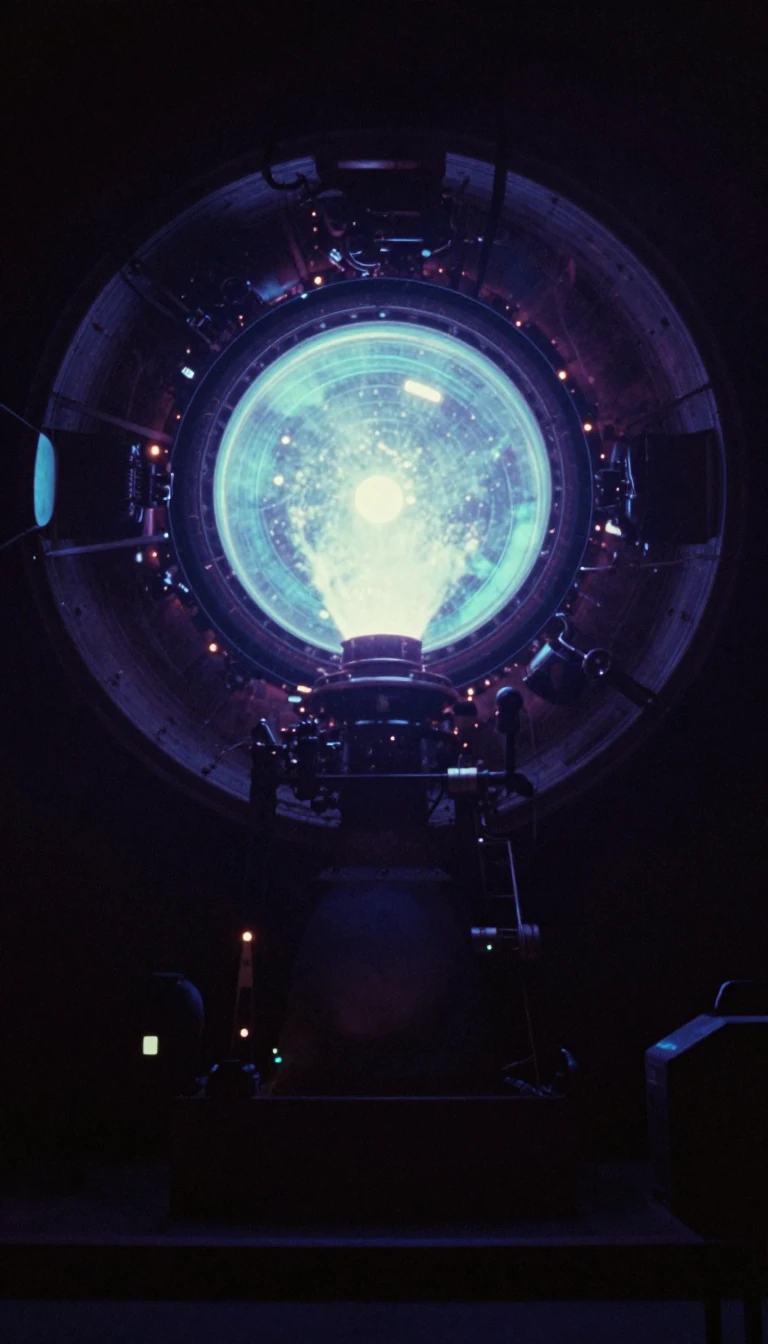
In short: When fissile material accidentally reaches critical mass, it releases a lethal burst of radiation. Witnesses often report a haunting blue glow and a sudden, inexplicable heat wave. While these events are deadly to those nearby, they lack the design features required to trigger a massive nuclear bomb-style explosion.
A criticality accident occurs when fissile materials like uranium or plutonium unintentionally accumulate in a configuration that sustains a nuclear fission chain reaction. In a stable state, each fission event produces neutrons that trigger further reactions at a balanced rate. If the system becomes supercritical, the neutron population cascades, releasing intense radiation. Despite the danger, these events cannot produce a nuclear explosion because they lack the complex engineering required to compress fissile material into a warhead. Instead, heat expansion often causes the material to become subcritical, naturally shutting the reaction down.
These accidents are categorized as either process-related—where safety controls fail—or reactor-based, often stemming from maintenance errors. Between 1945 and 1999, at least 67 such incidents were recorded globally. While many are brief, some have persisted for hours; the 1999 Tokaimura accident lasted about 20 hours, and a 1962 event at Hanford Works continued for 37.5 hours. Fatalities are localized, with over 20 deaths documented in the 20th century across nations including the United States, the Soviet Union, and Japan.
The eerie blue light often reported during these accidents is frequently attributed to the fluorescence of ionized air or Cherenkov radiation, which can even be perceived if radiation strikes the vitreous humor of the human eye. Eyewitnesses have also described a sudden heat wave. While some suggest this is a psychosomatic response to impending doom, researchers hypothesize it may be a physical effect: the same ionized air that produces the blue glow emits significant infrared radiation, which the skin can perceive as heat. However, confirming this remains difficult due to the scarcity of survivors capable of providing detailed accounts.
Opens the Intellect+ feed with this card first. Swipe up for the next one.
Sources
- Summary by Intellect · source: Criticality accident
To cite this card, link to https://intellectplus.co.uk/app/science-criticality-accident.
How we source, check and correct cards: Editorial standards.
General information, not professional advice. Spotted an error? Flag the card or see corrections and complaints.
Intellect Plus is a visual educational discovery platform for exploring fascinating facts and ideas. Brain Food, Not Brain Rot. What is Intellect Plus?
Related
More in Human body & genes · More in Science · Latest · A–Z · All topics
