How a film director built a record-breaking submersible using specialized structural foam
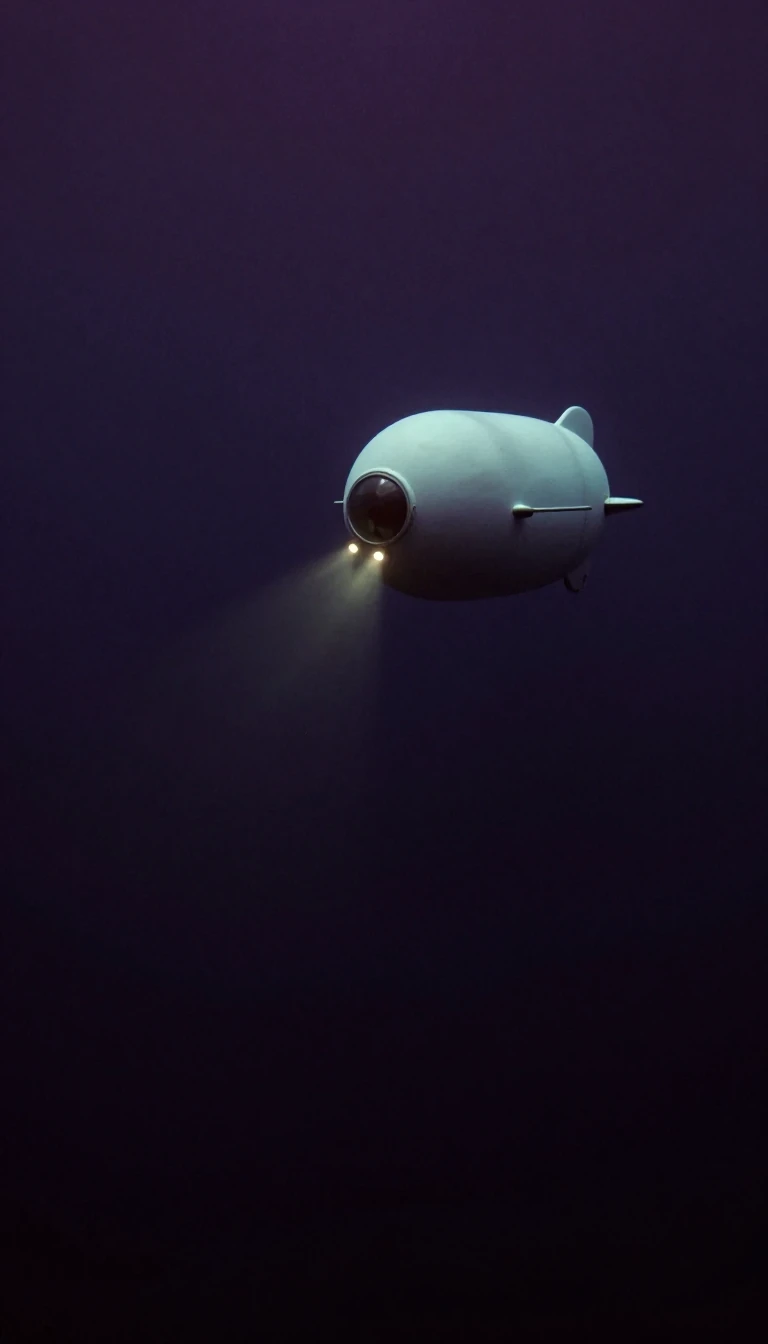
In short: In 2012, James Cameron piloted the Deepsea Challenger to the ocean's deepest point. To survive the crushing pressure of the Challenger Deep, engineers abandoned traditional steel skeletons for a revolutionary syntactic foam. This innovation allowed the vessel to carry more scientific gear than any predecessor while remaining remarkably lightweight.
The Deepsea Challenger was a feat of Australian engineering, led by Ron Allum and his team of experienced cave divers. To withstand the immense pressure at 11 kilometres deep, they developed a unique structural syntactic foam called Isofloat. Unlike traditional materials, this foam was composed of hollow glass spheres in epoxy resin, providing uniform strength and buoyancy. It made up 70% of the submersible's volume, serving as both the structural backbone and the housing for critical systems like lithium batteries and thruster motors.
The pilot sphere, where Cameron sat, was a 64-millimetre-thick steel vessel tested to endure 114 megapascals of pressure. The craft operated vertically, using 500 kilograms of ballast to sink and a galvanic release system as a fail-safe to ensure it could return to the surface even if primary systems failed. Despite these precautions, the dive on 26 March 2012 was not without technical hitches; sonar failures prevented the deployment of bait-carrying landers, and hydraulic issues limited the use of sampling equipment.
Cameron reached a maximum depth of 10,908 metres, marking the first solo crewed dive to the Challenger Deep and the first to spend three hours exploring the seafloor. The mission provided a stark contrast to the 1960 Trieste dive, as the Deepsea Challenger was less than one-tenth the weight of its predecessor. Following the mission, the vehicle was donated to the Woods Hole Oceanographic Institution. Its journey continued in 2015 when a transport truck fire caused significant damage, leading to an $8.3 million insurance claim and years of subsequent repairs.
The legacy of the Deepsea Challenger persists through the technological solutions it pioneered, many of which are now being studied for future deep-sea research. While other vehicles like the Triton DSV Limiting Factor and the Chinese Fendouzhe have since made successful dives, the Deepsea Challenger remains a landmark in the history of underwater exploration, proving that unconventional materials could unlock the most extreme environments on Earth.
Opens the Intellect+ feed with this card first. Swipe up for the next one.
Sources
- Summary by Intellect · source: Deepsea Challenger
To cite this card, link to https://intellectplus.co.uk/app/science-deepsea-challenger.
How we source, check and correct cards: Editorial standards.
General information, not professional advice. Spotted an error? Flag the card or see corrections and complaints.
Intellect Plus is a visual educational discovery platform for exploring fascinating facts and ideas. Brain Food, Not Brain Rot. What is Intellect Plus?
Related
More in Engineering · More in Technology · Latest · A–Z · All topics
